The Love That Dares Not Speak its Name Finally Gets a Voice

Hats off to Ayse

Blog Tour Intermission

Three hours into the flight from Istanbul to London I finally succumbed to the dubious pleasures of the Pegasus inflight magazine – all pretty pictures and shallow articles, as is the nature of these things. A piece on the current Turkish bestseller’s list caught my brief attention. The number one book in Turkey right now is Gizli Anların Yolcusu (Passenger of Secret Moments) by Turkish author, Ayşe Kulin. The English translation of the review read:

“Passenger of Secret Moments is about the kind of love that most of us would have trouble understanding and have prejudices about (speak for yourself, matey). With her usual mastery, Ayşe Kulin addresses a subject most fear to approach head-on in order to break taboos.”

According to a Bodrum Belle of my acquaintance, Ayşe Kulin is a prolific writer who has mass appeal and flogs books by the shedload to the growing middle class, just like Jeffrey Archer. And just like Jeffrey Archer, she isn’t particularly well-regarded by the literati. Who cares? I doubt I will be either. Good for her for writing a book in Turkish with a gay theme that’s made it to the top of the charts. Such people have more influence that many realise. Power to her pen, I say.

Check out my book. There’s a bit of gay theme in it too and the reviews aren’t bad either.

Twas the Season to be Jolly

Jack Scott, Columnist

Imagine our confusion and delight when we first happened across the Christmas trinket aisle at the local supermarket, where all manner of yuletide paraphernalia can be purchased. We fondled the multi-coloured shiny balls, flickering fairy lights, soft toy Santas, naff papier-mâché winter scenes and twinkling, tinselled trees, all manufactured by the enterprising Chinese. Not to miss out on the fun, it seems that our Turkish hosts have appropriated many Christmas traditions and grafted them on to New Year.

The book

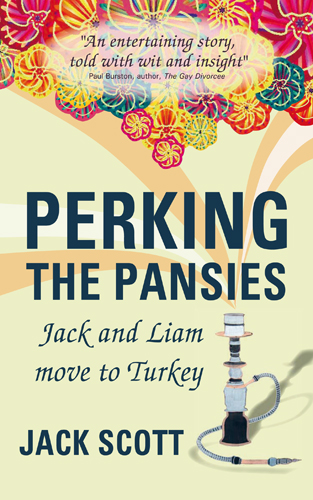
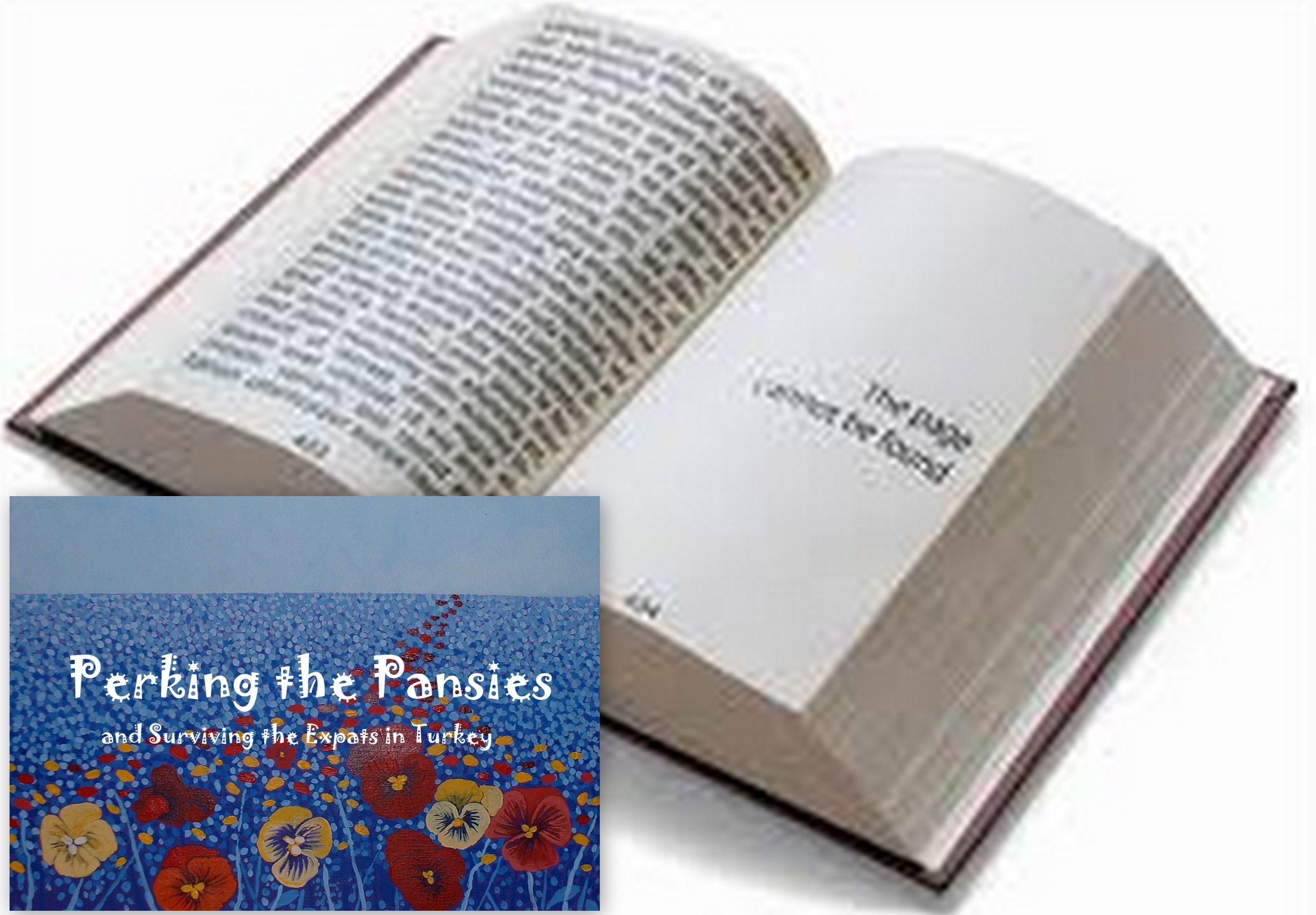
Perking the Pansies in Southwest Turkey

Jane Akatay is an experienced journalist of depth, intelligence and passion. Jane and I first met when she approached me to participate in an article she was writing about English Language bloggers in southwest Turkey for the Turkish Daily News. Jane’s article, The Tales that Wag the Blogs, cleverly inter-weaved the views of five different quality bloggers, each with their own unique perspective on expat life. When I neared completion of the book, Jane was the first person I turned to for a review. Despite her busy schedule, Jane was pleased to oblige and she wrote more than I could have hoped for. It’s not a brief throwaway review. It’s an in-depth, forensic critique set within the context of modern Turkey mores. It blew me away. Thank you, Jane.

___________________________________________________________________
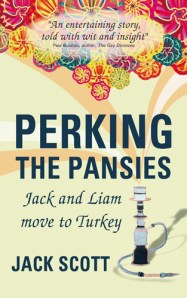
A decade into the 21st century along comes Jack Scott, a gay middle-aged man, who has bravely taken early retirement, daringly chosen to share his day-to-day experiences of life with thousands online in his blog, ‘Perking The Pansies’, and has now written a book with the same title.

No big deal, you may think; it’s been done already. So what? But this man, his blog and his book are more than a little different: Jack Scott lives in a predominantly Muslim country.

Not content to live in the accepting social scene of cosmopolitan London, he and his husband Liam have chosen to come and live in southwest Turkey, a decision that not only subjected them to scrutiny from the Turkish community but also to the watchful eyes of the burgeoning expat community, many of whom he describes with delicious vitriol and cutting humour. With the forthcoming publication of his book, Perking the Pansies, his lifestyle choices and intimate details of his everyday life will be open for inspection by the rest of the world.

Ask a cross-section of Turkish people, especially down here on the coast, and they will tell you that Gayness is a western problem (read ‘disease’) and doesn’t exist in Turkey. It is also generally accepted (as in so many other countries and institutions throughout the world) that the only homosexual in an active relationship between two men is the one who ‘receives’. The ‘giver’s’ behaviour is not deemed to be remarkable at all: after all they are just members of the notorious ‘any hole’s a goal’ club.

So how does a sexually repressed and quintessentially macho society relate to two men living together in marital harmony?

Ten years ago many ‘straight’ British men on holiday in Turkey expressed their shock when witnessing Turkish men’s tactile behaviour with each other: holding hands, casually draping their arms around their friends’ shoulders, resting a hand on a friend’s knee – and leaving it there.

Any physical contact between men, to most Brits, smacked of homoerotica and to their suspicious homophobic minds meant that these demonstrative men were either gay or, even worse, indiscriminate in their sexual preferences – after all even married men were seen to be doing it.

When a gay (and famous) ‘artist’ came along to a local restaurant popular with tourists at the end of the 1990s and, decked in veils and with his heavily kohled come-hither eyes, danced in the most superbly, sensual way imaginable (Turkish men, whatever their shape, age or sexual orientation are generally wonderful dancers), complaints from tourists of both genders: the decadence, indecency of it was evidently traumatising for the average Daily Mail reader and their children. Homophobia is by no means the sole preserve of conservative Brits.

Talk with any heterosexual, bi or gay western man who is open enough to speak about his gender identity and sufficiently emotionally intelligent and aware to question his own sexual vulnerability and he will often say that the rules of oriental societies are blurred to the point where they no longer know what the rules actually are even though they are sure they exist – yet Jack Scott made an active choice to leave the UK and come and live in such an inscrutable society with his partner, Liam.

Scott attempts an explanation: it was economically more viable for the couple to live in Turkey, having taken early retirement? ‘Bill’ the name given by Jack and Liam to their computerised accounting system would suggest that this is no longer the case. Times are hard for all expats living on the dwindling interest realised on their investments.

Sunshine and wonderful summers would seem another good reason perhaps, but as Scott illustrates the winters are cold, wet and frequently miserable and the summers are scorching. For people attempting to get on with their lives, rather than holidaying, the climate is not so kind.

Turkish society maybe provides an answer? It is certainly hospitable and charming on the outside. But as they discover following a murder, it has a dark homophobic underbelly, exacerbated by violent sexual acts (the man’s body reveals evidence of rape), and subsequently a few people warn the couple that views are hardening against gayitude. There is also the disadvantage of a cumbersome bureaucracy, slow, opaque and frustrating for those used to transparency.

No, it seems that, like so many other visitors to Turkey, these two men simply fell in love with the country and all that that entails. They sell up and move out but with a proviso that should the experiment fail they would return to the UK.

There again, many make that choice, for a variety of reasons, but all too often when the dream has turned into a nightmare they no longer have the wherewithal to return and are stuck, full of loathing. Scott pulls no punches when meeting such people and it is a warning to all to beware of becoming nothing more than negative whingers.

Scott’s crisp little portraits are of embittered British expats and Chrissie and Bernard are Jack’s archetypal poisonous couple. They epitomise the expat horror and the storyline would be poorer without them. Clement, a beautifully portrayed old queen, on the other hand, antediluvian and bigoted as his views are, at least has an underlying love of his adoptive country to redeem him and as an aspiring Emiköy, tries to make the most of his chances. His delight in muscle bound rough Turkish men obviously has more than a little to do with his move to the country. We are left wondering whether he will survive. (Opportunity for another book, Scott?).

Scott wields a vicious and occasionally cruel pen when describing these characters but the vignettes are unrelentingly accurate. Will these people recognise themselves? Only time will tell. Emigreys are self-explanatory and although the term may or may not be an original soubriquet, we all know a few.

VOMITS (Victims Of Men In Turkey) on the other hand are a breed of their own and Scott makes use of several in the narrative although mostly at their own expense. But to be fair, his colourful descriptive prose also illustrates some less dysfunctional characters with charm and wit and no little pathos. The couple, Charlotte and Alan for example, who adopt a baby, are a case in point and as their experiences unfold the book takes on a much more serious slant.

Indeed, there is a shift from the smug, pink and fluffy style in the opening chapters, reminiscent of Scott’s blog, to a much more considered narrative in the middle and remaining chapters. As the plot develops (there is one, although this isn’t apparent at the beginning), the personalities of Jack, Liam and the other main characters in the book are sensitively expanded and much more realistic and sympathetic. The quips and bad gay-boy jokes become less frequent and the content takes on a serious exploration of what life really is like for all foreign expats and many Turks too.

Jack and Liam for the most part have a pragmatic and relaxed attitude towards their adopted country and its attitudes and appear to relish every aspect of its culture apart from the two episodes already described.

If the beautiful happy baby Adalet (Turkish for Justice) is a metaphor for the tender love that dared not speak its name until relatively recently in Britain and even now in Turkey, then it would appear that Jack and Liam should be more than a little cautious; and only come out of their Bodrum closet in the guise of cousins, as they chose to describe themselves towards the end of the book. Their future here in Turkey could be perilous but then again with Turkey you never really know – and that is one of its many joys.

Perking The Pansies can and should be read for a number of reasons and not just seen as a book for the gay niche market. It revels in some of the more obnoxious aspects of expats who buy into a country but not the culture (not Jack and Liam; although not completely innocent they do at least make an attempt to learn the language and customs.) Finally, for anyone who is not part of either minority group, it is simply a good read and hopefully the first of many by new boy on the block, Jack Scott.

Jane Akatay, journalist

Pussy Lovers

Ever since I published a post called Pussy Galore a few weeks ago, hits to the blog have been inflated by people searching on the word ‘pussy’ – 1200 and rising. It’s heart-warming to know there are so many cat lovers out there in cyberspace interested in quirky moggie tales. Or maybe they’re fans of Honor Blackman, the ravishing, smoky-voiced Sixties beauty who played Bond girl Pussy Galore in Goldfinger. I hope they weren’t too disappointed to get a camp compilation of pussy-loving Mrs Slocombe from Are You Being Served?

Check out my new book:

Perking the Pansies – Jack and Liam move to Turkey

Midsomer Murder

I’ve been asked what the book is actually about. You’ll have to read it to find out, but suffice it to say, I learned some valuable lessons from David Steddall, the English Literature teacher at my South London grammar school. “A story should have a beginning, a middle and an end,” he would say. We’ve all heard the mantra. He seemed to like my essays, even if they were sometimes a little risqué in a post-pubescent, hormone-raging sort of way. His encouragement gave me confidence. He would often give me top marks and have me recite my work in class. Tragically, I failed* my Lit O Level. I just didn’t get the poetry and I was a lazy little student. Still, I’ve stayed faithful to Dave’s cause ever since and my book has a beginning, a middle and an end. It’s not a random series of observations like the blog. It’s the full story of our time in Turkey, warts and all. It’s not all light and frothy either. We’ve experienced some dark moments here:

Liam left exactly two months after we moved into the house in Bodrum. He dashed home on a mercy mission and I had no idea when he would be coming back. Üzgün’s death had thrown him off kilter and now he was needed in London.

The night before, we had dined al fresco to take advantage of yet another blessed, balmy evening. Liam’s gastronomic ambitions had reached such a pinnacle that we had less and less reason to eat out. The courtyard was a perfect setting. We reminisced about the days when, at the slightest hint of fine weather, we would rush home from work and grab the opportunity to eat in the garden.

We chinked glasses. “To the good life, Liam.”

It was a hollow toast. Üzgün’s murder had changed everything. He had been raped, robbed and murdered by three teenagers in a back street of Yalıkavak. His body was found in a dry river bed, naked, beaten and barely recognisable.

Liam got the call he had been dreading. He packed a suitcase and taxied to the airport to pick up the next available flight. I stayed awake for most of the night, texting Liam and trying to make sense of the mess around us. I camped on the balcony for hours, questioning my flawed understanding of Turkish society, balancing the highs with the lows and wondering if, ultimately, we had made one huge mistake. My head was a mass of interconnected thoughts and contradictions, each leading to a different conclusion and each stirring up an emotion that took me right back to where I started. I set myself a challenge. I would stay awake until the morning; by then I would know what to do.

The lights went out in Türkkuyusu just as they had done many times before. How could Turkey ever hope to become an industrial powerhouse if they couldn’t keep the bloody lights on? I stared into the darkened streets, lit only by the headlights of passing traffic. I wanted to speak to Liam but he was in the skies somewhere over Europe. I wanted to ask him why we didn’t go to Spain or why we left London in the first place. I knew he would answer, “because we’re different and different is good. Remember the pioneers. ‘Good As You’, they said.”

*I passed English Language with flying colours (along with history). Liam is trying to convert me to the joys of poetry. I fear it’s a lost cause.

Check out my book.

Where Have All the Women Gone?

Liam’s back from Blighty, exhausted and in need of a little TLC. Naughty Nancy picked him up from Bodrum Airport while I warmed the house with candles, decanted the red and prepared a homecoming meal. As I mentioned in an earlier post, my culinary skills leave a great deal to be desired, but there is one simple dish I can cook without causing an international incident. It’s a one pot number of chicken thighs, tomatoes, peppers, red onions, and spices brewed in red wine. I just bung it all in and hope for the best – a winter warmer on a chilly night.

A winter warmer was needed. Liam brought the dodgy weather back with him – cold, wind and rain. As we sat down to chomp on my juicy thighs, we reminisced about our first winter in Yalıkavak. When we first rambled into the little town on one of those sunny midwinter days, things felt foreign, in more ways than one. ‘Jesus, where are all the women?’ I remember Liam asking. He was right. The scarcity of women in public was a complete shock to the system and a standard feature of Turkish life that we would never fully come to terms with. Okay, during high season, the female population was augmented by foreign bikini babes with their jugs out for the boys, and by the occasional painted lady of the night looking to make a quick rouble. Out of season though, things were a different affair entirely. Yalıkavak became a man’s world. It took us a while to acclimatise. Eventually, we uncovered the fairer sex hidden away in the fields, ringing the tills at supermarkets, dishing out the dosh in Turkish banks or playing happy families on a Sunday stroll. It was a real culture shift for the boys from the Smoke.

Check out my book

Perking the Pansies – Jack and Liam move to Turkey

Tales from the Water Closet

Emiköy Alan, who as a hunky young rookie snatched the Queen’s shilling but found it to be debased, lives with the missus in a traditional Turkish village near Dalyan. Alan writes affectionately of their lives as rustic emigreys in his blog Archers of Okçular. He often leaves witty (so he thinks) comments on my posts. In fact, he’s my number one pundit. It gives him a little pleasure between the frequent power cuts they endure in the wilderness.

Alan recently published a post about the evolution of Turkish privies from low slung to high tech. To be mildly obsessed with evacuation is a peculiarly British pre-occupation. It’s our Dunkirk spirit. Alan reminds us of the all-in-one dump and rinse pans that are now common in this part of the world. The in-pan bidet accessory is a novel concept. Don’t attempt it in winter, though. The icy rush could cause a seizure in those with a weak constitution. When I first tried it, the water pressure was so high that the jet shot between my legs and hit the wall opposite. These days I prefer to use a pack of wet wipes to maintain a fragrant ring.

Cue the funny video:

You might also like:

Have You Been?

Silent But Deadly

What’s in a Name?

The select group of people who’ve had a chance to read the Perking the Pansies manuscript have commented how different the book is from the blog. Sure, it covers some of the same terrain but, they say it’s much more than just the random comic utterings of a myopic ex-pretty boy from the Smoke. They say it’s a proper book with a plot that has revelation, depth, pathos and pace. Laugh and cry has been mentioned in dispatches. I’m relieved that the initial reaction has been so positive.

There’s just one thing, though. We’re having a heated debate about the subtitle for the book. A subtitle is important because it conveys the subject of the book and should include keywords to help with internet searching and book classification. Perking the Pansies alone might give people the impression that the book is about horticulture!

Obvious keywords for the book include:

Gay – Gay Couple – Expats – Turkey – Surviving

So I thought, why not ask my loyal pansyfans? I know people haven’t read the book yet but if you fancy it, why not vote for your favourite.

Alternatively, if you have a different suggestion, please leave a comment.

You might also like:

Perking the Pansies, the Book

I’m Coming Out

Room with a View

Room with a View

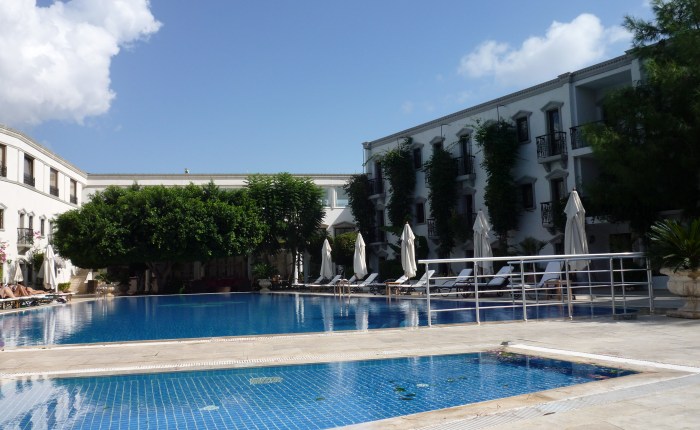
Our stone cottage is a little too small to lodge visitors, particularly those who prefer en-suite facilities for those ‘private’ moments. It’s a dilemma. Considering Bodrum’s popularity with the Turkish well-heeled, it’s odd that quality hotels in the centre of town are as rare as a bottle of so-so wine for under 50 lira in a restaurant. There’s no point relying on the star rating. It means little. Our usual recommendation is the Marina Vista. It’s close by and the location – on the promenade opposite the smart marina – can’t be equalled (hence the name, obviously). The top-notch Turkish breakfast served on the roof top restaurant is quite an experience, the foyer and communal areas are lavish and the pool is as inviting as it should be. Nothing is perfect, of course. The hotel isn’t cheap (though less expensive out of season), the rooms are cramped and have next to useless Juliet balconies, and the staff can be surly and unhelpful. I suppose you can’t have everything.

This slideshow requires JavaScript.

You might also like:

Sizzling Bodrum

Bodrum, Bodrum so Good They Named it Twice

Old Bodrum Renewed

Old Bodrum Renewed

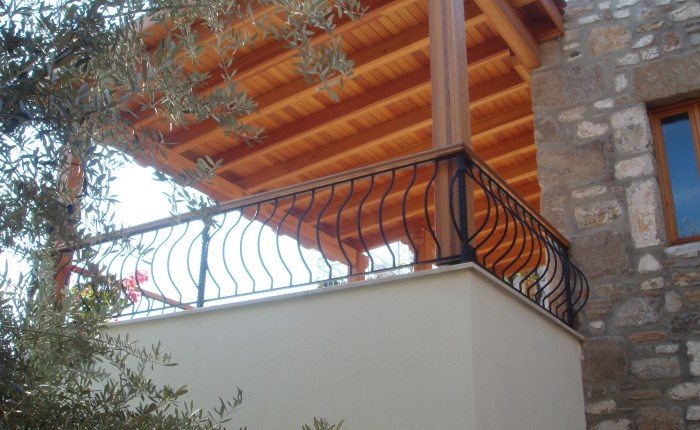
There is an authentic stone cottage in the heart of Bodrum Town sitting prettily in a well-stocked walled garden dominated by an ancient double-trunked olive tree. It is the original homestead of an old Bodrum family. As the family grew wealthy they moved on to larger premises and left their family home to slowly fall into quaint dilapidation. The house has an open-plan biblical feel, with a semi-basement – where I presume animals were once kept – a small mezzanine level and a larger first floor. One day the family had a bright idea. Selling off the family silver was unthinkable but maybe there was a little money to be made from the estate. They decided to renovate: extend the old house and build a brand new cottage in traditional style on the adjacent land where a small barn once stood. It took time, dedication and a few wrangles with the planners but they did it. It is a quality job. The family house now looks superb, sympathetically redressed in recycled stone finery. We seriously considered renting this bijou piece of local history but the cramped and quirky arrangement didn’t quite fit the way we live (no, I don’t mean camp discos, glitter balls and a blacked out sauna). Instead we rent the new house next door with its more practical and flexible living space. Both houses stand out from the crowd and are a happy snappers delight.

This slideshow requires JavaScript.

You might also like:

Bodrum, a Town of Two Halves

Bikini Bare