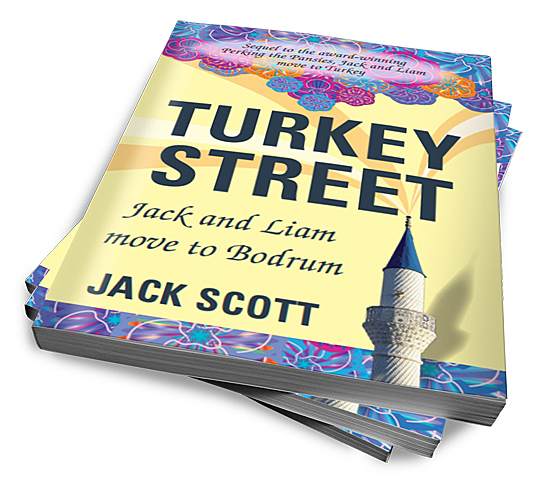
 English is a funny old foreign language. Turkey Street is littered with British cultural and geographical references, slang, idioms and place names that may fly over the heads of our cousins from across the seven seas. Cue Jack’s tongue-ever-so-slightly-in-cheek guide to Brit talk.
Am I bovvered? – The catchphrase of Lauren Cooper, a chav caricature from the BBC’s Catherine Tate Show. Unlike Vicky Pollard (see below), Lauren used a chavvy persona to disguise her intelligence.
Archers (The) – A long running soap on BBC Radio 4 about a dull farming community. Popular with those who prefer their beer warm and their neighbours white.
Argos – One of the largest high street retailers in Britain where customers flick through a fat catalogue, write their order on a little slip, pay at a till point and queue up at a warehouse counter to obtain their purchases. Weird.
Beak (The) – Judge or magistrate, so called because of the primitive gas masks stuffed with herbs and spices that medieval judges wore on the bench to ward off the plague. Little good it did them.
Betting shop biro – A half size ball point pen supplied free to punters who like a flutter on the horses. Millions of them end up in the bottom of handbags and manbags.
Bint – Bitch, originally a racist term (and still hardly complimentary) derived from the Arabic word for daughter and used by British soldiers in the Great War.
Bigwig – An Eighteenth Century VIP, the bigger the wig, the more important the person.
Blackpool – A trashy British seaside resort in northwest England famous for fish ‘n’ chips, kiss-me-quick hats, loose morals, brash illuminations and even brasher bottle blonds.
Blimey – An exclamation of surprise and an abbreviation of gorblimey, ‘God blind me.’ Blimey, who knew?
BNP – The British National Party and a nasty bunch of neo-Nazi nutters they are too.
Bruce Forsythe – Britain’s favourite all-round entertainer and a man older than the dinosaurs. Brucie is famous for his soft-shoe shuffle, catch phrases, dodgy wig, lantern jaw and marrying women young enough to be his granddaughter.
Bung – Bribe, not to be confused with the abbreviation for bung hole.
Cheesy Wotsits – A brand of ‘cheese’ flavoured corn puffs that stick to the teeth for days.
Chelsea Tractors – The large 4×4 vehicles that clog up the streets of rush hour London while Camilla drops little Hugo off at his private prep school.
Cherry Bakewell – A tart of short crust pastry with a layer of jam, ground almond sponge, topped with fondant and crowned with a glacé cherry. The very thought of it hardens the arteries.
Children of the Damned – A 1964 science fiction film about a group of evil children with psychic powers and the strapline ‘Beware the eyes that paralyse!’
Chips – French fries. What the Yanks call chips, Brits call crisps.
Clap Clinic – An STD clinic, from the Old French word clapoir, meaning a venereal bubo – an enlarged gland in the groin associated with sexually transmitted diseases. Ouch.
Clare Balding – A TV sports presenter with short hair and big bones.
Cottage – A public toilet visited by men seeking men, from Polari, a slang language used in Britain by sinners on the social margins – actors (when acting was considered no better than whoring), circus and fairground showmen, criminals, prostitutes, and, up to the early Seventies, gay people.
Council Tax – A property tax that helps pay for local services. It’s never been popular but then Brits are reluctant to pay for anything that isn’t related to booze, fags, the gee-gees and the footie (that’s liquor, cigarettes, horse betting and soccer).
Craic (pronounced crack) – An Irish term for fun, conversation and entertainment. The word is a Gaelicised version of the Middle English word crak meaning ‘loud conversation.’
Croydon – A soulless south London suburb famous for its high rise centre and Sixties shopping mall. Also one of the chaviest places on Earth (see Vicky Pollard below).
Cumberland Sausage – A delicious pork sausage shaped like a dog turd originating in the historic county of Cumberland. Cumberland is in the English Lake District (where it rains 364 days a year).
Delia – Delia Smith, the matriarch of British celebrity cooks and, just like nanny, not a woman to meddle with.
Dip his wick – Now come on, what else could it mean?
Dosh – Money, derived from God knows what.
Earls Court – A district of West London and the Capital’s gay village back in the day (no more than a couple of shabby dive bars and a seedy club: no match for Amsterdam or San Francisco).
Eton Wick – A village in England close to the college town of Eton which is the home to the famous private school – the alma mater to a political class that has absolutely no idea about the price of a pint or a line of coke.
Fag – Cigarette (not a derogatory term for homosexual as it is in Yankee). Gives a whole new meaning to the phrase ‘sucking on a fag.’
Harry Judd – The dangerously horny drummer for the boy band McFly. Women (and some men) across the land wet their panties at the very thought of him.
Hi-De-Hi – The title and catchphrase of the strangely entertaining Eighties’ BBC TV sitcom set in a fictional holiday camp featuring hammy acting, corny plots and slapstick humour.
Hobnob – A popular and very moreish biscuit made from oats. A minute on the lips, a lifetime on the hips, especially when covered in thick milk chocolate.
Home Counties – The shires that ring London, often characterised as prosperous, middle class and terminally boring.
Isle of Wight – A diamond-shaped green and pleasant island off the south coast of England. It’s where people go to die and where Jack first had sex (but not with a pensioner).
Jammy Dodgers – A round shortbread biscuit with a raspberry-flavoured jam filling, popular with children. To badly paraphrase the Jesuits, ‘Give me the boy until he is seven and I will give you the obese man with heart disease, high cholesterol and Type 2 diabetes.’
Kerfuffle – Fuss or commotion. Derived from carfuffle, from the Scots English word car (probably from Scottish Gaelic cearr wrong, awkward) and fuffle, to become dishevelled. Fancy that.
Khazi – A toilet, possibly derived from the Swahili word m’khazi meaning a latrine.
Kirk – A church in Scots and similar to words all over northern Europe – kirkja, kyrka, kyrkje, kirke, kirche, kerk, tsjerke, kirik, kirkko. I blame the Vikings.
Knacker’s Yard – A place where old animals not for human consumption are taken to be slaughtered. Aka an old people’s home.
Knocked Off – Stolen or fake, like most of the goods sold in the East End markets of London and pazars all over Turkey.
Knocking Shop – A venue to meet people for casual sex (for consumption on or off the premises). What was your name again?
Lancashire – A historic county in northwest England which has the dubious privilege of counting Blackpool among its treasures. Also home to Lancashire Hot Pot, a dull and tasteless lamb stew that requires little skill and no imagination to prepare.
Last Knockings – See Knocking Shop above. The last men standing at the end of a hard night.
Loo – Toilet, possibly from the cry gardyloo (from the French regardez l’eau ‘watch out for the water’), which was shouted by medieval servants as they emptied chamber pots from upstairs windows into the street.
Looker – Someone nice to look at. Like me when I was younger. Much younger.
Louie Spence – A very, very camp British choreographer and TV personality, grandma’s favourite and a man who is way beyond gay.
Malarkey – Nonsense. There’s a lot of it in the book.
Marge Proops – Once Britain’s most famous and trusted agony aunt. No oil painting but a wise old bird. She fell off her perch in 1996.
Marks and Spencer – A clothes and food retailer, the cornerstone of the high street and as British as the Queen (except Her Maj is German and most M&S products are imported).
Marmite – A sticky dark brown food paste made from yeast extract with a distinctive and powerful flavour. It is truly disgusting and quite rightly banned in Canada on health grounds.
Midnight Flit – To leave secretly. Popular with people trying to avoid the rent.
Midsomer – The fictitious county featured in the long-running whodunit TV series. It’s depicted as the epitome of tight-arsed Middle England and, judging by the murder rate, a more dangerous place to live than Baghdad.
Milk Tray – One of Britain’s favourite boxes of chocolates. Targeted at desperate women who think that stuffing their mouths with cheap confectionary will send a James Bond lookalikie swinging through their bedroom window on a rope (or so the ad implies). Dream on, ladies.
Miss Blobby – A variation on Mr Blobby, a character on an old Saturday night variety TV show, a ridiculous fat pink monstrosity covered with yellow pox spots.
Mother’s Ruin – Gin, so-called because of its popularity with Eighteenth Century washer women trying to blot out their wretched lives with home brew.
Mucker – Best friend in Ulster English. Also a farm hand who shovels shit.
Nicker – From nick, to steal. The verb is also slang for being arrested and the noun is slang for a prison cell – crime, apprehension and punishment all wrapped up in the same word. Has a poetic ring, don’t you think?
No.6 – Cheap brand of Seventies cigarettes that first got Jack addicted to the dreaded weed.
Nookie – An abbreviation of Nook and cranny, cockney rhyming slang for sex. Cranny rhymes with fanny which in British is a lady’s front bottom (not her booty as in Yankee).
Norfolk – England’s breadbasket and most easterly county, a place where the gene pool has been badly damaged by centuries of in-breeding.
Norwich – The county town of Norfolk and a city with more medieval churches than any other north of the Alps. Most have been boarded up or converted into coffee shops.
O Levels – An end of year subject-based examination taken by 16 year old across all parts of the United Kingdom except Scotland. In the Eighties it was scrapped and replaced by the GCSE – dumbed down and much easier to cheat in.
Page Three – The Sun ‘Newspaper’ once Britain’s undisputed champion red top which features images of topless busty babes on page three. It’s all good clean fun and not intended to objectify women in the slightest.
Portobello Road – A poncy (i.e. showy or affected) street in the Notting Hill district of West London with a pretentious street market and shops selling over-priced ‘antiques’ to gullible tourists.
Primarni – An oxymoronic amalgamation of Primark (the British chain famous for cheap disposable fashion) and Armani (where shopping requires a second mortgage). A term used to describe those with champagne tastes but beer bottle pockets. That’ll be Jack and Liam then.
Putney – A smug little suburb in southwest London famous for the annual Oxford and Cambridge Boat Race and where Jack misspent his youth relying on the kindness of strangers along its moonlit towpath.
Quid – Slang for a British pound, possibly derived from the Latin ‘quid pro quo,’ – to exchange something for something else.
Ragamuffin – A dirty, shabbily-clothed street child straight out of Dickens.
Reet (Right) little earner – Brummie (the accent of Birmingham) for something that pays well, like fixing the LIBOR Rate or laundering money through a Caribbean tax haven.
Saga – A company that specialises in servicing the over fifties. Libel laws prevent further comment.
Saveloy – A sausage with no discernable natural ingredients, hence the bright red colour. The genuine article glows in the dark.
Samantha Janus (now Womack) – Represented the UK at the 1991 Eurovision Song Contest. She sang so flat, ears bled and dogs howled. Samantha now plays the unhinged Ronnie Mitchell in EastEnders, Britain’s most depressing soap.
Scallies – A term derived from ‘scallywags’ to describe a UK subculture of working class youths of uncertain parentage who have adopted street fashion as their uniforms. And no, they’re not all muggers from broken homes.
Séverine – She won the 1971 Eurovision Song Contest for Monaco with a belting ballad entitled ‘Un Banc Un Arbre Une Rue’ (A Tree, A Bench, A Street). Great tune, ridiculous lyrics. That’s the French for you.
Shagging – Sexual intercourse. One of those wonderful words that does what it says on the tin but is less offensive than the F word.
Sink Estates – Grim and poor quality social housing schemes from the Sixties and Seventies that have remained in public ownership because you couldn’t give them away. Generally used to corral those at the bottom of the social heap.
Sitges – An elegant seaside resort near Barcelona in Spain popular with the gays, particularly those who like to wear tight pants for a night on the tiles then drop them on the beach at 4am.
Slag/Slapper/Slut – A person of generous disposition who drops them at the first smile, like the young Jack.
Slough – Ugly sister to Windsor and Eton. ‘Come friendly bombs and fall on Slough!’ wrote former Poet Laureate, Sir John Betjeman. Says it all.
Sparky – An electrician. Obviously.
Strongbow – A brand of cheap cider that helped Jack onto the slippery slope of alcohol dependency and cirrhosis of the liver.
Sussex – The beautiful historic county on the south coast of England roughly equivalent to the Anglo-Saxon kingdom of the South Saxons and now split into West and East Sussex and which sits on top of vast reserves of gas ripe for the fracking. Also home the Rude Man of Cerne, a well-hung giant cut into the chalk down with the morning manhood of a porn star.
Swan Vesta – The brand name for the most popular kind of ‘strike-anywhere’ matches in the UK. Especially popular with arsonists.
Tea Leaf – Cockney rhyming slang for ‘thief.’ Theft is the preferred occupation of those living in the East End of London along with dressing up as pearly monarchs, eating jellied eels and brawling on a Saturday night.
Tenko – An early Eighties BBC series chronicling the fate of a mixed collection of imperious women interned by the Japanese after the fall of Singapore in World War Two. Appalling living conditions, malnutrition, disease, violence and even death failed to dent the superiority of some of the dames of the Empire. Comes from the Japanese for ‘roll-call’.
The Only Gay in the Village – The proud lament of Daffyd Thomas, the Welsh character from the BBC comedy sketch show Little Britain. Like all the gays of Harlech, he minces round a mining town in PVC and rubber fetish wear.
The Smoke – London, so-called because the huge metropolis was once afflicted by smog, a thick and deadly carpet of coal smoke and fog that once killed people by the thousand. The title has now passed on to a choking Beijing.
Tic-Tac Man – An on-course bookmaker who uses a traditional method of signing the odds on certain horses. It looks like someone’s having a fit.
Tiffin – A slang term for a light meal originating in India during the good old days of the British Raj (before the Brits lost an empire and miserably failed to become good Europeans).
Toff – Upper class, rich and often stupid, possibly derived from the Anglo-Saxon ‘toforan’ (superiority) or ‘toffee-nosed’ from the toffee-like nasal mucus that leaked from the snouts of Nineteenth Century snuff-sniffers. Yuk.
Tooting – A suburb of South London, shabby no chic.
Twat – An idiot. Yes an idiot. What else could it mean?
Vicky Pollard – A character from the BBC comedy sketch show Little Britain and the epitome of the British female chav – poor white trash in fake designer-wear, usually up the duff (i.e. pregnant) by the age of thirteen.
Wads – Bundles of banknotes, often illegally obtained.
Walnut Whip – A cone of hollow thick milk chocolate filled with vanilla fondant and topped with a walnut. Impossible to eat without looking like a cheap slut.
William Morris – A Nineteenth Century English textile designer, poet, novelist, translator, and revolutionary socialist with a very long beard. As a designer, he loved floral designs, just like the village ladies of Turkey.
Willy-nilly – Haphazardly. From the Old English ‘wile hē, nyle hē,’ literally: ‘will he or will he not?’
Wonga – Money, possibly from the Romany for ‘coal’ and now the name of a pay day loan company that lends to the feckless at stratospheric interest rates.
 To find out more about Turkey Street, Jack and Liam move to Bodrum here.








 Perking the Pansies