Review of the Year, 2011

Happy New Year to pansy fans one and all from a stormy, rain-sodden Bodrum. In the best tradition of the New Year and all those cheap-to-make review and top ten TV compilations I give you:

Perking the Pansies Top Ten 2011

An eclectic mix of the mad, the glad, the sad and the bad, the old, the bold, the sold and the gold. It’s interesting how few of these posts are actually related to expats directly. The list represents around 20% of all hits to Perking the Pansies (out of about 500 posts). Fancy that.

  1. Amy Winehouse, RIP
  2. Now, That’s What I Call Old
  3. Are We Mad?
  4. Pussy Galore
  5. Gay Marriage in New York
  6. Expat Glossary
  7. Publish and Be Damned
  8. There’s Hope for Us All
  9. Happy Birthday Perking the Pansies
  10. Sisters Are Doing it for Themselves

I wonder what 2012 has in store?

This is in store right now.

Perking the Pansies in Southwest Turkey

Jane Akatay is an experienced journalist of depth, intelligence and passion. Jane and I first met when she approached me to participate in an article she was writing about English Language bloggers in southwest Turkey for the Turkish Daily News. Jane’s article, The Tales that Wag the Blogs, cleverly inter-weaved the views of five different quality bloggers, each with their own unique perspective on expat life. When I neared completion of the book, Jane was the first person I turned to for a review. Despite her busy schedule, Jane was pleased to oblige and she wrote more than I could have hoped for. It’s not a brief throwaway review. It’s an in-depth, forensic critique set within the context of modern Turkey mores. It blew me away. Thank you, Jane.

___________________________________________________________________
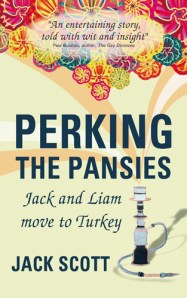
A decade into the 21st century along comes Jack Scott, a gay middle-aged man, who has bravely taken early retirement, daringly chosen to share his day-to-day experiences of life with thousands online in his blog, ‘Perking The Pansies’, and has now written a book with the same title.

No big deal, you may think; it’s been done already. So what? But this man, his blog and his book are more than a little different: Jack Scott lives in a predominantly Muslim country.

Not content to live in the accepting social scene of cosmopolitan London, he and his husband Liam have chosen to come and live in southwest Turkey, a decision that not only subjected them to scrutiny from the Turkish community but also to the watchful eyes of the burgeoning expat community, many of whom he describes with delicious vitriol and cutting humour. With the forthcoming publication of his book, Perking the Pansies, his lifestyle choices and intimate details of his everyday life will be open for inspection by the rest of the world.

Ask a cross-section of Turkish people, especially down here on the coast, and they will tell you that Gayness is a western problem (read ‘disease’) and doesn’t exist in Turkey. It is also generally accepted (as in so many other countries and institutions throughout the world) that the only homosexual in an active relationship between two men is the one who ‘receives’. The ‘giver’s’ behaviour is not deemed to be remarkable at all: after all they are just members of the notorious ‘any hole’s a goal’ club.

So how does a sexually repressed and quintessentially macho society relate to two men living together in marital harmony?

Ten years ago many ‘straight’ British men on holiday in Turkey expressed their shock when witnessing Turkish men’s tactile behaviour with each other: holding hands, casually draping their arms around their friends’ shoulders, resting a hand on a friend’s knee – and leaving it there.

Any physical contact between men, to most Brits, smacked of homoerotica and to their suspicious homophobic minds meant that these demonstrative men were either gay or, even worse, indiscriminate in their sexual preferences – after all even married men were seen to be doing it.

When a gay (and famous) ‘artist’ came along to a local restaurant popular with tourists at the end of the 1990s and, decked in veils and with his heavily kohled come-hither eyes, danced in the most superbly, sensual way imaginable (Turkish men, whatever their shape, age or sexual orientation are generally wonderful dancers), complaints from tourists of both genders: the decadence, indecency of it was evidently traumatising for the average Daily Mail reader and their children. Homophobia is by no means the sole preserve of conservative Brits.

Talk with any heterosexual, bi or gay western man who is open enough to speak about his gender identity and sufficiently emotionally intelligent and aware to question his own sexual vulnerability and he will often say that the rules of oriental societies are blurred to the point where they no longer know what the rules actually are even though they are sure they exist – yet Jack Scott made an active choice to leave the UK and come and live in such an inscrutable society with his partner, Liam.

Scott attempts an explanation: it was economically more viable for the couple to live in Turkey, having taken early retirement? ‘Bill’ the name given by Jack and Liam to their computerised accounting system would suggest that this is no longer the case. Times are hard for all expats living on the dwindling interest realised on their investments.

Sunshine and wonderful summers would seem another good reason perhaps, but as Scott illustrates the winters are cold, wet and frequently miserable and the summers are scorching. For people attempting to get on with their lives, rather than holidaying, the climate is not so kind.

Turkish society maybe provides an answer? It is certainly hospitable and charming on the outside. But as they discover following a murder, it has a dark homophobic underbelly, exacerbated by violent sexual acts (the man’s body reveals evidence of rape), and subsequently a few people warn the couple that views are hardening against gayitude. There is also the disadvantage of a cumbersome bureaucracy, slow, opaque and frustrating for those used to transparency.

No, it seems that, like so many other visitors to Turkey, these two men simply fell in love with the country and all that that entails. They sell up and move out but with a proviso that should the experiment fail they would return to the UK.

There again, many make that choice, for a variety of reasons, but all too often when the dream has turned into a nightmare they no longer have the wherewithal to return and are stuck, full of loathing. Scott pulls no punches when meeting such people and it is a warning to all to beware of becoming nothing more than negative whingers.

Scott’s crisp little portraits are of embittered British expats and Chrissie and Bernard are Jack’s archetypal poisonous couple. They epitomise the expat horror and the storyline would be poorer without them. Clement, a beautifully portrayed old queen, on the other hand, antediluvian and bigoted as his views are, at least has an underlying love of his adoptive country to redeem him and as an aspiring Emiköy, tries to make the most of his chances. His delight in muscle bound rough Turkish men obviously has more than a little to do with his move to the country. We are left wondering whether he will survive. (Opportunity for another book, Scott?).

Scott wields a vicious and occasionally cruel pen when describing these characters but the vignettes are unrelentingly accurate. Will these people recognise themselves? Only time will tell. Emigreys are self-explanatory and although the term may or may not be an original soubriquet, we all know a few.

VOMITS (Victims Of Men In Turkey) on the other hand are a breed of their own and Scott makes use of several in the narrative although mostly at their own expense. But to be fair, his colourful descriptive prose also illustrates some less dysfunctional characters with charm and wit and no little pathos. The couple, Charlotte and Alan for example, who adopt a baby, are a case in point and as their experiences unfold the book takes on a much more serious slant.

Indeed, there is a shift from the smug, pink and fluffy style in the opening chapters, reminiscent of Scott’s blog, to a much more considered narrative in the middle and remaining chapters. As the plot develops (there is one, although this isn’t apparent at the beginning), the personalities of Jack, Liam and the other main characters in the book are sensitively expanded and much more realistic and sympathetic. The quips and bad gay-boy jokes become less frequent and the content takes on a serious exploration of what life really is like for all foreign expats and many Turks too.

Jack and Liam for the most part have a pragmatic and relaxed attitude towards their adopted country and its attitudes and appear to relish every aspect of its culture apart from the two episodes already described.

If the beautiful happy baby Adalet (Turkish for Justice) is a metaphor for the tender love that dared not speak its name until relatively recently in Britain and even now in Turkey, then it would appear that Jack and Liam should be more than a little cautious; and only come out of their Bodrum closet in the guise of cousins, as they chose to describe themselves towards the end of the book. Their future here in Turkey could be perilous but then again with Turkey you never really know – and that is one of its many joys.

Perking The Pansies can and should be read for a number of reasons and not just seen as a book for the gay niche market. It revels in some of the more obnoxious aspects of expats who buy into a country but not the culture (not Jack and Liam; although not completely innocent they do at least make an attempt to learn the language and customs.) Finally, for anyone who is not part of either minority group, it is simply a good read and hopefully the first of many by new boy on the block, Jack Scott.

Jane Akatay, journalist

Blighted Blighty

Blighted Blighty


I received a witty email from Blighty life friend, Ian. No, that’s not him in the photo. As youngish singletons, he and I cruised across Europe and beyond, seeking high jinks and low frolics. Amsterdam, Paris, Gran Canaria, Sitges, Istanbul, Croydon – nowhere was safe. These days we’re both hitched and respectable pillars of the community.

Ian wrote:

Hope all’s well in your world and you are gearing up for an uneventful Brit visit. It’s relentless doom and gloom here, of course, with a daily update of Angela Merkel’s hair-do on the News and Cameron getting redder and redder as the weeks pass. The British media are loving exploring all the Doomsday scenarios, obviously. Still, Harry from Mcfly is still in Strictly so there’s something to swoon over as we all sink into the abyss. Hope your launch is massive. The Champoo is on you!

Strictly Coming Dancing, the opium of the masses. Good old Auntie Beeb. Harry is rather fetching, though. He’d certainly keep my mind off the overdraft.

Check out my book

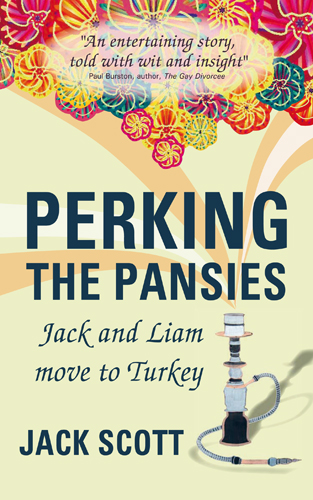
Perking the Pansies – Jack and Liam move to Turkey

Marriage Equality in Argentina

Argentina, the land of silver and the smouldering tango, has come a long way since the dark days of deified bottle-blonds, military juntas and bankruptcy (wasn’t Madonna shocking in Evita?). The country is a rising star, economically and socially. Progressive liberalism has taken root and social attitudes are being transformed. Argentina was the first country in South America to adopt full marriage equality for lesbian and gay people.

The equalities campaign was boosted by a clever and slick video campaign with a simple message of fairness. A sterling effort all round. Maybe Buenos Aries should be the next stop on our pansy trail? A breath of fresh air.

Check out my book

Perking the Pansies – Jack and Liam move to Turkey

Prowler Stocks Perking the Pansies

Prowler WindowOn the day Perking the Pansies, hit the presses, I found out that Joe Storey-Scott, the Book & Film Buyer for Millivres Prowler Group, contacted my publisher, Jo Parfitt. Prowler is Blighty’s premiere gay lifestyle chain with outlets in Brighton and on London’s Brewer Street, Soho. Joe has agreed to stock the book. Wow. Thank you, Joe.

Check out the book

High Five Cs

While Nurse Liam is in Londra doing his Florence Nightingale gig, he frets that I’m wasting away on a liquid diet. There’s a lot to waste away these days. I could do with dropping a few pounds around the midriff. Nevertheless, he has a point. My culinary talents would never get me on Masterchef. When I was a young gay boy about town I considered my function in life to be purely decorative. That worked extremely well until I reached about thirty when the looks began to fade. After that I had to learn some proper life skills that would keep, and not just attract, a partner. These days, I’m quite handy about the house. I can scrub better than the best char in town. Sadly, the kitchen has remained a bridge too far. This may explain my life mantra – the 5Cs. This isn’t an indication of bog-standard IQ, but the formula I’ve applied to assess relationship potential. What are the 5Cs? I thought you’d never ask.

Cook – I know good food when I eat it.

Conversation – A brain and an opinion worth hearing.

Car (or the ability to drive) – Another skill I’ve never mastered.

Cuddles – I’m a romantic old sod.

And the last C? Well, I’ll leave that to your filthy imagination.

What’s your formula?

Check out my new book:

Perking the Pansies – Jack and Liam move to Turkey

Stonewall’s Bigot of the Year

Gay marriage is a hot topic across the pond, particularly since the State of New York legalised it in July. The noisy vitriol from the opponents is depressingly predictable. In the end, I hope reason will triumph over ignorance. Meanwhile, over in Blighty, Stonewall recently awarded Melanie Phillips the Bigot of the Year Award. It’s much deserved. Ms Phillips is a columnist for the Daily Mail (no surprises there) and has written extensively on LGBT rights (they shouldn’t have any), Civil Unions (What next, getting hitched to your budgie?) Gay Marriage (God says no). Perhaps her most ludicrous assertion is:

“Mad as this may seem [you said it!], school children are to be bombarded with homosexual references… In science, they will be directed to ­ animal species such as emperor penguins and sea horses, where the male takes a lead role in raising its young.”

So, let me get this right. All fathers who bring up their children are gay? Does Ms Phillips drink?

In the final analysis, nothing I can say will make much of a difference but this video just might:

Thanks to What’s for Tea Tonight, Dear for the video

You might also like

Gay Marriage in New York

Second Time Around


Polari Literary Salon

I’m really excited to announce that Paul Burston, award winning author, LGBT Editor of Time Out London and one of Blighty’s leading commentators on LGBT life, has invited me to speak at the Polari Literary Salon in February. Paul created Polari to showcase new gay and lesbian writers. Since its launch in 2007, Polari has established an enviable reputation as a centre of excellence for promoting new talent. I’ll be reading passages from the book and taking questions. I’m completely terrified. Paul assures me it’s a warm and easy crowd. I will have to dig deep into my past to resurrect the orator in me. I’ll be trolling down to Soho to ask the literati omis, palones and palone-omis to vada my bona book*. I hope this pansy will still be perking by the end of it. What shall I wear?

*For a quick lesson in Polari slang check out Trolling on the Net.

You might also like:

Publish and Be Damned

The Dorothy Dollar and Pink Pound

Under the Tuscan Sun

Under the Tuscan Sun

With Liam back in Blighty, I’m making do. Our Turkish neighbour, Bubbly Beril, knocked on the door and shoved a DVD in my hands.

Under the Tuscan Sun

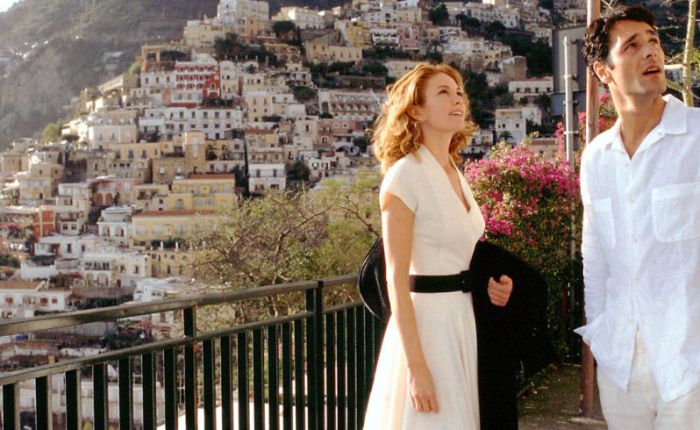
Based loosely on a true story, Under the Tuscan Sun is the tale of an American woman whose marriage collapses around her. She emerges from deep despair and paralysing sense of failure by making a new life in Tuscany, all by chance. It’s a sentimental, sugar coated yarn of love lost and a life regained. Boo to the nasty man who dumped her and hurrah for the cast of colourful characters who pick her up, dust her down and help her start all over again. I cried like a child.

Of course, life isn’t really like a movie. Not everyone’s that nice. The female flotsam washing up on our shores seeking comfort in the arms of a Turk are mostly onto a hiding to nothing. It can work but the odds are stacked against it. For me, the most significant part of the film was that the Yankee expat first arrived in Italy on a Tuscan gay tour.  Beril had picked up the subplot. She was saying, ‘I know and I don’t mind.’

Trolling on the Net

Fellow blogger, Yankee Garrett at A Change of Underwear commented on my post about expat forums and some of the strange people that lurk within. He tells me that the word trolling is now used to describe the mean business of writing nasty online comments. Funny, in my day trolling meant something completely different – cruising (in the picking up loose men sense, not mucking about on silly boats sense). This was part of a whole lexicon of slang words that formed something called Polari (from the Italian palare – to talk). Polari was used in Britain by sinners on the social margins – actors (when acting was considered little better than whoring), circus and fairground showmen, criminals, prostitutes, and, up to the early seventies, gay people. We deviants have always kept the best company. Back when you couldn’t get a word out of the love that dares not speak its name because of the threat of a stiff prison sentence, Polari slang was a safe and secret form of communication. It has a delicious vocabulary of wonderfully ripe terms. Here are a few of the ones I just love:

Basket (a man’s bulge through clothes); bibi (bisexual); bona (good); bona nochy (a good night); bungery (pub); buvare (a drink); camp (effeminate); carts (willy); chicken (young man); cottage (a public loo used for jollies); dilly boy (rent boy); dish (bum); eek (face); handbag (money); jubes (tits); khazi (loo); lallies (legs); mince (walk); naff (nasty); national handbag (dole); omi (man) omi-palone (camp queen); plate (blow job); palone (woman); palone-omi (lesbian); remould (sex change); riah (hair) rough trade (working class sex); slap (makeup); todd (alone); tootsie trade (sex between two passive partners); trade (sex); troll (to walk about looking for trade): vada (see).

The use of Polari began to wane when society loosened up and male gay sex was de-criminalised in 1967 (interestingly, lesbianism was never a crime). However, before it was finally consigned to the social history books, Polari had one last glorious hurrah. Round the Horne was a popular BBC radio show from 1965 to 1968 and featured short sketches called Julian and Sandy. The high camp comedy was liberally sprinkled with Polari and wicked double entendre, ultra risqué for those buttoned up days. Julian was played by Kenneth Williams and Sandy by Hugh Paddick. The back story here is that the supremely talented Kenneth always struggled with his sexuality and lived an embittered almost monastic existence, whereas jobbing thespian Hugh lived a happy homosexual life with his partner for thirty years. Sadly, both Kenneth and Hugh are now in bona heaven.

A few Polari words such as naff, camp and slap have entered modern parlance. If by chance I walk past you and remark, ‘vada the bona dish’, take it as a complement. And I absolutely love the thought of right wing ranters trolling the internet. I hope they use a wipe-down webcam; forgive them, they know not what they do. The word Polari itself lives on at the Polari Literary Salon launched by Paul Burston (Gay Editor of Time Out London), a brilliant showcase for new gay and lesbian writers.