The Great British High Street

Congratulations to Norwich Lanes for being awarded first place in the City Category of the Great British High Street Competition. Sadly, Belly Button, the shop I used in my original post is no longer trading – a victim of hard times, perhaps. I should have checked first. Consider my busy wrist well and truly slapped.

Jack Scott's avatarPerking the Pansies

High_StreetNorwich Lanes, a hotchpotch of mostly medieval streets and alleys and home to over 300 independent retailers, cafés and bars, has been nominated for the Great British High Street Awards 2014. Let’s face it, these days, the British high street needs all the help it can get to survive the relentless onslaught of samey out of town retail parks and the likes of Amazon. So far, the Lanes have managed to buck the depressing trend and are holding their own by offering something unique and quirky to please the punters. Well, who wouldn’t love a shop called Belly Button? So if you’re an East Anglian (and even if you’re not), why not show a little support? Visit the Norwich Lanes website for more info.
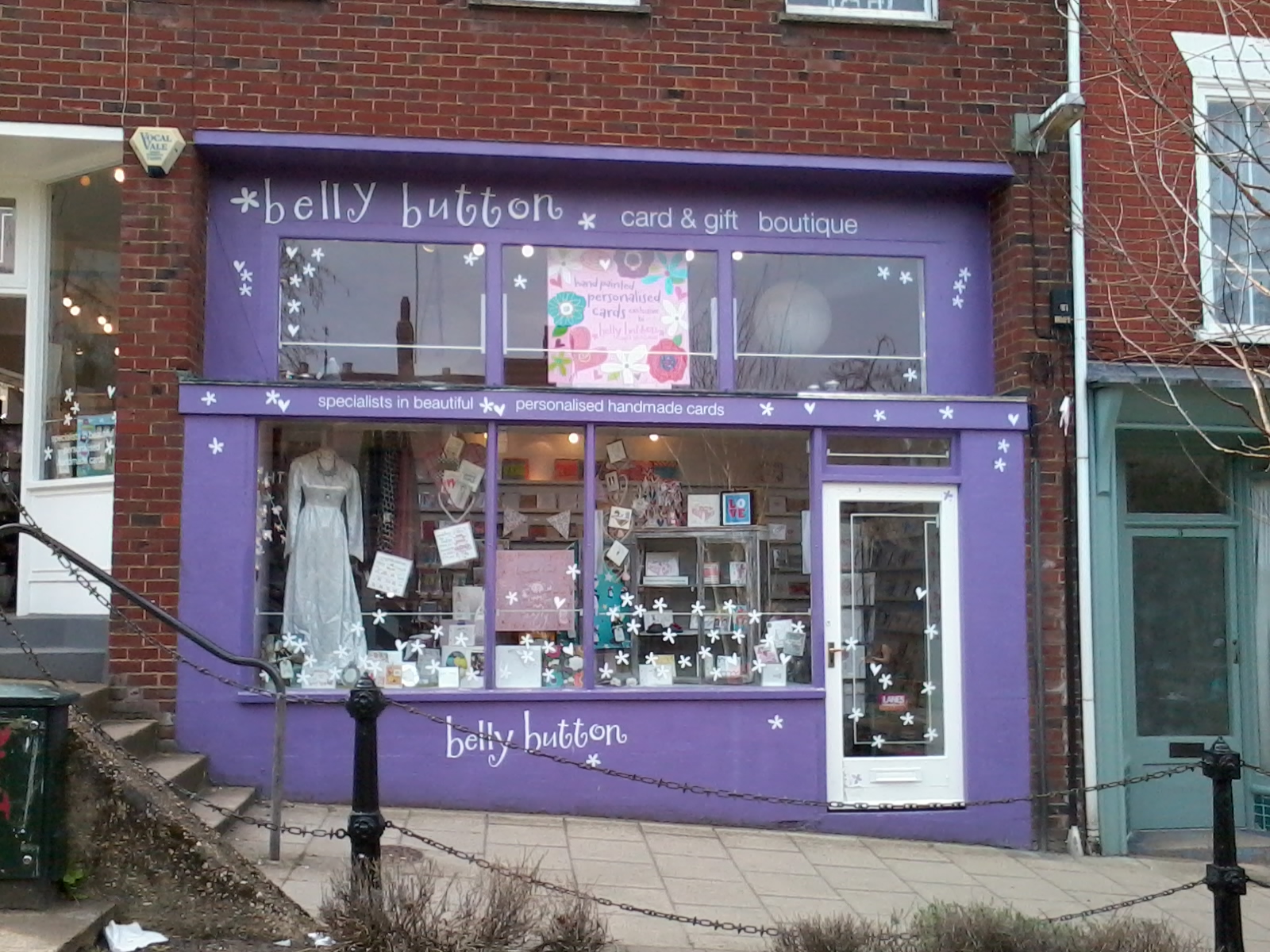
Belly Button

View original post

The Great British High Street

High_StreetNorwich Lanes, a hotchpotch of mostly medieval streets and alleys and home to over 300 independent retailers, cafés and bars, has been nominated for the Great British High Street Awards 2014. Let’s face it, these days, the British high street needs all the help it can get to survive the relentless onslaught of samey out of town retail parks and the likes of Amazon. So far, the Lanes have managed to buck the depressing trend and are holding their own by offering something unique and quirky to please the punters. Well, who wouldn’t love a shop called Belly Button? So if you’re an East Anglian (and even if you’re not), why not show a little support? Visit the Norwich Lanes website for more info.

Belly Button

Goat Herder Required, Apply Within

House-sitting and house-swapping are fantastic low cost ways of getting to stay in some amazing places. We have old friends in Turkey who live in…

…Gökcebel, a sprawling village in the foothills above Yalıkavak. Their impressive detached pile is surrounded on all sides by a well-manicured walled garden and patrolled by a trio of cats brought in from the bins. Just like its owners, the house is elegant, unpretentious and homely.*

They often exchange their village homestead for ruritanian French gites and posh Californian condos. All they ask (along with the place not being trashed, obviously) is that their soporific cats are fed and watered. Easy.

Now we’re in our new gaff, we might get in on the act. There must be people out there who wouldn’t mind laying their hat in a well-appointed micro-garret with all mod-cons minutes away from the delights of Norwich and her embarrassment of riches. Ours is a lock-up-and-leave loft, small but beautifully formed (like me). All we’d ask is that guests turn the lights out as they leave. I guess we’d have to hide the dressing-up box and battery-operated play things. Or maybe not.


Needham Place

Sometimes, this care-taking lark can be a tad more challenging. Take, for example, the menagerie owners in Hockwold cum Wilton (yes, that is a genuine place) who pretty much need a qualified zoo keeper to look after their duo of dairy goats (Simone and Ashia), a pack of terriers (Monty, Blossom, Scarlett and Sanya), a clutter of cats (Jarvis and KC), a brace of drakes (Flappy and Ballerina), a nest of guinea pigs (Hearty and Chubby), a clutch of  chickens (including randy roosters) and a small shoal of goldfish. Sounds a bit too much like work experience at Whipsnade for my liking and besides, I’d be terrified of killing something. Still, there are no shortage of goat-herders applying for the busman’s holiday. They’re fully booked.

Thanks to Roving Jay for the heads up on this one.

*From Turkey Street, Jack and Liam’s Bodrum Tales out soon.

Who Ate All the Pies?

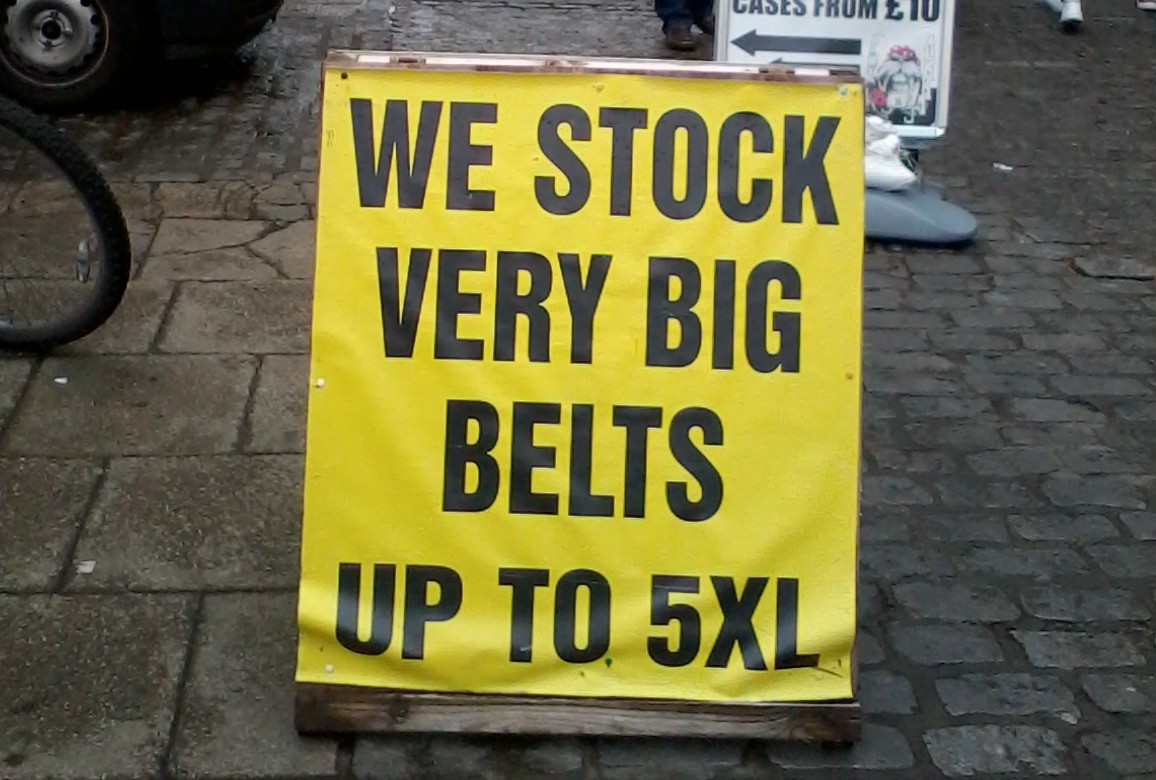
Big Belts in Norwich MarketEast Anglia is England’s breadbasket, a land of milk and honey, a cornucopia of plenty. From crab to duck, sugar, saffron and samphire, poultry and pigs, mustard to mint, wheat, barley and acres and acres of rapeseed that in spring turn the patchwork of fields an iridescent yellow, the flatlands provide some of the most abundant land on Earth. But you can have too much of a good thing. Back in the day, being fat was a sign of wealth and health. Skinny was the fashion of those at the bottom of the social heap, a consequence not a choice. But now, the flatlands are the fatlands; fat is the new thin.

Who am I to talk? Now I’ve reached my midriff years, I’m no longer that skinny little waif whose 26 inch waist played to packed houses in the late Seventies. Yes, my middle age spread is, well, spreading. But I’m talking about carbon hoof prints of heffer proportions and they’re attached to people half my age. It ain’t clever and it ain’t pretty. So, my fellow East Angles, if you want to outlive your parents, it’s time to go easy on the pies and the fries.

Normal for Norfolk

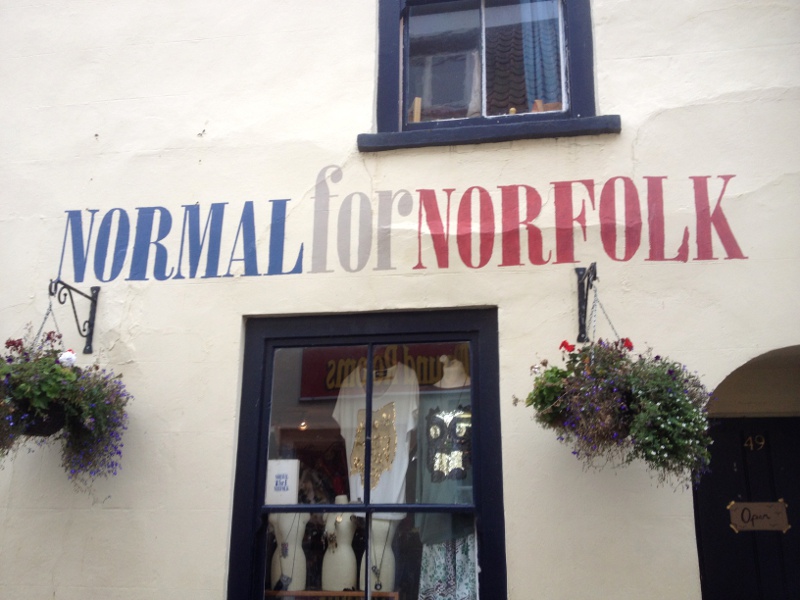
N4N1As a recent interloper to this green and pleasant corner of England, it’s not for me to suggest that the north folk of Norfolk are less blessed in the old grey matter than those in other parts of this sceptre’d isle. Those in a better position to judge such things tell me that a long history of cousin-shagging has indeed narrowed the gene pool. So this isn’t just a malicious rural myth spread by the smug metropolitan elite. It seems there was little else to do during the cold and dark winter months before the advent of commercial TV and Super Mario, not even a brass band or a male-voice choir. Even today, whenever a local yokel says or does something, well, a bit village idiot, there’s a time-honoured, well-worn phrase that trips of the lips of the spectators to the fall. With arms folded they mutter with a casual shrug, “normal for Norfolk.”  This might also explain the popularity of the UK Independence Party.

Other references to the N4N phenomenon (as it’s abbreviated on medical files – I kid you not) can be found on the Urban Dictionary and Literary Norfolk.

Closed for 2014

A sunny spring day saw us on the top floor of a double decker cruising cross-country past gilded fields of rapeseed. We were on our way to Loddon, a picture postcard market town of 2,500 souls, ten miles outside Norwich at the headwaters of the Norfolk Broads on the River Chet. We had a taste for a speciality brew and a clotted cream fancy in the Vintage Tea Rooms at the eighteenth century mill, quite the thing to do in these parts. Neat and tidy Loddon is stuffed with quaint little Georgian and Victorian buildings lining its gently winding high street and is dominated by the fifteenth century Holy Trinity Church set in a sea of tombstones. The town also features the smallest fire station I’ve ever seen with room for just a single truck  and no fireman’s pole to slide down.

We made it to the Vintage Tea Rooms, only to find it locked up with the following message:

“Closed for 2014”

We got the bus back to Norwich and went to the pub instead. Every cloud…

When in Rome

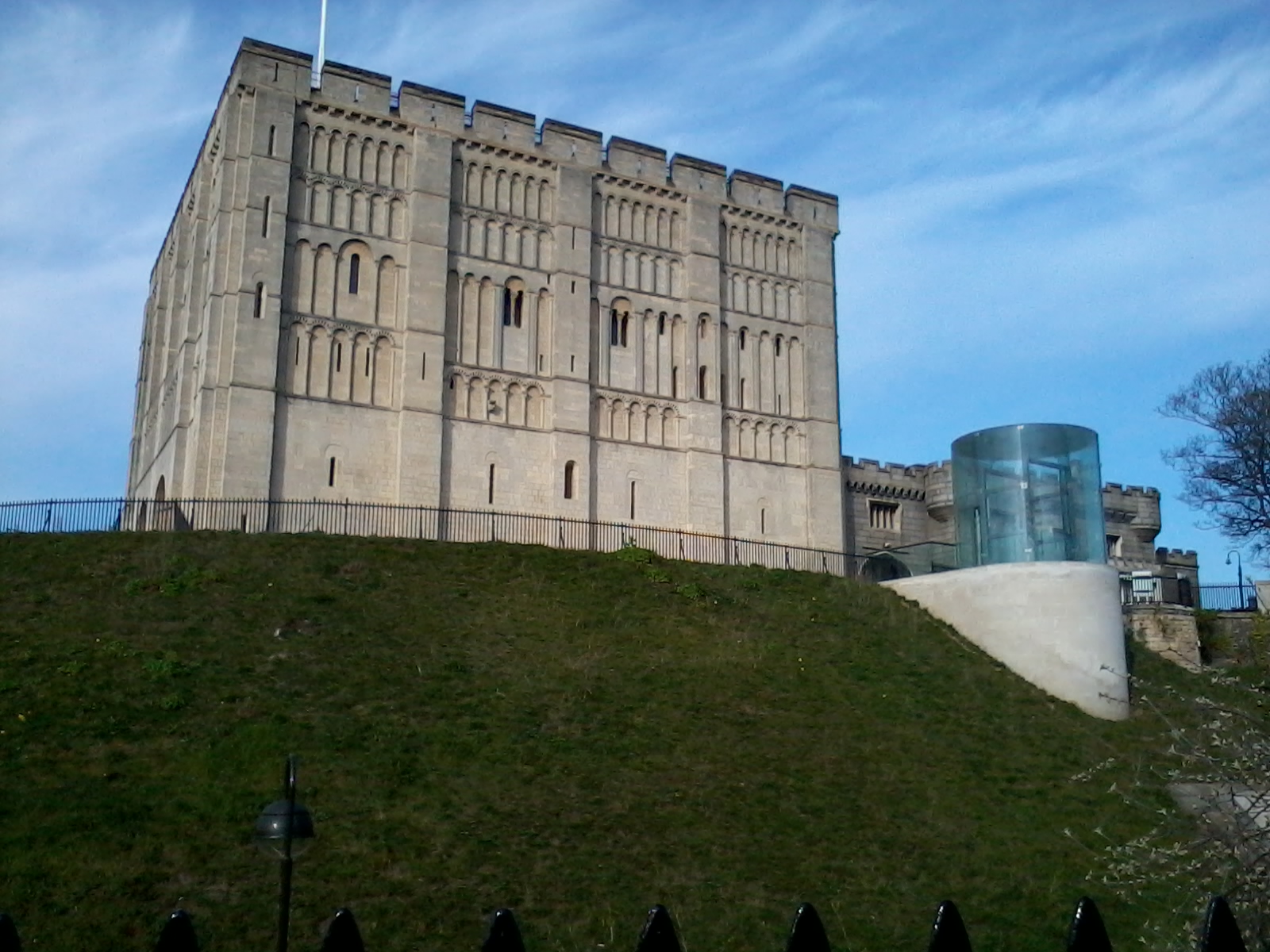
The great castle keep of Norwich dominates the city’s skyline. At first sight, it looks too twee to be authentic, its walls too sharp, its stonework too clean and its decoration too untroubled by the march of time. No wonder Liam and I assumed it to be a folly, a romantic Victorian nod to a more chivalrous age (if such a thing ever existed). As it happens, we were entirely wrong. While most of the sprawling castle has disappeared, the old keep and its handsome white Caen limestone walls have endured for almost 900 years. Its conversion from a royal palace to the county gaol in the 14th Century ensured its survival. The hanging, flogging and incarceration continued with great gusto for 500 years until the building opened as a museum in 1894. There’s a lesson there for us all: adapt to survive. Norwich Castle Keep I’d passed around the keep many times but had never bothered to pop in for a gander. That was until a new exhibition caught my eye – Roman Empire: Power and People – a British Museum tour. While the show didn’t quite match up to the scale and glory of the Ephesus Archaeological Museum in Selcuk (one of the highlights of our Turkey years) it was a beautifully formed diversion for a couple of hours on a crisp sunny day.

The remainder of the museum is given over to an assortment of galleries mostly dedicated to local history (Boudicca, Anglo-Saxon and Viking East Anglia, prison life). There’s even a small Egyptian gallery with its very own mummy (the excuse being that Howard Carter of King Tut fame grew up in nearby Swaffham). And only in England would you find a gallery dedicated to teapots – all 3000 of them. Sadly, the Teapot Gallery was closed (for a tea break, presumably). Generally, the exhibits had a school field trip about them. Oh to be twelve again. The keep itself is impressive and certainly wowed Liam. The Victorian renovators removed the cell blocks to open up the building’s shell and installed a galleried balcony at the level of the original Norman floor. Two massive arches support the roof. The ‘new’ look gives a real sense of the scale, something intended to send a powerful message to the defeated and downtrodden Anglo-Saxons in their tiny thatched hovels. The nasty Normans were saying, “We’re in charge and don’t forget it.” These days, aircraft carriers convey the same message.

Enhanced by Zemanta

Norwich-Over-The-Water

Norwich-Over-The-Water

After 20 months, we finally closed the door on the Weaver’s Cottage and left the old parish of Norwich-Over-The-Water. It was a sad parting but bricks and mortar are just that, even when they’re 370 years old and located in the oldest ward in town. In any case, we shall return. Our new gaff (my 18th home since I dropped) is less than a mile across the city on the other side of the water. We fully intend to re-visit our old haunts every now and then and wallow in the exuberance and pretentiousness of Norwich arty types (also known as a few pints on a warm summer’s evening at the Playhouse Theatre bar).

There’s something a little bit special about Norwich-Over-The-Water. It’s reckoned by those in the know to be the site of the original Saxon (or rather Anglish) settlement called Westwic. According to the Anglo-Saxon Chronicle, wood-pannelled Westwic was torched in 1004 by the deliciously named Sweyn Forkbeard, King of the Danes. Clearly there was something rotten in the State of Denmark, to misquote the Bard. However, the doughty arsonist’s marauding hit the right spot and he later became the first Danish king of England and introduced flat-packed furniture to a world-wide audience. Okay, I made that last bit up.

Fast forward to medieval times and Norwich-Over-The-Water welcomed Huguenot, Walloon and Flemish refugees from the near continent, fleeing religious persecution from the dastardly French and Spanish. The immigrants became known as “The Strangers” and eventually made up a third of the city’s population. Apparently, the mighty flood of immigrants caused very little resentment at the time. Far from packing out the workhouses and stealing the jobs of the local farmhands, the highly skilled expats from the Low Countries bolstered trade with mainland Europe and helped make Norwich rich. Stick that in your pipe and smoke it, Nigel Farage and your UKIP xenophobic swivel-eyed loons.

So, I give you a little tour of Norwich-Over-The-Water from the comfort of your own sofa:

Enhanced by Zemanta

Oi Speak Narrfuk Oi Do

Anyone living on these damp little islands and anyone who visits them knows that Britain is a nation of a thousand and one accents and dialects. Homespun and imported lingo twists and turns through town and county. We may live in a global village and in a mass media world where ‘Globalish’ (the cut-down version of English-light) dominates, but that hasn’t stopped many regional accents kicking against the tide. In many cases, they are thriving. English in all its variants is constantly evolving and because the language is such a magpie, words are being dropped and added, borrowed and adapted, created and extended all the time. Our cousins across the Pond might be forgiven for thinking that there are only two English accents: posh and Cockney. But even those stereotypes are changing. These days, only the Queen speaks like the Queen and the word on the street, the inner city London street, is a marvellous infusion of words, phrases and pronunciations from right across the world. Quite different from an Eastenders episode.

Unfortunately, many English dialects are truly indecipherable to an untrained ear. Pity the poor foreigner, jumping into a cab at East Midlands International Airport to be greeted by:

“Ayup me duck.”

The thick Norfolk accent, aptly named “Broad Norfolk” is no less difficult to fathom and notoriously difficult to imitate. Norwich may only be 115 miles from central London but that’s far enough away for Broad Norfolk to survive the onslaught of the insipid Estuary English, the dominant accent of southeast England (and the one Liam and I speak). There’s even an organisation, the Friends of Norfolk Dialect (FOND) which is…

…dedicated to conserving and recording Norfolk’s priceless linguistic and cultural heritage, thus keeping ‘Broad Norfolk’ alive.

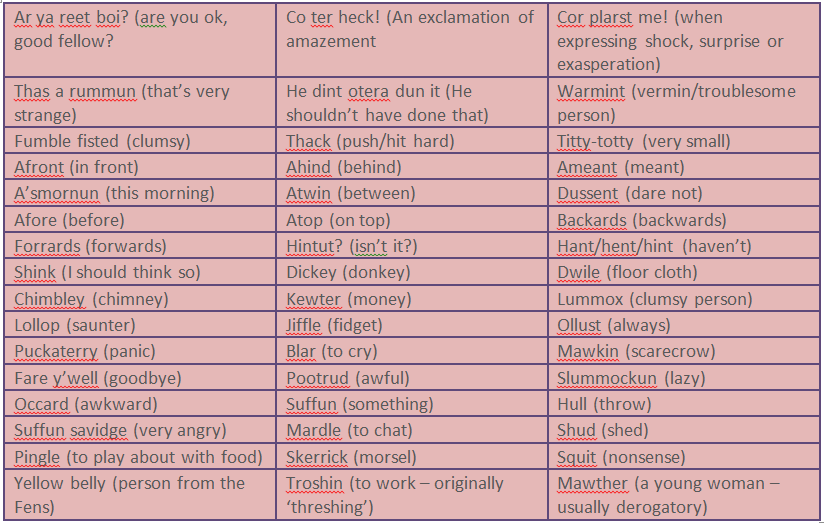
Broad Naarfuk is rich in local words and phrases, some of them variants on standard English, others completely unique. A year in and Liam and I are only just beginning to look a little less baffled. Here’s a few to give you a titty-totty taste:

Norfolk_Words

Want to know how all of this sounds? Take a look at this. I’ll be testing you later.


Only in Norwich

Only in Norwich

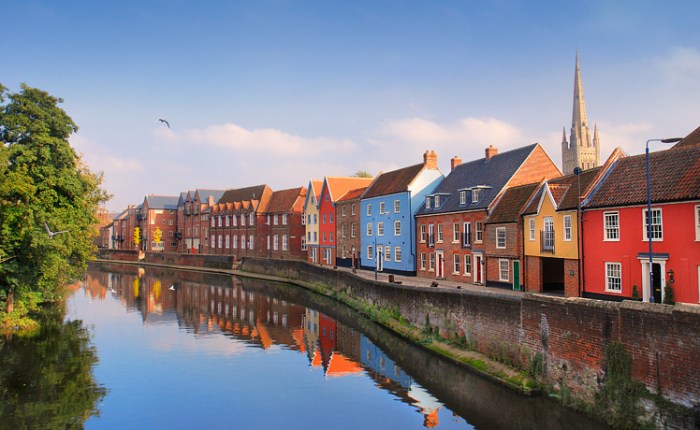
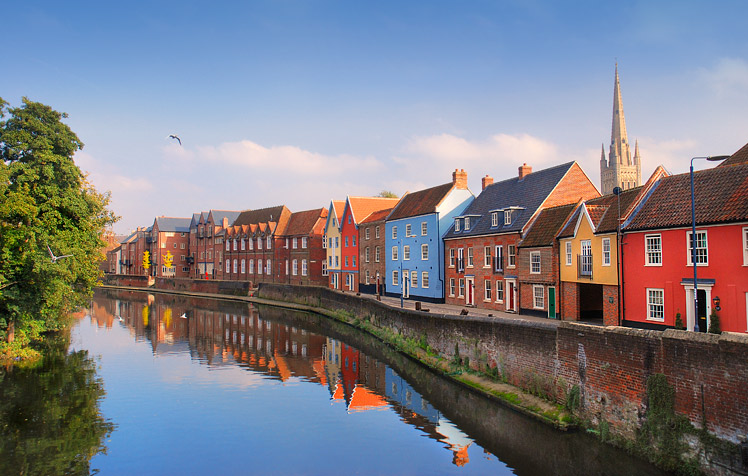
RiverWensum

Image courtesy of Daniel Tink at Scenicnorfolk

Liam answered the door of our old weaver’s cottage to a little middle-aged man wearing a bucket hat, wax jacket and supermarket denim. “Sorry to disturb ya, mate,” he said, “Been visitin’ me old girl (at the adjacent granny flats) and I’m goin’ fishin’ later but I forgot me worms. Can I dig some outta ya flower bed? Won’t make a mess, promise.” At the time I was enjoying a cuppa and thumbing through a copy of our local rag, the Eastern Daily Press (the most popular morning regional newspaper in the country, apparently). The front page headline was:

“Farmer Killed by Bull”

Only in Norwich.