Now That’s What I Call Really Old

Göbekli TepeThis blogging lark is a bit of a hit and miss affair. Who knows the right formula to blast a post into orbit and keep it there? Certainly not me. My random musings about the life of a washed-up ex-pretty boy are small fry when compared to the big fish in the overcrowded blogpond. I’m astounded that anyone’s still listening.

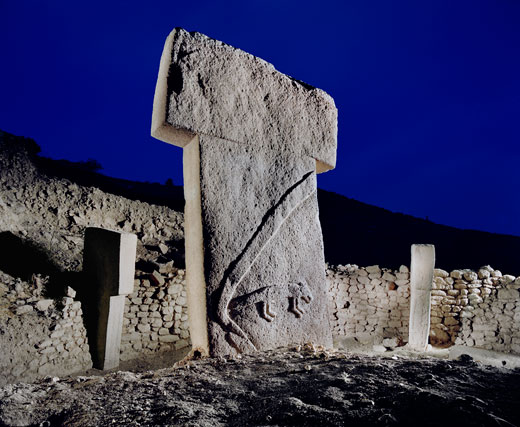
At the end of 2011, I published a post about the ancient ruins of Göbekli Tepe in eastern Turkey. Now That’s What I Call Old was a throwaway, humble little post of about seventy words, and hardly did justice to the age and significance of the enigmatic ruins. Little did I know it would be the post that keeps on giving while the archaeologists keep on digging*  – 12,000 hits and rising. One hit for every year of Göbekli Tepe’s estimated existence. There’s a poetic symmetry to that, don’t you think?

*I suspect, for the moment, the trowels have been put away while the murderous chess game is played out just across the border.

I Could Murder a Pint

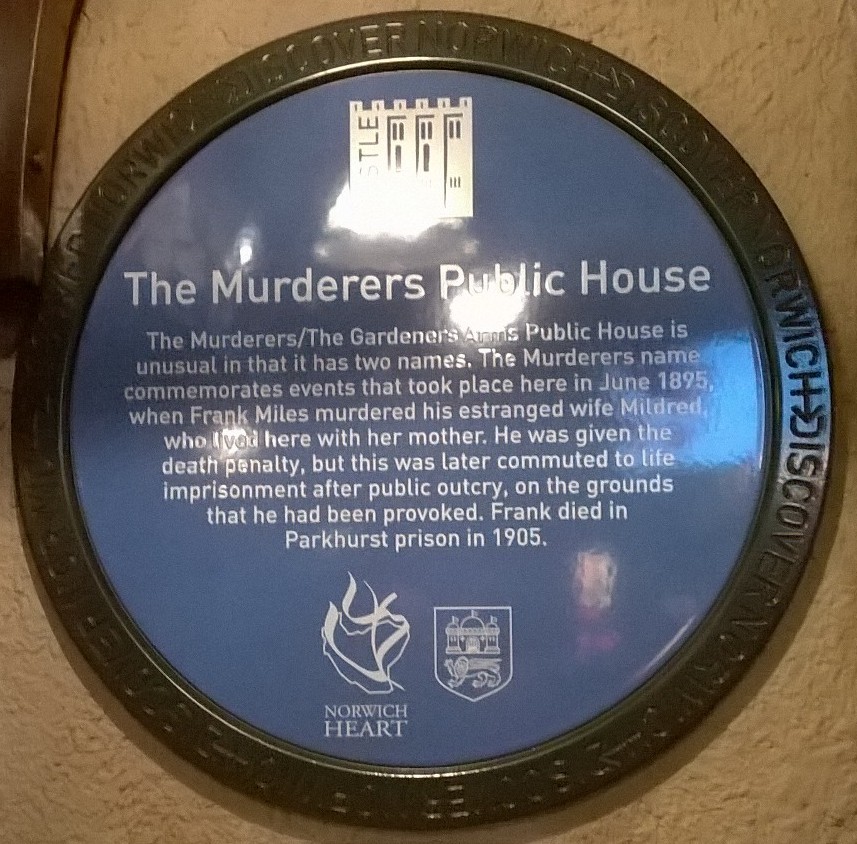
The Murderers Public HouseNorwich is blessed with a wealth of hostelries to quench the thirst and chew the cud, but few are as famous as the Gardener’s Arms on Timberhill, one of the last family-owned pubs in the city. Partly dating back to the Seventeenth Century, the traditional ale house is stuffed with oldee worldee nooks and crannies, knotty oak beams and exposed brickwork. Its fame derives from an infamous past. The Gardener’s Arms might be the pub’s licensed name but, for years, it’s been known locally as the Murderers. Why? Because after closing time one late night in 1895, Frank Miles battered his estranged wife with a hammer and left poor Mildred for dead. Handy Frankie should have swung for his dastardly deed but the case attracted huge public sympathy and his death sentence was commuted to life imprisonment. What had the luckless Millie done to deserve such a sticky end? Apparently, she was seen with another fella. Oh, that’s alright then.

Murderer's Pub

Pith, Path and Poof

Anyone growing up in Seventies Britain will remember that the word ‘poof’ was the insult of choice for red-blooded males in their crotch-hugging loon pants, polyester tank tops, bouffant hairdos and BO. The abuse was often accompanied by a teapot impersonation. Oh, how I laughed. These days the word seems quaintly old-fashioned and has been (almost) consigned to history along with flock wallpaper, velour three-piece suites, fondue sets, beige teasmades with corn motifs and the curly perm.

Poof

I’ve often wondered about the origin of the word. A quick Google reveals a variety of explanations from a suitably camp French headdress to some fanciful tale about the sound of a fart; neither of which rings true to me. Now I think I’ve cracked it. Liam and I were watching ‘The Secrets of the Castle,’ a BBC show about the construction of a medieval fortress employing the building techniques of the day (I know, I know, we ought to get out more). One of the many absorbing details uncovered by the experimental archaeology was the old grading of sandstone into hard (pith), medium (path) and soft (poof). There you have it. Shirt lifters have always been considered a bit soft, never quite man enough to make the grade, butch-wise. Not that this was the case with Billy Moss, a prison officer I once dallied with in the Nineties. One warm summer’s evening we were enjoying a pint outside the Colherne Pub in West London, the grand-daddy of gay bars back in the day. As we supped, a delivery van passed by, stopping at a red light. The tattooed driver shouted over something rather unpleasant. Billy handed me his pint, swaggered over, squared up to the driver and said,

‘Come on then, mate. You want some? And after you can tell yer wife you got beaten up by a big poof.’

While I don’t condone the threat of violence, I must confess that the look of fear on the white van man’s face was a real treat as he hit the gas to make a quick getaway. I wonder where Billy is now?

Exit Through the Gift Shop

As anticipated, our London to Brighton expedition was a booze cruise of Swedish proportions. The main seaside event was supposed to be Elaine Paige in concert at the Brighton Dome courtesy of our London playmates. I say, supposed because Ms Paige cancelled at the last minute. She was laid up with a throat infection – a killer for any singer or porn star – and no amount of gurgling loosened the famous pipes. Elainey may only be a minor deity in the pantheon of demanding divas (not a patch on drunken Judy, mad Barbra or po-faced Madge) but she can bang out a tune better the most and was the definitive Evita. We drowned our sorrows in a cabaret bar that served up warm wine of excruciating awfulness. We drank it anyway.

The next day, the wind powering up the English Channel blew us into the Royal Pavilion. Despite multiple trips to the bright lights of Brighton down the decades, I’d never ventured into the Pavilion before. The pastiche fantasy – styled in onion-domed Disney-Mughal on the outside and lavish Chinoiserie on the inside – was the extravagant pleasure palace-on-sea of serial slut George IV.  Oriental imagery was all the rage during the Regency period and not a penny that Fat George didn’t have was spared. It’s still fabulous but, as I toured the opulent salons, I wondered what the huddled masses made of the folly they had paid for.  Ironically, it’s owned by the council now.

We were rather relieved to leave Brighton in the end. There’s a sadness about the town, something I hadn’t noticed before. I must be getting old.

Catch of the Day

Gumusluk2

My tuppence-worth contribution to Roving Jay’s latest travel book, The Gümüslük Travel Guide, the first of an in-depth series about the Bodrum Peninsula from a lady in the know:

One sultry autumn afternoon, Liam and I rode the dolly to Gümüslük, a pretty picture-postcard village set among the ruins of the ancient Carian city of Myndos. This was a well-trodden excursion for us, a frequent and welcome distraction from bustling Bodrum Town. As a protected archaeological site, Gümüslük had mercifully been saved from the rampant over-development that afflicted much of Bodrum Peninsula.

As we bussed along the meandering heat-cracked road, I imagined how different the scenery must have been before the mad march of little white boxes up hill and down dale. Stunning, I was sure. Nevertheless, the hinterland surrounding Gümüslük still managed to impress; snapshot glimpses of pine-smothered hills and Tiffany blue waters cast a beguiling spell. We arrived at the small otogar perched above the village and meandered down the hill to the rows of craft stalls peddling multi-coloured knick-knacks, eclectic artwork and small pieces of fine silverware. Liam liked to potter, umming and ahhing at each stall and chatting to the hawkers. Sometimes he even bought a trinket or two. Just ahead of us, the glassy harbour gleamed beyond the quay and drew us to the water’s edge. The sheltered anchorage has been a sailors’ safe haven for millennia. This is where Julius Caesar’s chief assassins, Brutus and Cassius, moored their galleys during the ensuing punch-up with Mark Antony, something that even gets a mention in the famous Shakespearian tragedy.

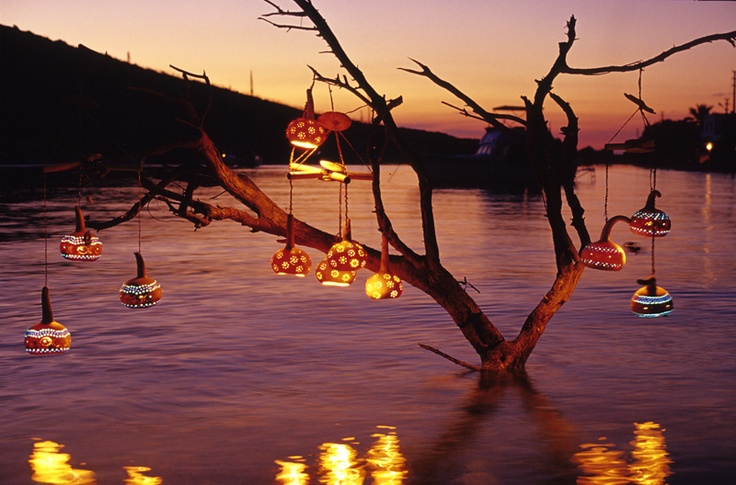
Gumsuluk Travel Guide1A late lunch was on the menu. We’d long since learned to avoid the overpriced identikit fish restaurants with their press-ganging waiters reeling in the catch of the day. As emigreys on a fixed income, we left the fishy eateries that lined the bay to unsuspecting tourists and well-heeled Istanbulers who equated price with quality. Our destination was our favourite low-cost lokanta, a ramshackle kind of place with mismatched furniture and wipe-down table cloths. Dalgiç Restaurant was set off the main drag and served our favourite fast food – freshly prepared gözleme – delicious savoury rolled pastries laced with a tasty selection of meat, cheese or vegetable fillings. Our effervescent patron attended to our needs out front while his pantaloon’d missus rolled, chopped and griddled out back. The flat-bread feast was washed down with a ripe bottle of red, a cut above the ancient Myndoan plonk that was reputably mixed with sea water and caused unending flatulence. Sated, replenished and wine-mellowed, we wandered down to the headland and waded across the partially sunken causeway (submerged by a long forgotten earthquake) to Rabbit Island. Here, as was our tradition, we tumbled over antique stones*, bunny spotted and settled down on a grassy ledge to witness one of the most sublime sunsets the Aegean has on offer.

*Sadly for visitors,  Rabbit Island is off limits to waders due to renewed archaeological interest. Don’t let this put you off. The sunsets are gorgeous from every angle in Gümüslük.

The Last Rolo

Fellow author, David Gee, recently uncovered a dusty old silver screen classic while rummaging around the video vault at the University of East Anglia. ‘Come With Me to Norwich‘ is a 1952 documentary presented by Richard Dimbleby, BBC patrician and father to David and Jonathan. It’s a ghostly narrative of a bygone era full of bulldog optimism set against the rising tide of a new world order. Fast-forwarding to 2014, it’s fascinating to see what’s gone the way of the dodo and what’s survived against the odds. Mid-Twentieth Century Norwich once traded in mustard, money, shoes and chocolate. But where are they now?

Colman’s of Norwich

In 1814, mustard maker, Jeremiah Colman, founded Colman’s of Norwich, four miles south of the city. By 1865 production had transferred to a large factory near the city centre where the firm still produces mustard and mustard-derived products as an operational division of that enormous global conglomerate, Unilever.

Norwich Union

In 1797, merchant and banker, Thomas Bignold, founded the Norwich Union Society for the Insurance of Houses, Stock and Merchandise from Fire. The less than catchy name soon became known simply as Norwich Union. Today, the Footsie 100 company is branded as Aviva and is the sixth largest insurer in the world.

Startrite

It was in 1792 that a cordwainer called James Smith made the first off the peg shoes, shoes that ordinary folk could afford. Unsurprisingly, Jimmy’s big idea caught on. The business evolved into the Startrite brand, manufacturing footwear for rug rats. Startrite is still headquartered in Norwich but manufacturing has been outsourced to India. Fortunately, that wasn’t the end of cordwaining in the city. Van Dal still make half a million pairs of gorgeous heels every year for Norfolk broads, drag queens and cross-dressers everywhere. The times they are still a-changing: Startrite is looking for a deep-pocketed investor and Van Dal is being sold to its employees.

Rowntree-Mackintosh

In 1857, AJ Caley established a chemists business in London Street which evolved into a distiller of mineral water and a chocolatier. As the company grew, it moved to new premises in Chapelfield. The firm was sold off by the Caley family in 1918 and sold on to confectioners, Mackintosh, in 1932. In 1937, the first rolo rolled off the production line. This was soon followed by Munchies and Caramac, brands I have devoured with tooth-rotting regularity ever since being knee-high to a grasshopper. By 1969, Mackintosh had merged with Rowntree to make one of the world’s premier confectioners, but it wasn’t to last. In 1988, Rowntree-Mackintosh was controversially set upon by the Swiss food giant, Nestlé. The hostile takeover resulted in a period of savage cost-cutting. The Chapelfield factory was closed with a loss of over 900 jobs and all production was moved to York. The last rolo rolled off the Chapelfield production line in 1994.

There’s still a Caley’s of Norwich, manufacturer of fairtrade chocolate with an online business based in Hampshire and Caley’s Cocoa Cafe in Norwich’s Guildhall. What connection these businesses have to each other and to the old Caley family is anyone’s guess. Still, the name lives on.

Chapelfield Shopping Centre

The old Rowntree-Mackintosh chocolate factory has given way to the posh Chapelfield Shopping Centre. All that remains of the old industrial buildings are the granite millstones that used to grind the cocoa beans, now re-used as seating for the huddled gangs of smoking pariahs outside the rear entrance to the mall. Rolos have given way to Apple, Munchies to Mango. And so our post-industrial world is kept turning by rampant consumerism, conspicuous spending only interrupted by the occasional Costa coffee. Make mine a cappuccino. With a generous sprinkle of Cadbury’s on top.

Enhanced by Zemanta

There is Turkey and Then There is Bodrum

A few weeks back, I entered another writing competition with the marvellous ‘I Must Be Off!’ travel site. The piece is about Bodrum (naturally) and was adapted from my 2013 e-book ‘Turkey, Surviving the Expats‘. Somehow, my entry has made it to the last seven. Will I fall at the final fence? The competition is stiff so we shall see. Bronze, silver and gold will be announced at the end of the month. I’ve got my fingers crossed for my place on the podium. In the meantime, there’s a Reader’s Choice Award up for grabs too, based on the number of hits and comments. This award is open until the 10th August. Can I trouble you for a hit and a comment on the article itself by clicking on the link below? I thank you.

PtP2 Kindle1Bodrum, Turkey’s San Tropez by Jack Scott

August 2014 Update: Yesterday, I received news that I’d come in first for the Reader’s Choice Award. A massive hand to anyone who took the trouble to visit and comment on the article. Thank you. I’m really chuffed!

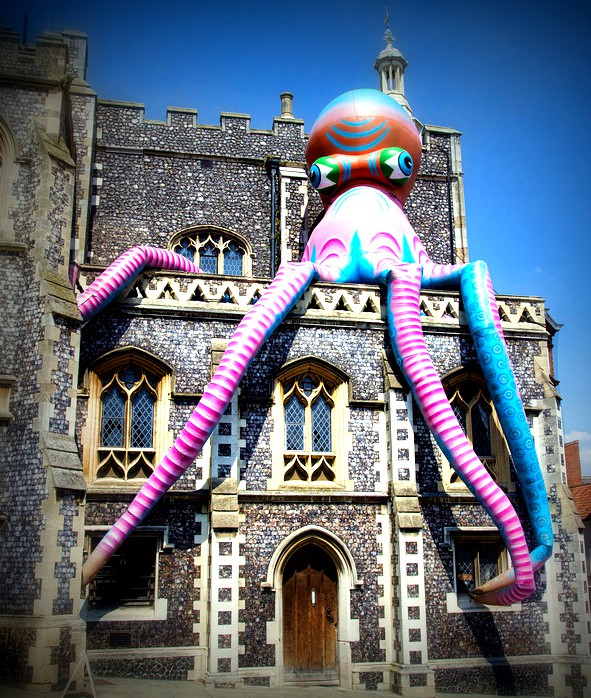
Giant Squid at the Guildhall

Gumusluk Travel Guide

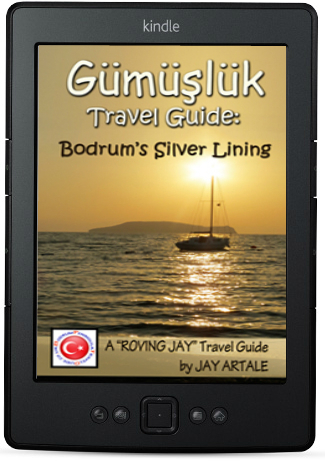
Roll, roll up for your free Kindle copy of the meticulously researched Gümüşlük Travel Guide: Bodrum’s Silver Lining by the incomparable Roving Jay. This one-time offer is available for two days only – the 7th and 8th of June – so grab it while you can.

The book in Roving Jay’s own words:

Gumsuluk Travel Guide1Whether you visit Gümüşlük for the day; make it your holiday destination; or plan on visiting long-term, the “Gümüşlük Travel Guide: Bodrum’s Silver Lining” provides you with all the information you need to discover this Turkish location for yourself.

I’ve thrown myself wholeheartedly into the process of writing this guidebook, and as well as gathering information, I’ve accumulated a collection of memorable moments along the way.

This is the start of your very own journey down the historical and well-trodden path to Gümüşlük and I trust my travel guide will help to create some unforgettable memories of your own.

Start creating those memories. Get the Gümüşlük Travel Guide at Amazon.co.uk | Amazon.com and all Amazon stores worldwide.

Oh, and I’m in it by the way, but don’t let that put you off.


Closed for 2014

A sunny spring day saw us on the top floor of a double decker cruising cross-country past gilded fields of rapeseed. We were on our way to Loddon, a picture postcard market town of 2,500 souls, ten miles outside Norwich at the headwaters of the Norfolk Broads on the River Chet. We had a taste for a speciality brew and a clotted cream fancy in the Vintage Tea Rooms at the eighteenth century mill, quite the thing to do in these parts. Neat and tidy Loddon is stuffed with quaint little Georgian and Victorian buildings lining its gently winding high street and is dominated by the fifteenth century Holy Trinity Church set in a sea of tombstones. The town also features the smallest fire station I’ve ever seen with room for just a single truck  and no fireman’s pole to slide down.

We made it to the Vintage Tea Rooms, only to find it locked up with the following message:

“Closed for 2014”

We got the bus back to Norwich and went to the pub instead. Every cloud…