Google Before You Go

Google Before You Go

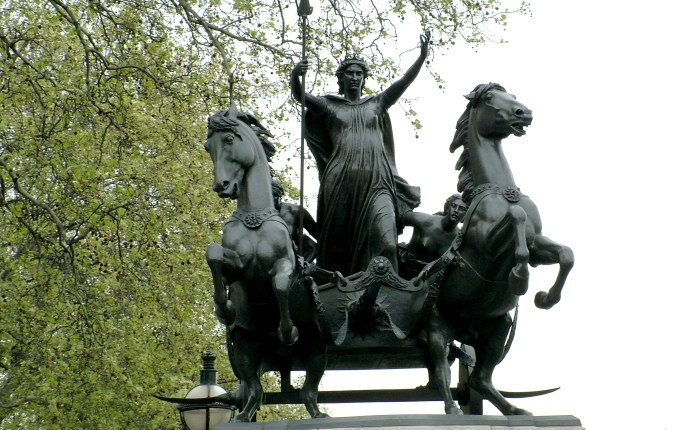
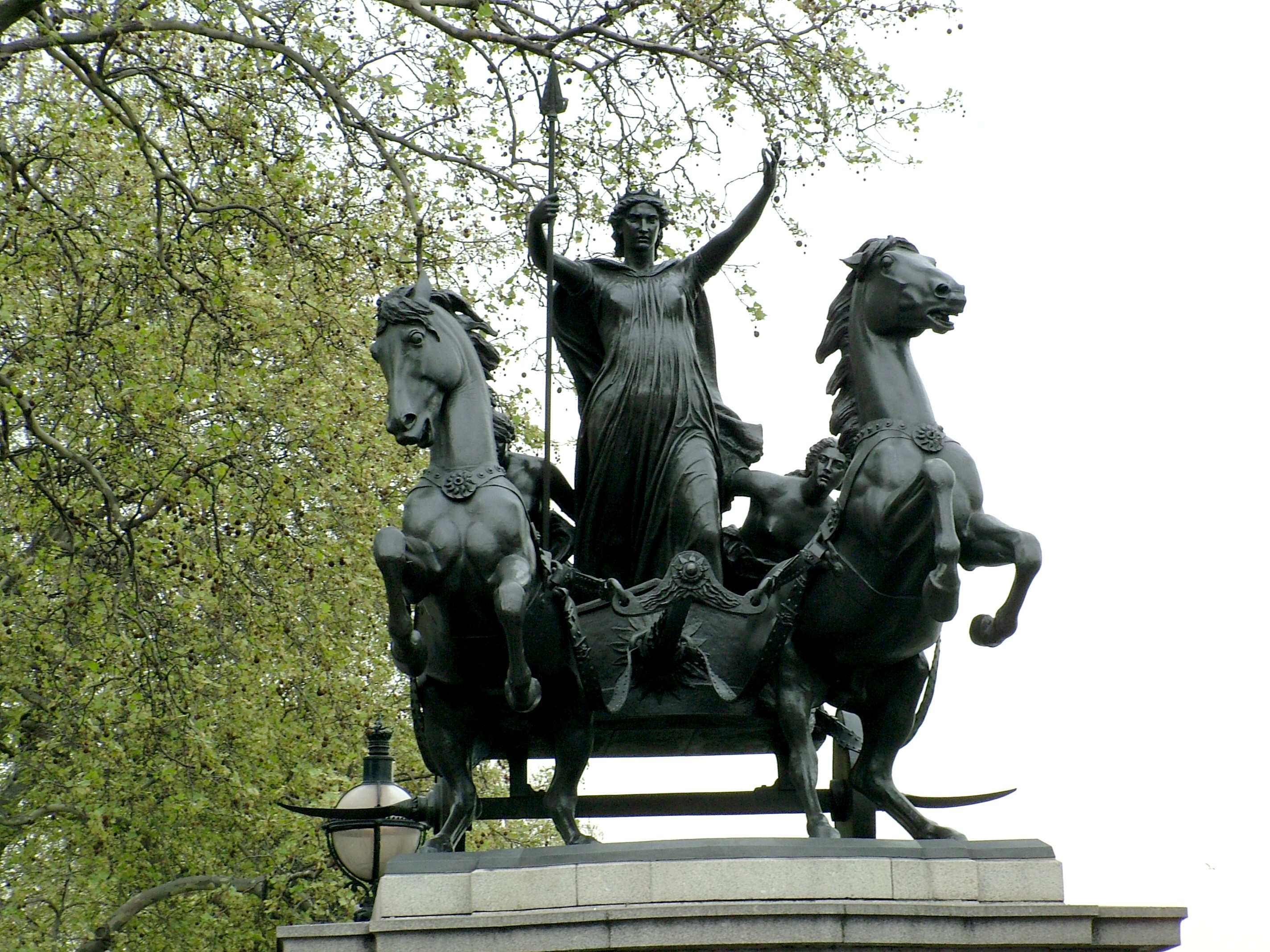
BoudiccaA bright spring sky and a benign forecast enticed us out for a countryside foray. We fancied a look around a reconstructed Iceni village near the hamlet of Cockley Cley (there’s a joke in there somewhere but I’m damned if I can find it). Cast your minds back to the history books of your early school days and the chapter on Queen Boudicca (Boadicea). As the story goes, the Iceni were a Celtic tribe who lived in what is now the county of Norfolk. Following the Claudian conquest of 43 AD, King Prasutagus of the Iceni (Boudicca’s other half) kept his crown by taking the Emperor’s shilling and becoming a client of the Romans. When he died, he left his lush forests and clearings in equal share to his two daughters and fiddling Nero. The perfidious Romans ignored his Will, flogged Boudicca, raped her daughters and took the lot for themselves. Dowager Boudicca was seriously pissed off. Bent on revenge, she joined up with other revolting tribes and went on the rampage. The startled Romans got quite a kicking and the rebellion nearly succeeded in booting the double-crossing conquerors out on their toga’d arses. The insurrection failed in the end but not before the rebels torched London (the first great fire), Colchester and St Albans, slaughtering the inhabitants. Folklore has it that the old Norfolk broad is buried under platform 9 or 10 of Kings Cross Station in London.

We stopped for tea in nearby Swaffham, a pretty market town with kerb appeal and a sprinkling of charm. Sadly, it was closed for the winter (apart for the odd charity shop and the ubiquitous and over-priced Costa Coffee). We climbed back into the car and headed south, passing open fields populated with freakish scarecrows dressed like the Ku Klux Klan. Liam muttered something about Jerry Springer the Opera and sped on towards the Iceni village. Contrary to the forecast, it started to rain. More by luck than judgement, we found the faux settlement hidden along a nondescript country lane. The gates were firmly locked, like Swaffham, closed for winter.

Memo to self – next time you fancy dipping your fat toe into the history of the Ancient Brits, Google before you go.

Les Misérables

Les misThe advantages of joining the club at Cinema City are free tickets and 10% off at the bar, both of which are guaranteed to drag us out into the drizzle. Our latest freebie at the flicks was the musical blockbuster, ‘Les Misérables,’ adapted from the all-conquering stage musical. Les Mis follows the fortunes of on-the-run ex-con, Jean Valjean, ducking and diving his way to redemption from the final defeat of Napoleon in 1815 to the abortive Paris uprisings of 1832. Anyone who is familiar with the Victor Hugo tale will know the misery of the revolting masses is relentless. The film slaps on the despair with a technicolor trowel from the epic opening act right through to the desperate insurrection of the final scenes. The historic ex-Royal Naval College (now university) at Greenwich is used to great effect as the grand backdrop to the bloody revolution. I presume the lofty burghers of Paris didn’t provide the right tax breaks to the production company.

The complicated score of Les Mis requires pipes of semi-operatic quality and it was entertaining watching various Hollywood divas straining to hold a tune. Apart from Russell Crowe’s flat notes, on the whole it wasn’t half bad, and Anne Hathaway’s exquisite performance as the luckless Fantine was a tear-jerking revelation. The film is 2 ½ hours long which befits one of the longest novels ever penned. The Glums canters the distance well enough. Misery was never so much fun.

The Cream of the Crop 2012

The Cream of the Crop 2012

top 10 It’s the turn of a new year, a time to reflect on the recent past. And what a hectic time it’s been for these old two old drunken reprobates. Four years ago, we jumped the good ship Blighty and swam ashore to paradise in search of a dotty dotage of gin and tranquility  We found a paradise of sorts and so much more besides. Three years into our choppy voyage, I found a little fame and notoriety, and a new course was set – as an accidental author. 2012 brought change: a rudder slammed into reverse and a return to our damp little island perched on the edge of Europe. So, in the best tradition of the year’s end, I give you the most popular Pansy posts of 2012.

1. Now That’s What I call Old

Who would have guessed that a lazy, throwaway post about the 12,000 year old ruins at Göbekli Tepe in Eastern Turkey would hit the top spot? Although it was published in 2011, like Meatloaf’s Bat Out of Hell*, it never left the charts. In fact, it’s my most popular piece ever, racking up 7,500 hits to date.

2. Expat Glossary

Another perennial favourite. Technically, it’s a page not a post nowadays (though it started off as a post many moons ago). Oft quoted and copied, it’s a tongue in cheek attempt to classify the vintage villagers of expatland. It continues to strike a chord.

3. Goodbye to the Turkish Living Forum

The closest I came to an unseemly slanging match – I queered my pitch with the Turkish Living Forum (or, more accurately, they queered their pitch with me). I stopped the vile conversation in mid-sentence. I can do that. It’s my blog. It gladdens my little homo heart that this post continues to attract punters. If I’ve put just one potential member off the bigoted posts, then my work is done. It’s a shame. Most contributors to the forum seem sane and reasonable. It’s a good idea ruined by the vicious and vocal few.

4. Britain’s Got Loads of Talent

I’m a sucker for a sob story and Britain’s Got Talent is stuffed to the rafters with them.  A genuine attempt to discover the best (and worst) amateur talent that Blighty has to offer, or a cynical commercial exercise in crass over-sentimentality? Probably both and so what? This year a dog won. No, a real dog, not an ugly person.

5. No Going Back on Going Back

A slip of the wrist and the cat was out of the bag. A premature posting meant that I announced our repatriation much earlier than I had intended and readers tuned in to read the news.

6. Zenne Dancer

A post about a ground-breaking and award-drenched Turkish film, inspired by the true story of a Kurdish student who was gunned down by his own father for being openly and unrepentantly gay. It still hasn’t been released with subtitles so I’m ashamed to say I still haven’t seen it.

7. Fifty Shades of Gay

I wrote this post to celebrate and support the launch of Rainbowbookreviews, a brand new LGBT book review website. As part of the party, Perking the Pansies, Jack and Liam move to Turkey was offered as a competition prize. What some people will do for a freebie.

8. The Friendly Games

This was my naughty but nice take on the closing ceremony of the London 2012 Olympics. The BBC did a grand job in televising the once-in-a-lifetime event – online, on radio and on TV. Liam had all three on simultaneously. For a brief period, the nation forgot its woes and smiled again. The mother lode of precious metal helped.

9. Bodrum’s Crusader Castle

Towards the end of our time in Turkey, I thought it was high time to give the pansy treatment to the grand centrepiece of the Bodrum townscape – a little bit of history (not too much) and a little bit of humour. It’s a popular cocktail.

10. Gran Canaria, Sex Emporium

Our first ‘proper’ holiday for four years and we chose Gran Canaria, that rocky mid-Atlantic brothel. You can take the boy out of the back room but you can’t take the back room out of the boy.

I leave you with my favourite image from 2012. I know, it’s all a bit predictable but I’m turning into a dirty old man and I intend to wallow in it. Happy New Year everyone and thank you for enduring my camp old nonsense for yet another year.

Olympics1

*Bat Out of Hell stayed on the UK album chart for 474 weeks. God knows why. 

Eat, Drink and Be Merry

One lovely old face

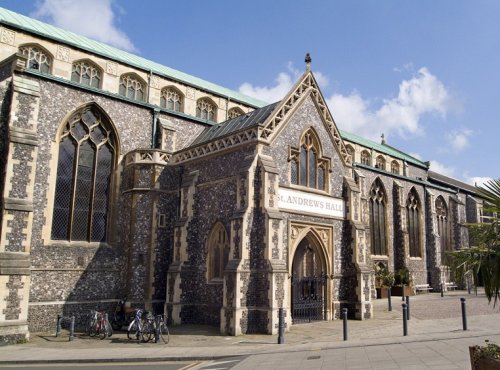
St Andrew’s and Blackfriars’ Halls (known collectively as ‘The Halls’) is a 13th century medieval complex at the end of our street and the best preserved friary in England. The riot of sturdy buttresses, hammer beams and Gothic arches is one of the ‘Norwich 12‘ – a list of the most iconic buildings in the city. When Henry VIII decided to strip the Catholic Church of all its power and wealth, the friary was dissolved, the friars were cast out into the cold and the buildings were put up for sale. They were saved by the intervention of the Mayor of Norwich who took them off fat Harry’s hands for £81, pledging to use the halls “…for the good of the citizens, for fairs and feasting.” The Halls have been used for secular knees-ups ever since.  Carrying on the 450 year old party tradition, St Andrew’s Hall has just played grand host to the Norwich Beer Festival, a six day piss-up sponsored by the Norwich and Norfolk branch of the Campaign for Real Ale (CAMRA). Real ales are for real males judging by the herd of nerds in knitwear corralled outside a side door having a quick fag before resuming their drunken orgy and sucking the kegs dry. I was so fascinated by the species that I walked straight into a lamp post and nearly knocked myself out. And I was the sober one. Cheers!

Another lovely old face after it walked into a lamp post

You might also like:

A Date with Anna Karenina

The Birds

Letter from Ephesus

Image: Thomas Depenbusch

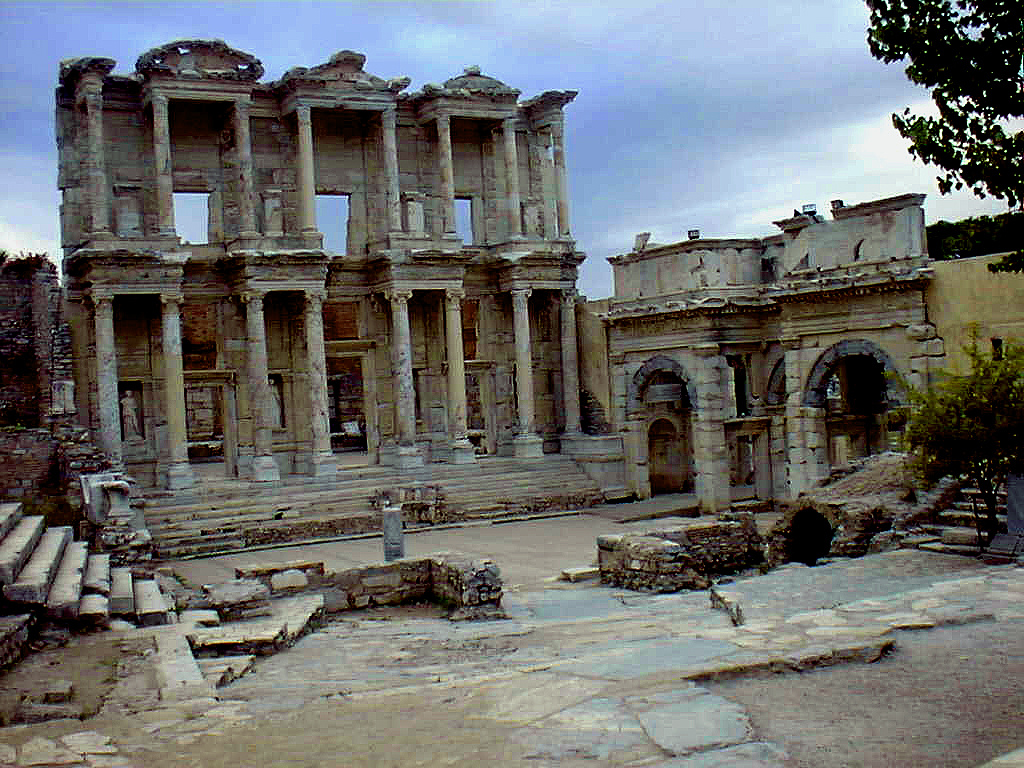
No journey through Asia Minor is complete without a tumbling tour of the ancient wonder that is Ephesus: world heritage site nominee and arguably one of the most impressive open air museums anywhere. Ephesus (or ‘Efes’ to give the place its Turkish name which also happens to be the name of Turkey’s favourite ale), was one of the most sophisticated cities of antiquity, adorned with grand civic buildings, marble-clad pavements and street lighting.

More…

‘Allo, ‘Allo Norwich

Throughout the Middle Ages, Norwich was England’s largest city outside London and, until the eighteenth century, vied with Bristol to be the Sceptered Isle’s second metropolis. The original source of the city’s wealth was the wool trade (England’s principle foreign exchange earner in those far flung days). As the industrial revolution swept through other parts of the country, Norwich slipped down the civic rankings. The city was relatively untroubled by industrialisation and avoided most of the urban blight that followed it. Much of what did exist was flattened by the Luftwaffe in 1942. The blanket bombing was a bit of threadbare affair as the Jerrys missed both the enormous city hall and Jeremiah Colman’s mustard mill. Despite the bulldozing frenzy of the 60s and 70s that disfigured too many British towns, Norwich has managed to preserve much of its charming medieval legacy.

Apparently, Jeremiah Colman was one of those rare Victorian philanthropists who were good to their workers. This goes to prove that you can get filthy rich without screwing the poor. Until recently, Colman’s was the main sponsor of Norwich City Football Club. This crown has now passed to Delia Smith, Blighty’s most famous no-nonsense cook and obsessive football fan. However, St Delia (as she’s known in the pie trade) is not a local lass. Norwich’s most famous daughter is Edith Cavell. Nurse Cavell was shot for treason by the dastardly Germans in the Great War because she helped smuggle British prisoners of war out of occupied Belgium. It caused an international outcry at the time and badly damaged Imperial Germany’s image. Well, it just wasn’t cricket and not nearly as funny as ‘Allo, ‘Allo.

Like anywhere, I’m sure it has its problems but Norwich today is a sparkling hilly liberal jewel within a flat sea of true blue conservatism. The council is Labour-controlled and the city returns two members to Parliament. The current incumbents – Simon Wright (Liberal Democrats) and Chloe Smith (Tory) both have progressive social views, including a healthy understanding of LGBT issues. Right on Norwich, here we are.

You might also like:

Norwich?!

And the Winners Are

Off With Their Heads!

Off With Their Heads!
Circa 1640

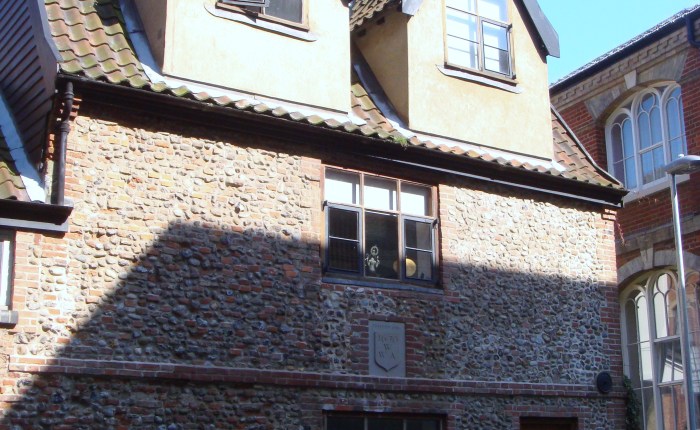
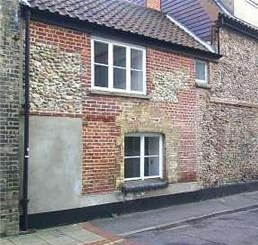
Our loft aspirations turned to dust. Someone else reached the finishing line before us and we were back to square one. Do not pass go, do not collect £200. This is what happens when dreamy loft lodgings are offered to several letting agents simultaneously: chaos and disappointment run amok. Still, at least our reservation fee was promptly refunded. Decent billets were flying off the shelves at a rate of knots so we rose early to catch the elusive worm, zipping back up the A11 in our borrowed Renault Megane at the crack of dawn. It was a fruitful tour. On our first viewing we bagged ourselves a genuine 17th Century weaver’s cottage at the edge of Norwich’s medieval quarter just a short sashay from the action. So, instead of a writer’s garret, I shall be weaving my words in a converted artisan’s flint and brick dwelling dating from the 1640s. Just think, the original weaver first moved into his brand new designer hovel (no mod-cons at the time) when the humourless Protestant Taliban chopped off Charlie Stuart’s head, established the English republic, banned music, closed down the play houses and outlawed Christmas (and let’s not even talk of the unspeakable things they did to the Irish). It’s no wonder the Commonwealth didn’t last; it was so boring. I wonder what Killjoy Cromwell would have made of us? Off with their heads?

Bodrum’s Crusader Castle

Bodrum’s Crusader Castle

The Crusades is a dirty word in the Middle East. It’s hardly surprising. All those unwashed and smelly chain-mailed warrior knights, bloodied sword in one hand, crucifix in the other, brutalising the civilised Muslim world for God, glory and gain (in that order). The perfidious Catholics even turned on the besieged Byzantines, sacking Constantinople and deposing the Emperor because he was a softer target than the Arabs and the wrong kind of Christian. The crusader legacy resonates today with the fault lines that still exist in the region.

This brings me neatly on to Bodrum’s very own Crusader heirloom – the Castle of St Peter. It is the jewel in the Town’s crown. Its sturdy silhouette dominates from every direction. Built by the Knights Hospitaller from 1402, the castle remained in Christian hands until they were unceremoniously booted out by Suleiman the Magnificent in 1522. The magnanimous Sultan allowed the defeated knights to sail off to Crete – no hard feelings. What a gent. The castle last saw action when it was bombarded by a French warship during the Great War. Presumably, our Gallic allies did it for a laugh as the fortress had long lost its strategic importance. Several towers were badly damaged and the minaret of the mosque was toppled.

Today the reconstructed castle is a major tourist attraction and home to the Museum of Underwater Archaeology, the biggest of its kind. The grounds also play host to the annual summer ballet and dance festival. It’s a sweaty affair during the height of summer. Rambling over the ramparts is an easy excursion and there are plenty of shady places in the well-tended gardens to catch your breath and watch the randy dandy peacocks strut their stuff. The exhibits are absorbing if you’re into old wrecks, chipped anfora and ancient glass. I can’t vouch for the exhibition devoted to the tomb of a Carian princess, who died between 360 and 325 BC. It’s always been closed when we’ve visited. Sauntering through the various towers is a fun way to spend a spare afternoon. The English Tower, in particular, looks like a set for Ivanhoe. Where’s Elizabeth Taylor when you need her?

This slideshow requires JavaScript.

If you’d like a potted history of the castle check out Wikipedia. Spot the (non) deliberate mistake relating to the mosque.

You might also like:

My Golden Horn

Cappadocia Then and Now

Sleepy Norwich

Blazing June in Blighty is a damp squib. As Bodrum hit the low forties, we were welcomed home by angry black skies and our first walkabout around Norwich was blasted by blustery showers. We didn’t let it dampen our spirits. Norwich’s cobbled medieval quarter was classy, if somewhat ghostly. Perhaps the inclement weather conspired to keep the crowds at bay. Norwich people are a fruity cocktail – fake Burberry chavs, silver-studded hippies, scruffy students, chalky professors, smart-tailored henrys, well-appointed pensioners and middle England mothers in Barbour jackets and sensible shoes. We meandered casually through the smart shops without being dragged in by the scuff of the neck and browsed the shelves without being stalked by the retail police. English politeness reigned supreme; we overdosed on thank you, excuse me and after you.

This slideshow requires JavaScript.

We ended a hassle-free day by feasting on Thai, toasting to our safe arrival and the adventures to come. We observed city street life from the warmth of the elegant linen-tabled restaurant. Norwich at night was strangely sleepy. Perhaps the deep recession has imposed a financial curfew on the worried masses. Squiffy and sated, we wandered back to our lodgings at a Premier Inn – the best in show of the low cost boarding-houses – to splash about in the reviving waters of a deep bath and canoodle in the comfy bed. We still need to find a roof over our heads. That’s for another day.

Cappadocia Then and Now

One of our greatest regrets during our time in the Land of the Sunrise is not taking the time to visit magical Cappadocia. I can offer no satisfactory excuse. We just didn’t do it. I give you some images to tickle the taste buds and stir the wanderlust.

This slideshow requires JavaScript.

We were reminded of our failing by Pansyfan Bonnie. She sent me this fascinating Turkish film of Göreme from 1962, courtesy of Turkey Central. This is Göreme only 50 years ago, yet it could be from the time of Abraham – no camera-toting tourists, no swish cave hotels, no restored Disney murals, no over-blown restaurants, no hot air balloons, no hot air hawkers. From biblical to boutique. I have no words.

Kapadokya 1962

You might also like:

Now That’s What I Call Old

Islamic Chic