Off With Their Heads!

Off With Their Heads!
Circa 1640

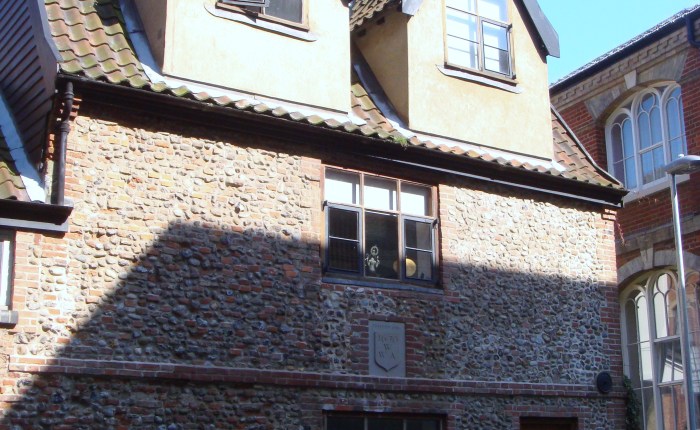
Our loft aspirations turned to dust. Someone else reached the finishing line before us and we were back to square one. Do not pass go, do not collect £200. This is what happens when dreamy loft lodgings are offered to several letting agents simultaneously: chaos and disappointment run amok. Still, at least our reservation fee was promptly refunded. Decent billets were flying off the shelves at a rate of knots so we rose early to catch the elusive worm, zipping back up the A11 in our borrowed Renault Megane at the crack of dawn. It was a fruitful tour. On our first viewing we bagged ourselves a genuine 17th Century weaver’s cottage at the edge of Norwich’s medieval quarter just a short sashay from the action. So, instead of a writer’s garret, I shall be weaving my words in a converted artisan’s flint and brick dwelling dating from the 1640s. Just think, the original weaver first moved into his brand new designer hovel (no mod-cons at the time) when the humourless Protestant Taliban chopped off Charlie Stuart’s head, established the English republic, banned music, closed down the play houses and outlawed Christmas (and let’s not even talk of the unspeakable things they did to the Irish). It’s no wonder the Commonwealth didn’t last; it was so boring. I wonder what Killjoy Cromwell would have made of us? Off with their heads?

Bodrum’s Crusader Castle

Bodrum’s Crusader Castle

The Crusades is a dirty word in the Middle East. It’s hardly surprising. All those unwashed and smelly chain-mailed warrior knights, bloodied sword in one hand, crucifix in the other, brutalising the civilised Muslim world for God, glory and gain (in that order). The perfidious Catholics even turned on the besieged Byzantines, sacking Constantinople and deposing the Emperor because he was a softer target than the Arabs and the wrong kind of Christian. The crusader legacy resonates today with the fault lines that still exist in the region.

This brings me neatly on to Bodrum’s very own Crusader heirloom – the Castle of St Peter. It is the jewel in the Town’s crown. Its sturdy silhouette dominates from every direction. Built by the Knights Hospitaller from 1402, the castle remained in Christian hands until they were unceremoniously booted out by Suleiman the Magnificent in 1522. The magnanimous Sultan allowed the defeated knights to sail off to Crete – no hard feelings. What a gent. The castle last saw action when it was bombarded by a French warship during the Great War. Presumably, our Gallic allies did it for a laugh as the fortress had long lost its strategic importance. Several towers were badly damaged and the minaret of the mosque was toppled.

Today the reconstructed castle is a major tourist attraction and home to the Museum of Underwater Archaeology, the biggest of its kind. The grounds also play host to the annual summer ballet and dance festival. It’s a sweaty affair during the height of summer. Rambling over the ramparts is an easy excursion and there are plenty of shady places in the well-tended gardens to catch your breath and watch the randy dandy peacocks strut their stuff. The exhibits are absorbing if you’re into old wrecks, chipped anfora and ancient glass. I can’t vouch for the exhibition devoted to the tomb of a Carian princess, who died between 360 and 325 BC. It’s always been closed when we’ve visited. Sauntering through the various towers is a fun way to spend a spare afternoon. The English Tower, in particular, looks like a set for Ivanhoe. Where’s Elizabeth Taylor when you need her?

This slideshow requires JavaScript.

If you’d like a potted history of the castle check out Wikipedia. Spot the (non) deliberate mistake relating to the mosque.

You might also like:

My Golden Horn

Cappadocia Then and Now

Sleepy Norwich

Blazing June in Blighty is a damp squib. As Bodrum hit the low forties, we were welcomed home by angry black skies and our first walkabout around Norwich was blasted by blustery showers. We didn’t let it dampen our spirits. Norwich’s cobbled medieval quarter was classy, if somewhat ghostly. Perhaps the inclement weather conspired to keep the crowds at bay. Norwich people are a fruity cocktail – fake Burberry chavs, silver-studded hippies, scruffy students, chalky professors, smart-tailored henrys, well-appointed pensioners and middle England mothers in Barbour jackets and sensible shoes. We meandered casually through the smart shops without being dragged in by the scuff of the neck and browsed the shelves without being stalked by the retail police. English politeness reigned supreme; we overdosed on thank you, excuse me and after you.

This slideshow requires JavaScript.

We ended a hassle-free day by feasting on Thai, toasting to our safe arrival and the adventures to come. We observed city street life from the warmth of the elegant linen-tabled restaurant. Norwich at night was strangely sleepy. Perhaps the deep recession has imposed a financial curfew on the worried masses. Squiffy and sated, we wandered back to our lodgings at a Premier Inn – the best in show of the low cost boarding-houses – to splash about in the reviving waters of a deep bath and canoodle in the comfy bed. We still need to find a roof over our heads. That’s for another day.

Cappadocia Then and Now

One of our greatest regrets during our time in the Land of the Sunrise is not taking the time to visit magical Cappadocia. I can offer no satisfactory excuse. We just didn’t do it. I give you some images to tickle the taste buds and stir the wanderlust.

This slideshow requires JavaScript.

We were reminded of our failing by Pansyfan Bonnie. She sent me this fascinating Turkish film of Göreme from 1962, courtesy of Turkey Central. This is Göreme only 50 years ago, yet it could be from the time of Abraham – no camera-toting tourists, no swish cave hotels, no restored Disney murals, no over-blown restaurants, no hot air balloons, no hot air hawkers. From biblical to boutique. I have no words.

Kapadokya 1962

You might also like:

Now That’s What I Call Old

Islamic Chic

Bodrum Past

Some Bodrum Belles of our acquaintance have been living hereabouts for a couple of decades (or more). They tell of cold water flats, power supplied on a wing and a prayer, a town virtually devoid of modern conveniences and fun, lots of it. Bodrum was where the intelligentsia was exiled and where the artistic found sanctuary. It was far enough away from Ankara to stay under the radar of the more reactionary tendencies of the ruling elite. Even today, Bodrum has a diverse, edgy vibe unique in all of Turkey. This is why we chose it. Ambling along the newly marbled streets lined by fancy bars crammed with the well-heeled, it’s hard to imagine how it must have looked in times past. Imagine no longer. Here are some old grainy snaps of the town. The last two images are of the lane that runs along the side of our house – then and now.

This slideshow requires JavaScript.

A curiosity is the Greek Orthodox Church that once stood in the heart of the town (first two pictures in the sequence). It’s a reminder of Bodrum’s Greek past before the euphemistically called ‘population exchange’ of 1923. Liam and I debated what now stands in its place. We think it’s the rather large and ugly concrete library. Perhaps those in the know could help us out.

Postscript

There’s a fabulous Facebook group page dedictated to old images of Bodrum places and people called Eski Bodrum. It’s a fascinating study in social history. Thanks to Back to Bodrum for the heads up.

The Mausoleum of Halicarnassus

Let’s face it, not many people can claim to live on the same street as one of the Seven Wonders of the Ancient World. No trip to Bodrum is complete without a look around the meagre ruins of the once magnificent Mausoleum of Halicarnassus (Bodrum that was) which are located a few hundred metres from our house. The vast tomb was constructed to inter the remains of King Mausolus in 350 BC (hence the origin of the word mausoleum). Remarkably, the monument survived virtually intact for seventeen centuries before it was felled by an earthquake in the middle ages. What remained was plundered by the Knights of St John to build the imposing crusader castle that now dominates the town. The fortress rises above the same strategic promontory where Mausolus’ palace once stood.

Admittedly, visitors need a vivid imagination to visualise how the monument once looked. All that really remains is a large hole in the ground with multiple fragments of pillars and dressed stones scattered about randomly. There is a bijou and rather tired museum which attempts to fill in some of the detail. It features a naff video on a loop: more of a tourist board advert for Bodrum. Typically, there’s more to be seen in the British Museum in London.

This slideshow requires JavaScript.

Still, there’s something about the place. A pretty overgrown precinct provides a welcome tranquil respite from the heat, hassle and bustle of the modern town. We visited on a sunny spring day. The shrubbery was verdant and winter waters still trickled through the foundations covering the stones with algae and creating a pool in Mausolus’ burial chamber. It was teeming with tadpoles and other pond life. After an hour or so tumbling over the ruins, we popped home for a welcome cuppa.

You might also like:

Islamic Chic

Rutting Reptiles

Turkish Wrestling, Lube and Lederhosen

Turkish Wrestling, Lube and Lederhosen

The Turkish oil wrestling circus came to an ancient town. A picnic field near the obscure and little excavated Lelegian city of Pedasa, high in the hills above Bodrum, hosted a greasy competition of brute force and suspect hand insertions. The ancient smack down imported by the nomadic Turks from the windswept steppes of Central Asia was staged by the lubed-up lads in lederhosen (or kisbets as they’re correctly called) with enthusiasm and grunting gusto. Getting a slippery grip on a marinated boy basting in the midday sun would challenge the most dedicated follower of a bit of rough and tumble. It was an all-family affair with drums, horns and B-B-Q chicken. I’ll leave the last word to a Bodrum Belle of our acquaintance who supplied the snaps.

“Fat men getting feisty in flora! I even caught them having a soapy shower behind the fire engine afterwards but you will see that, for most of them, the greasy glory days are sadly over. Have you and Liam never fancied cavorting in Castrol?”

The answer’s no. We leave the homoerotic horseplay to the hetties. They do it so much better.

This slideshow requires JavaScript.

You might also like:

Tales from the Harem

Penis Points

Review of the Year, 2011

Happy New Year to pansy fans one and all from a stormy, rain-sodden Bodrum. In the best tradition of the New Year and all those cheap-to-make review and top ten TV compilations I give you:

Perking the Pansies Top Ten 2011

An eclectic mix of the mad, the glad, the sad and the bad, the old, the bold, the sold and the gold. It’s interesting how few of these posts are actually related to expats directly. The list represents around 20% of all hits to Perking the Pansies (out of about 500 posts). Fancy that.

  1. Amy Winehouse, RIP
  2. Now, That’s What I Call Old
  3. Are We Mad?
  4. Pussy Galore
  5. Gay Marriage in New York
  6. Expat Glossary
  7. Publish and Be Damned
  8. There’s Hope for Us All
  9. Happy Birthday Perking the Pansies
  10. Sisters Are Doing it for Themselves

I wonder what 2012 has in store?

This is in store right now.

Now That’s What I Call Old

Civilisation in Anatolia has deeper roots than most people imagine. The recently discovered ruins of Göbekli Tepe are among the oldest human-made structures yet discovered. The site is almost 12,000 years old, predating any other known civilisation by several thousand years. Eat your heart out Abraham (c1800 BC) Rameses the Great (c1300 BC), Nebuchadnezzar (c600 BC) and all those daft fundamentalist Christians who think that the world was created 6000 years ago.


You might also like:

The Mausoleum of Halicarnassus | Bodrum’s Crusader Castle | Cappadocia, Then and Now | Rutting Reptiles | Communal Crapping

An Anatolian Adventure

Today’s guest is gorgeous Kym who is the author of Turkeywithstuffin’s Blog and the pretty brain behind On the Ege, the monthly online magazine about Turkey’s Aegean coast.  Kym is married to dusky Murat, her hunky Turk. When veteran expat Kym wears a headscarf, she wants to look like Sophia Loren but thinks she looks more like Hilda Ogden. Personally, I think she resembles a darker version of Gynneth Paltrow in the Talented Mr Ripley.

Kym

It’s a Thursday in November 2008 and I am on my first road trip to Sanliurfa, my husband’s birth town. When we first arrived in Urfa late at night, the electricity was off and the city was in darkness.  Perhaps because I was tired from the long journey, I felt uneasy and had commented more than once that I’d been kidnapped and taken to Beirut. I did for a moment consider taken a plane home the following day. As we stood in the dark alley I was moaning, but once the large iron gate opened things could not have looked more different. We walked into a beautiful stone courtyard with mosaic tiles, Ottoman seating, potted plants and a small fountain.

The Manager at the Beyzade Konak Hotel is Murat’s cousin’s husband, Omer. He shows us to our room and once I have the internet and some coffee (they have a generator), I’m quite happy to chuck Murat out for an hour or so to allow him to play with his cousin Mehmet. I have a boiling hot shower, get my pajamas on and send a few quick “I’ve landed” emails. Then it’s lights out and a sleep so deep I could be in the cemetery.

Urfa

Day breaks and I realise the hotel is between two mosques. I open my eyes to the dual call to prayer, one a heartbeat behind the other. I doze for a bit then remember I’m actually on holiday and there are shops out there.

After breakfast, I nip back to our room and cover my locks with a headscarf. It’s a simple gesture of respect while I’m here and among the more traditional rellies. Well, that and I don’t really want to get stoned in the street! Mu of course thinks this is great and off we trot, out through the iron gate and onto the streets of Sanliurfa.

Once we leave the cobbled alley and get onto the main drag, its bustling; busses hog the road, cars fight for space beside them, scooters weave in and out of the traffic and pedestrians narrowly avoid being run over.  The air is filled with BBQ spices, pungent & smoky and the smell is everywhere. Small eateries and kebab houses jostle for space alongside clothes shops and jewelers who have 24 karat rays shining from their windows.

Stunning

There are a few glances my way naturally. It could be the pale skin and the green eyes, or it could be the flip flops and bright red toenails that don’t quite go with the rest of my ensemble. Still, that’s a great excuse to buy shoes isn’t it?

First things first, I need a new camera. We wander across to the maze of connecting alleyways that make up one of the eight covered bazars, to the collection of electronic shops. The salesman shows us his wares and converses with Murat: “Senin Esin mı?”(your wife),  “Yabanci” (a foreigner), “Alman?” (German).  Mu confirms the first two and I answer the last. “English” I say, not realising at the time that we will have this conversation many times during our stay. I guess it’s due to my height and build and of course, my great Grandparents, Mr & Mrs Shram!

I end up with an Olympus, a compact professional the man says. We will see.

Leaving the shop we are met by Cousin Mehmet and Hassan Amca. Their first words to me are “Kym, Beirut Nasil?” Very funny!  The four of us then continue around the bazaar which contains a veritable Aladdin’s Cave full of treasure. There is even a street full of workshops where workmen batter copper and solder iron.

Heading into the Balikigol area toward the cay bache, we pass through the ‘Sipahi Bazar’ and the ‘Kazzaz Bazaar’, the oldest covered Bazaars of Urfa. These were built by the Ottoman Emperor, Suleiman the Magnificent in 1562.  It really is like stepping back in time and I watch ancient shalvar wearing salesmen sitting cross legged in their little tented alcoves, bathed in rich colour and drinking tea while customers peruse their antique carpets, kilims and hand woven head dresses.

Feed Me!

During our small shopping excursion, I’d picked up some elastic hair bands that I needed and watched as three pairs of hands reach into theirpockets to pay for them. Oooooo I like shopping here. I wonder if it works in shoe shops? A few minutes’ walk and we reach the cave of Abraham. Legend has it that the Babylonian King, Nemrud, had Abraham captured and thrown into fire. His crime?  Calling upon the people to worship the real god and not the icons of celestial objects, as was the religion of the time.  Of course, God was watching and on seeing this, he turned the fire into water, saving Abraham from certain death. Not content with that, he then turned the surrounding woods into the sacred fish, the ancestors of which we see today at the site of the “Halil ur Rahmen” Mosque in the centre of Urfa.

I buy a dish of fish pellets and watch the fat feisty fish fight each other for each tiny morsel, after which we take a rest in the cay bachesi. I sit sipping hot sweet tea and take a look at my photos so far. The photos are amazing; sneaky zoom shots of men at prayer and performing the abtest, plus the usual tourist shots of minarets and domes. It’s getting late now and as dusk settles over the city, we head back to the hotel.

Nemrud

So far so good, my first day in Urfa was wonderful and I am hungry for more. We have decided to use Urfa as a base for a few road trips. On my list are: Harran, Nemrut, and Hasenkeyf, then, a stop at Cappadocia on the way home.  I had no idea at the time but this journey would also encompass, Mardin, Midyat, Batman & Siirt. My Anatolian adventure continues.