Jack and Liam Move to Norwich

Jack and Liam Move to Norwich

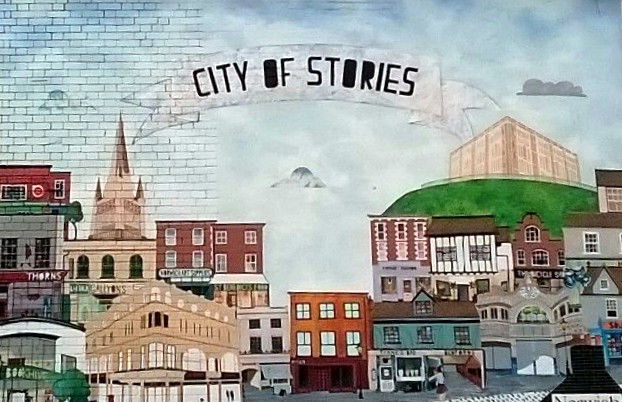
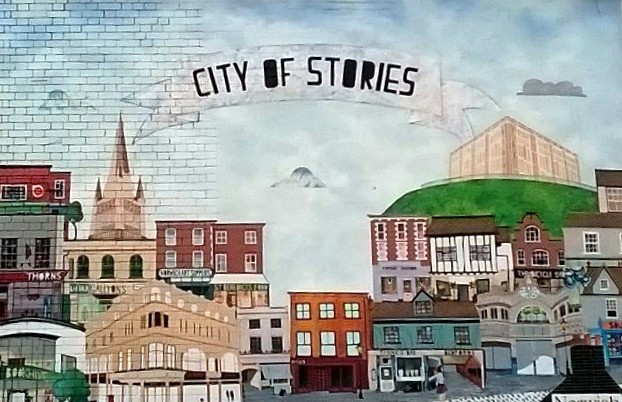
Hardly breaking news is it? But it’s the title of a little something I wrote back in the summer of 2014 for the Visit Norwich City of Stories website. I was chuffed at the time when it was chosen as the opening piece in a series showcasing different aspects of Norwich life. I even pitched up at the red carpet launch and helped myself to one too many cocktails. The website has recently gone from literary showcase to shop window and content has been updated to feature the best the city has to offer. My article still stacks up I think, so I’m posting it here for posterity, with a few images to give it life.

City of Stories

Jack and Liam move to Norwich

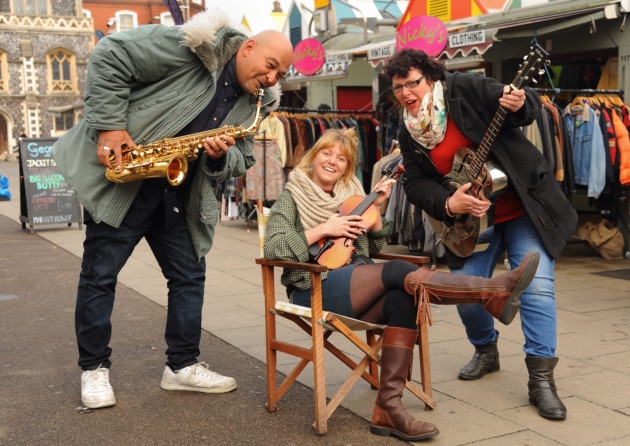
Jack and Liam took up pole position outside a coffee shop to sup their lattes and people watch. The passing footfall was a bumper crop. A warm summer’s afternoon had delivered coaches of North Folk and charabancs of tourists to Norwich’s cobbled streets. Dutch lowlanders in sensible shoes mingled with happy snapping Koreans; local gentry in waxed jackets weaved through the hipsters in vintage garb; busy bees in smart suits hurried past, glued to their smart phone and a jester-hatted Big Issue seller competed with a line of smiley charity workers collecting direct debits for the cause. In the middle of the rainbow crowd, two men with well-fed midriffs and trendy whiskers paused to take in a busker crooning for his supper. They grinned as the Frank Sinatra tribute segued from New York, New York to a local interpretation of My Kind of Town (‘Naaridge is’) and when the final chords faded to nothing, they tossed some coins into a trilby perched on a Fender amp and vanished into the throng holding hands. Like everyone else in the surprising city, they were doing it their way.

Norwich Buskers

Jack ran his fingers along the cartoon tourist map. The tapestry of streets was weaved with familiar names of old London Town like Charing Cross, Blackfriars Bridge, Bishopsgate, Spitalfields, Haymarket, and Pudding Lane, threaded with roads of goats, cattle, dogs and a rampant horse, and stitched with more holy places than a mitred man could shake his crook at. But clearly this was not London. What the boys from the Old Smoke heard was an altogether different soundscape, just distant enough to escape the orbit of the great metropolis and the relentless surge of Estuary English. Somehow, Norwich had preserved a unique linguistic heritage, a melodic sweep of bouncing vowels and dropped consonants pickled down the centuries.

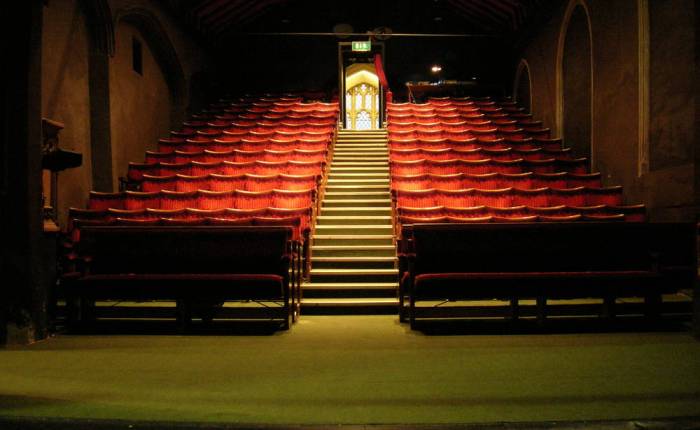
The inquisitive strangers downed their coffees to roam the streets. Their meandering took them to the Assembly House, a gorgeous pile of Georgian elegance and the perfect stage for Regency debutantes in ribboned bonnets to chase Mr Darcy and his magnificent britches around the courtyard fountain. Next door, the architectural show continued with the Theatre Royal, its modern overcoat disguising 250 years of board treading. A quick circuit of the front-of-house posters revealed an eclectic tradition of new and old, high-brow and kitchen sink, top hats and tutus, laughter and tears.

Back down the hill and along Gentlemen’s Walk, they passed neat rows of multi-coloured market stalls lined up like beach huts marooned at low tide. The vast City Hall, looking down on the medieval guildhall it replaced, provided an over-imposing backdrop.

Jack and Liam scampered down a maze of lanes and alleyways, a treasure trove of independents – shops, pubs and cafés. Norwich had bucked the national trend of sameness. Maybe the city’s relative seclusion had bubble-wrapped it from the commercial onslaught of identikit chains or perhaps wise burghers had protected the endangered. Whether by accident or design, it was a window shopper’s dream.

The most complete medieval city in Britain boasted the guide book, and as they pounded the streets up Saint This, down Saint That and along the lazy winding river that caressed the city like a feather-leafed boa, Norwich oozed the ages from every brick, paving stone and stained glass window. The city, it seemed, was triple dipped in history.

Finally, Jack and Liam came to rest on the far side of a handsome stone bridge and sat under the shade of a sprawling tree outside the Playhouse, the Theatre Royal’s little sister. A tree-top teapot in vivid yellow wafted in the breeze. The walk-weary old Londoners rested with a bottle of Merlot in the Playhouse beer garden. Close to the newly elevated University of the Arts, the bustling bar was the trough of choice for young fashionistas and their arty mentors. Jack and Liam took their seats in the refectory and imbibe an ambience that overflowed with naive optimism.

And that’s how it happened. One heady afternoon in the garden of the Playhouse Theatre Bar, Jack and Liam found somewhere new to lay their hats. An offbeat, theatrical, cosmopolitan, romantic, open-minded and open-hearted place set beneath the true-blue skies of Norfolk. Norwich, a surprising city. A place to live and a place to start living.

A random sample of Norwich’s medieval churches…

Ladies in Lavender

Ladies in Lavender

I’m a sucker for an old dame, particularly those two old Dames Judi and Maggie. They light up my screen.  My all-time fave is Tea with Mussolini, a regular winter warmer on a chilly night. But any film with them in will do. I’m not fussy.

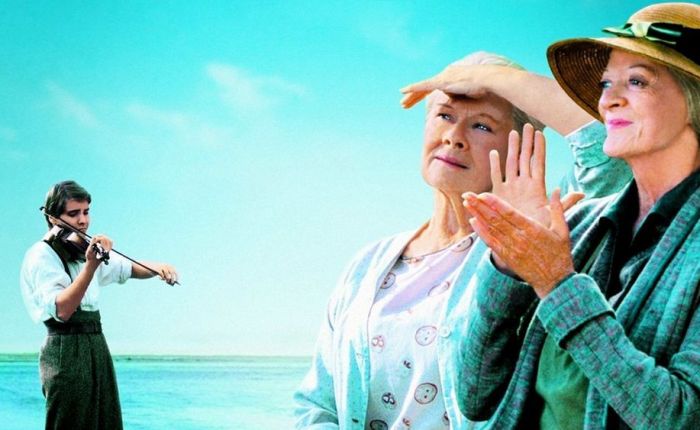
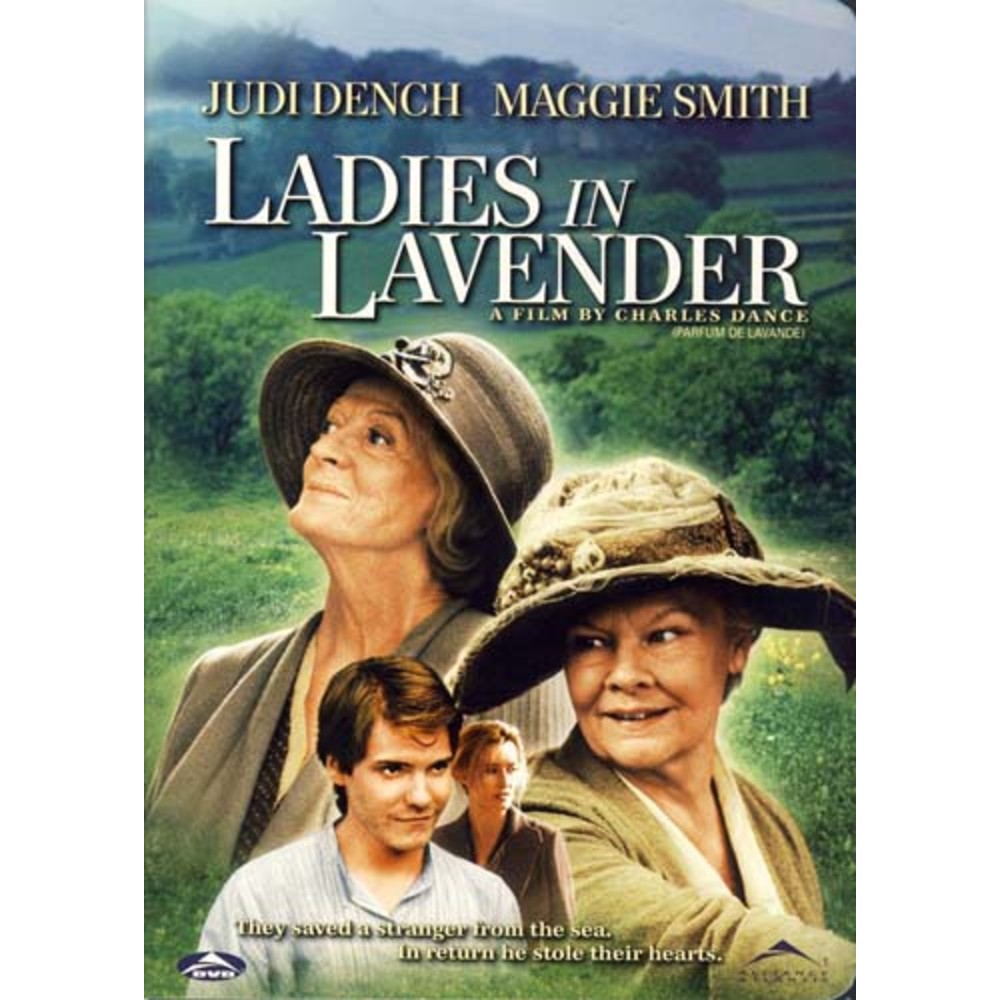
Ladies in Lavender PosterA less well-known screen outing for the pair was Ladies in Lavender, a tender tale of two elderly sisters living quietly in a Cornish fishing village during the thirties who scoop up a handsome young Pole from the beach after he was swept overboard during a storm. They nurse him to health, causing a stir among the locals – and the stirring of long repressed feelings for sister Ursula, played by Judi. The whole thing is a joy to watch, a moral tale of a rescue without hesitation or fear of an economic migrant washed up on a foreign shore. Rather relevant today, don’t you think? And there’s a real Billy Elliot moment at the end that gets me every time. So, when the stage version of the film came to Norwich’s Maddermarket Theatre, we just had to see it (even though neither Dame was in it, obviously).

It was a sterling effort from the cast with the best lines reserved for the housekeeper and delivered with great comic timing. The performance got an enthusiastic hand at the end but I couldn’t help wondering if the message was lost on the mostly elderly audience with their curls, pearls and comfy lives. I hope I’m wrong.

Dancing in the Rain

Dancing in the Rain

What better way to raise our spirits after the misery of Brexit and the rise of the loony right than a street party? Thank the Lord Mayor for his big day. Last year, we sizzled under a cloudless sky. This year sunshine and showers were on the menu, but this didn’t dampen our ardour or the enthusiasm of the performers. From ballerinas to buskers, breakdance to bangra, choristers to elderly brass bandeliers, the mad mix of turns – on the stages, on the streets and on the floats – proved Norwich folk are truly bonkers. Amen to that!

Despite sinking one sherry too many, we made it to the fireworks finale – just. Sadly, the next day we didn’t manage to roll out of our pit in time to cheer on the dressed-up waterfowl in the annual duck race.

For pure foot tapping joy, you can’t beat a bit of Bollywood. It brought the proverbial house down. To end this madness, I give you bangra and bangs…

Twisted Cabaret

Twisted Cabaret

Norwich has more medieval churches than you shake a stick at, a church for every week of the year so the saying goes. You can hardly turn a corner without bumping into a stone steeple or Gothic arch. Back in the day, the cloth trade made Norwich rich and the top of the heap paid their way into Heaven by sponsoring medieval masterpieces. The cassock class were more than happy to indulge the myth and take the bung.  But in these more secular times, the Faithful are few: come Sunday, most pews are empty. Some churches have been mothballed – boarded up and padlocked to keep out the elements and the vandals. Many others, though, have been given a new lease of life as arts centres, theatres, museums and exhibition spaces. Such is the case with the Church of St Peter the Less on Barrack Street. The pretty 15th century building miraculously survived the Luftwaffe’s bombs which flattened everything else around one night in 1942, and now sits on a grassy mound by a busy roundabout. Since 1980, the church has been home to the Norwich Puppet Theatre, one of those amazing provincial arts organisations that flourish against all the odds.

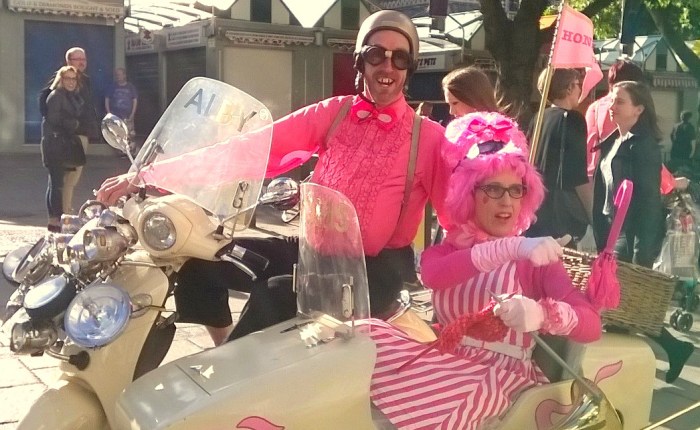
When not stringing up the cast to amuse little people, the theatre is available for hire (including civil weddings, ironically). So, one Sunday we took our pews for a performance of Twisted Cabaret by the Knightshift Dance Company and jobbing drag queen, Miss Special K. The fusion of modern community dance with old-school gay showbiz was inventive enough but a man in a frock and ginger wig singing ‘Your son’ll come out tomorrow,’ in a deconsecrated church was deliciously subversive. Those God-fearing old merchants must be spinning in their graves. I loved it.

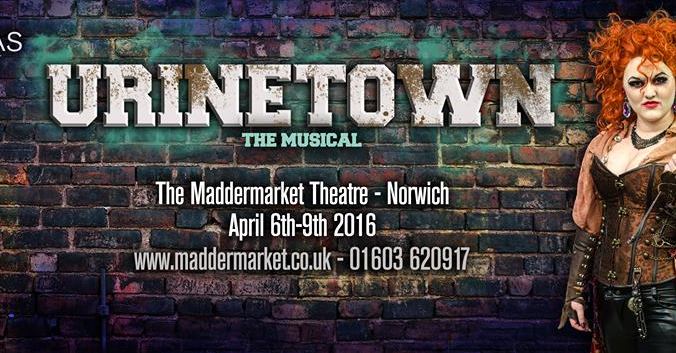
Urinetown

Urinetown

Friday night was theatre night and Liam fancied a slice of am-dram at the Maddermarket. When he announced we were to see Urinetown, I thought he was taking the pissoir: a show about a public loo? Fortified by a large glass of white and resigned to grin and bear it, I took my pew and surveyed the crowd. On most cultural excursions we’re generally surrounded by the good and the grey of the county. This audience was decidedly younger and trendier. Perhaps they knew something I didn’t.

Turns out they did. The production was foot-tapping fun but with a dark edge, an everyday tale of environmental degradation, unfettered capitalism, corporate greed, rampant public corruption and a restive mob – all set to a score of soaring tunes that parodies some of the more pompous musicals like Les Misérables. I spied a nod to Romeo and Juliet too. The mob triumphs but, alas, it doesn’t end well. Urinetown is a show with a message.

It may have been am-dram from the Sound Ideas Theatre Company but you could hardly tell. The live band was a classy touch and there were several stand-out performances from the cast. But for me, the star of the show was seventeen year old Nicola Myers who played ‘Little Sally’ with pathos and humour accompanied by a cracking set of pipes. I predict a great future.

All the images are courtesy of the Sound Ideas Facebook page.

Victoria Wood, RIP

victoria woodIt’s with enormous sadness that I’ve just heard about the death of Victoria Wood from cancer.  She was, quite simply, my kind of act. Her body of work was astounding  – TV sketch shows, stand up, sitcoms, musicals, plays and films (both comic and straight) – all containing the same depth of wit and unsentimental pathos that set her head and shoulders above the rest of her (mostly male) peers. Victoria Wood saw humour in the humdrum, the extraordinary in the everyday. She was a breath of fresh air from both the misogynistic old dinosaurs of her early career and the new breed of angry comics who thought shouting expletives at you was funny. And, she was generous with her words, giving her best lines to the talented cast of people she always kept close, Julie Walters among them.

I’m so pleased I got to see her (twice) at the Albert Hall back in the day. Victoria Wood has kept me laughing through four decades.

Image courtesy of the Guardian.

Dirty Weekend

Dirty Weekend

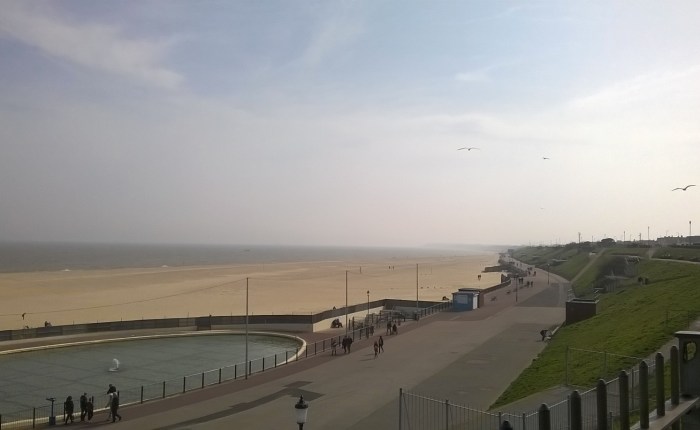
What better way to celebrate our ‘salt’ wedding anniversary than a trip to the seaside for a dirty weekend? We were chauffeured to Gorleston-on-sea in decadent style by a pair of old Norwich rascals (you know who you are), necking fizz all the way in the back of their Mercedes Benz. Our luxurious room with a sea view came courtesy of my sister and the celebratory bottle of red on the Cliff Hotel terrace came courtesy of Liam.

Mother Nature, a contrary old bag round these parts, was in a bright mood for a change so we were all set for fun on the sand and frolics in the boudoir. The rest I leave to your vivid imagination.

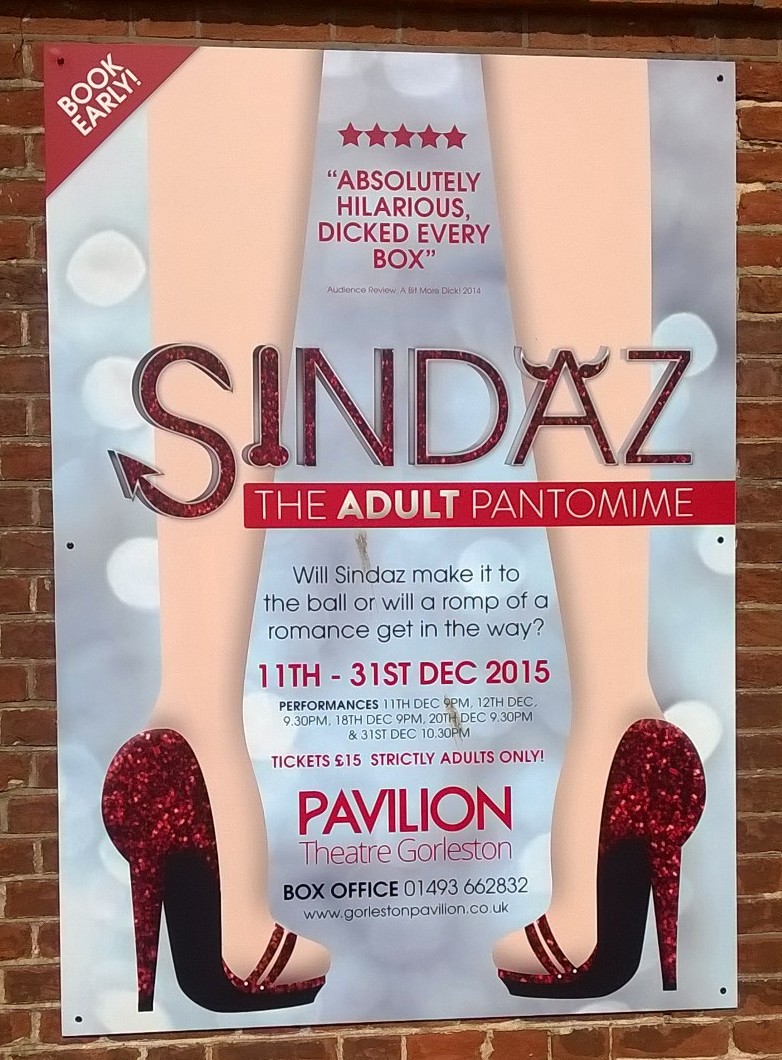
Alas, we were four months too late to catch a performance of ‘Sindaz’ the adult panto, giving a whole new meaning to the line, ‘he’s behind you’.

SindazSo we squandered a few quid in the penny arcade instead. And what did we get for our coppers? A cuddly toy, obviously. We called him Gallstone.

Gallstone

Anne Reid, I Love to Sing

Anne Reid, I Love to Sing

A couple of weeks back, Liam treated us both to a slice of cabaret at Norwich’s trendy Playhouse Theatre. We were front and centre for a night of song and gossip from veteran actress and national treasure, Anne Reid.

Ms Reid first electrified  the nation when she was fried by a dodgy hair dryer in Coronation Street, Britain’s longest running soap. It was 1971 and the untimely death of her character, Valerie Barlow, had 18 million viewers on the edge of their lurid orange velour sofas – about 30% of the entire UK population at the time. After taking time out to do the family thing, Ms Reid returned to the boards and popped up all over the place in film and television. Later, as a 66-year-old jobbing actress, she bedded the future 007 Daniel Craig in the 2003 film, ‘The Mother’. She received a BAFTA nomination for her performance. I would too, if I had the chance to bonk James Bond.

Anne Reid hasn’t looked back since. These days, she’s better known as Celia, the Daily Mail reading bigot with a lesbian daughter in the romantic drama ‘Last Tango in Halifax’, playing opposite old-school socialist Alan (Derek Jacobi). It’s an engrossing tale of family dysfunction with tight, fast dialogue. The show’s been an unexpected worldwide hit for the BBC.

Last Tango in Halifax

Back to the Norwich Playhouse. Thanks to Ms Reid’s touching renditions and recollections, we left the theatre on a nippy night feeling nothing but warm inside.

Art of the Underground

Art of the Underground

The human compulsion to draw on walls is as old as humanity itself; think of all those masterly cave paintings in the Dordogne. And I gather the Greeks and Romans were rather fond of doodling all over the place too. These days, you can hardly turn a corner without seeing someone’s tag scrawled over some surface or other. So, is graffiti a vibrant urban art form or senseless vandalism? The jury’s out on that one. Personally, I dislike much of it because, like any other form of advertising, most of it is rubbish. Back in the day, I didn’t find the ugly scribbles defacing much of the Alto Bairro district of Lisbon or Damm Square in Amsterdam particularly colourful, cutting edge or inspirational. And I wasn’t such an old fart then.

What of Norwich? Well, we have our fair share of street artists/delinquents (delete according to taste) thinking they’re the next Banksy. The grim Sixties’ underpass close to the micro-loft provides a blank canvas for anyone wanting to express themselves in spray paint. But this year, Life in a Fine City had the bright idea of inviting local artists young and old to cover the walls in original work. I must say, it makes a damp, smelly and soulless space a little more bearable to pass through and, out of respect, the taggers have left the art (mostly) untouched. There is honour among artists, methinks.

A few that caught my eye…

Déjà Vu

Déjà Vu

I’m sure I’ve been here before.

So said my mother after she took a sip of her brandy and coke and looked around the large smoke-filled room. It was 1980 and I was stepping out with Bernie, a salesman from Somerset. We were treating my mother to a night of slap, sequins and perversion at the Royal Vauxhall Tavern, South London’s premier drag pub. As it turned out, her feelings of déjà vu were spot on. In the Swinging Sixties, she and my soldier dad had slipped out from the barracks on the other side of the river to catch an act or two.

Bernie was a close friend of Pat, the jovial landlord. Against all the odds, bent-as-a-nine-bob-note Bernie and straight-as-a-die Pat had consummated their bromance at the horses, shelling out a king’s ransom at the Cheltenham Gold Cup every year.

RoyalVauxhallTavern

Pat was Irish. Digging roads or running pubs were the standard professions for the Irish back in the day. Just a few months before, Pat had been the manager of the Colherne, the grand old queen of gay bars in West London.  But Pat had ambitions to rise above the ranks and saved his pennies. When the tenancy of the Royal Vauxhall Tavern came up, he grabbed it with both hands, moved in his wife and kids and spent a small fortune reconfiguring the original three bars into one large single space. It was a masterstroke that saw the till ka-chinging for years.

Royal Vauxhall Tavern Charity Night

Charity night at the Royal Vauxhall Tavern with the late Diana Dors flanked by the Trollettes. That’s Pat the landlord (top row, third from the left. Next to him in the bow tie is someone everyone knew as Terry ‘Allcock’ – can’t think why we called him that.

Image courtesy of the RVT Community.

Time marched on, of course. Pat and his missus retired back to Ireland many moons ago and, sadly, I lost touch with Bernie in about 2006. The Royal Vauxhall Tavern, however, continued to thrive, standing firm against the constantly changing rainbow landscape as a venue for drag and alternative cabaret. Arguably, the venue’s most famous turn was Lily Savage, Paul O’Grady’s theatrical alter-ego before he hung up the blond wig and became every housewife’s favourite.

And then the iconic building was bought by an Austrian property development company. There’s a vast building boom going on in Vauxhall and Battersea these days, with a tube line extension, the redevelopment of Nine Elms, Battersea Power Station and a new state of the art American embassy. The future of the pub was looking bleak. That was until some punters swung into action and applied for listed building status. And guess what? They got it. Historic England (the organisation responsible for such things) decided…

…the building has historic and cultural significance as one of the best known and longstanding LGB&T venues…

It’s the first time any building has been listed on this basis. While the new status protects the building for posterity, it doesn’t mean that the venue will survive in its present form but it’s a start, a great start.