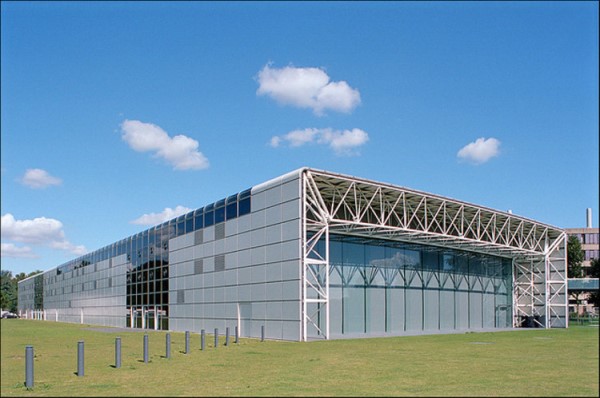
“Grab your man bag,” Liam said. “We’re off to Sainsbury’s.” It wasn’t a pint of semi-skimmed and a sourdough loaf on his mind but something altogether more highbrow – the Sainsbury Centre for Visual Arts.
The museum was opened in 1978 to show off the art collection donated to the University of East Anglia by Sir Robert and Lady Lisa Sainsbury (of the Sainsbury’s supermarket chain). Robert was made a knight of the realm for his services to the arts, not for the quality of his Jersey royals or his juicy plums.
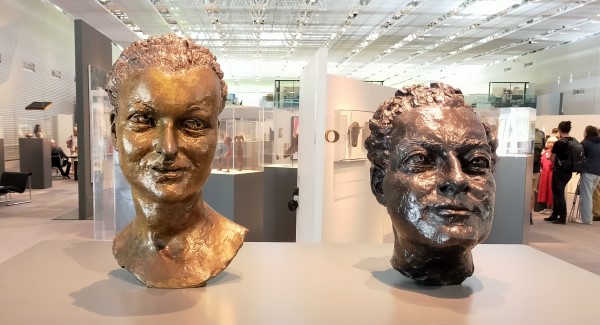
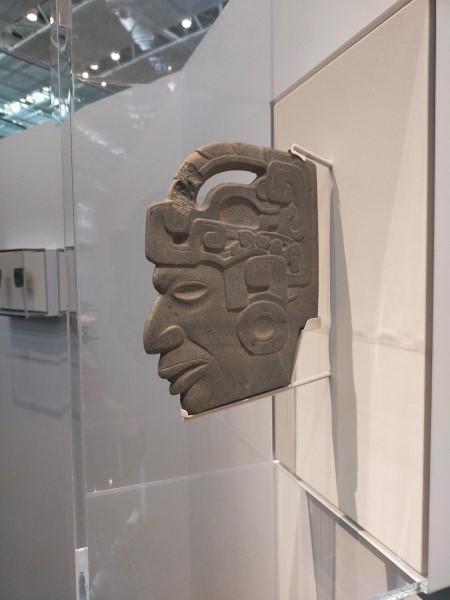
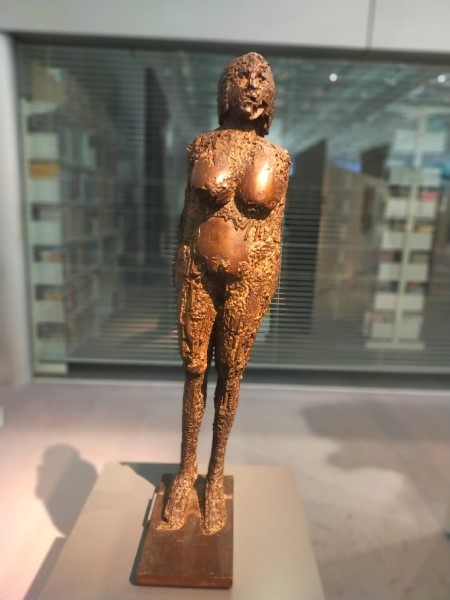
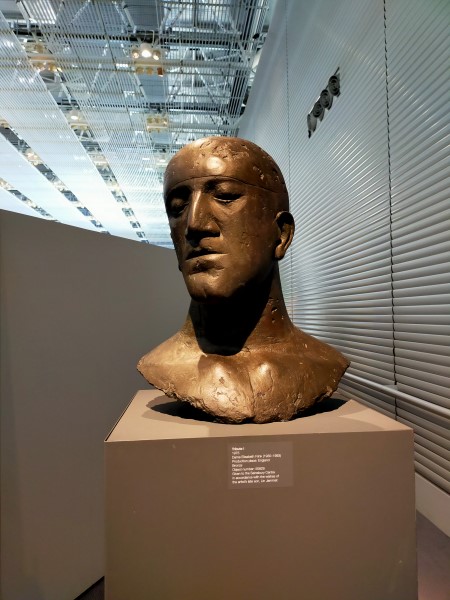
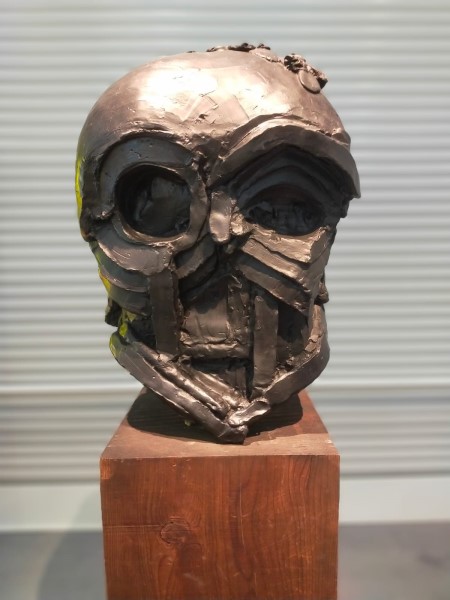
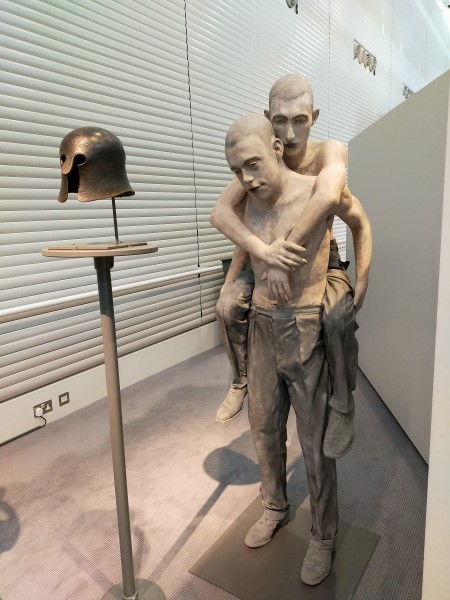
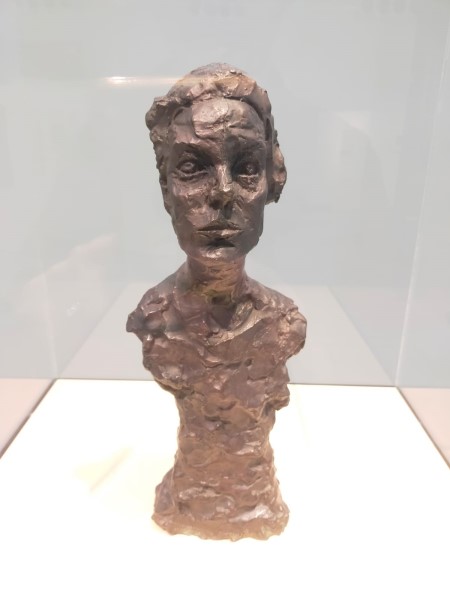
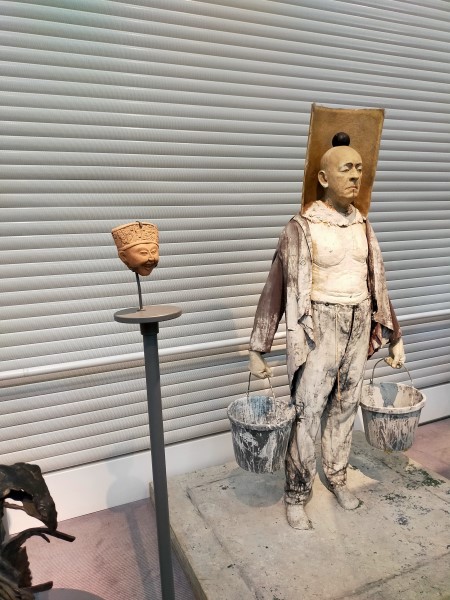
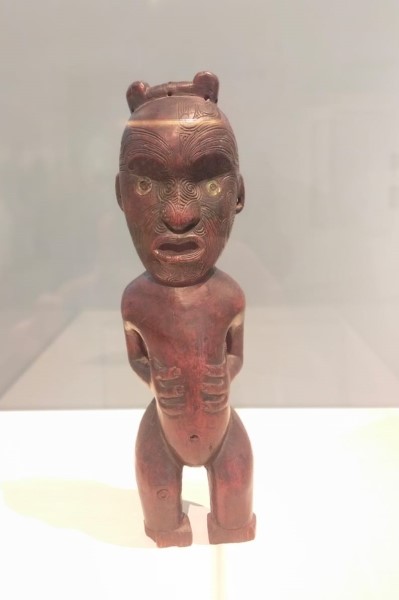
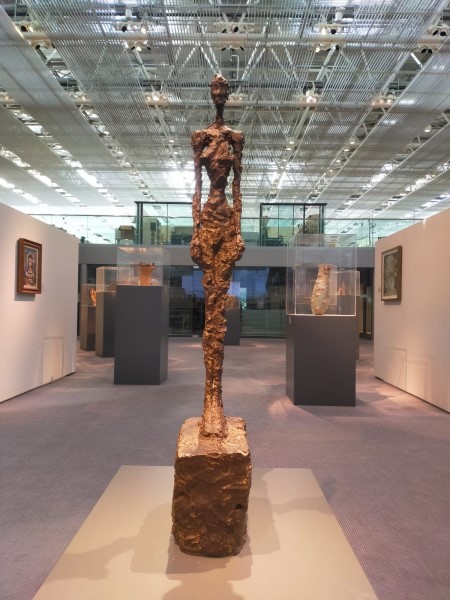
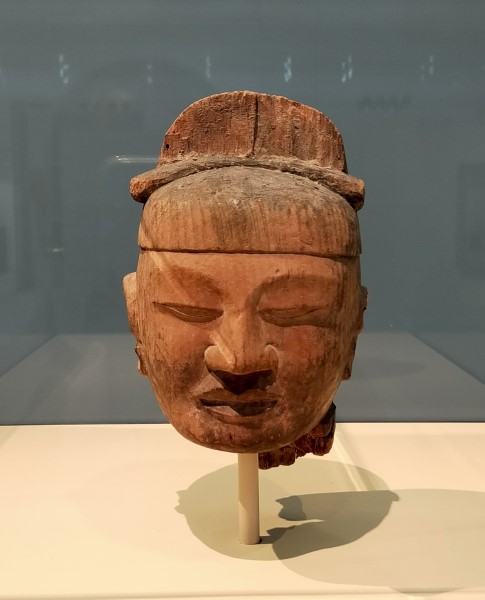
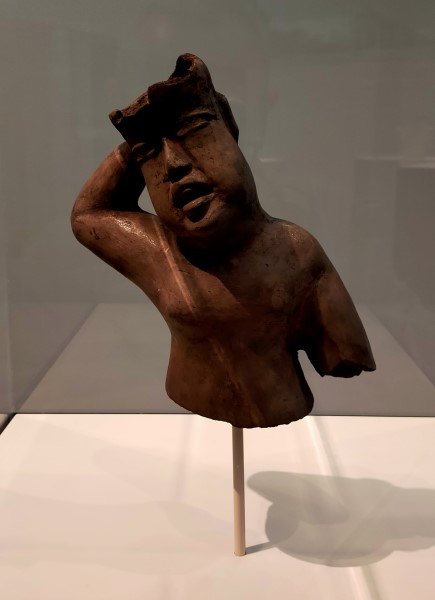
The impressive Norman Foster-designed building sits within the leafy university grounds and houses an eclectic miscellany of paintings and sculptures spanning 5,000 years, with artefacts from prehistory right through to the late 20th century. As you meander through the exhibits, there seems to be a particular obsession with the human form.
Lady Lisa and Sir Robert Sainsbury
The building itself was put on display in several scenes from the 2015 films Avengers: Age of Ultron and Ant-Man.
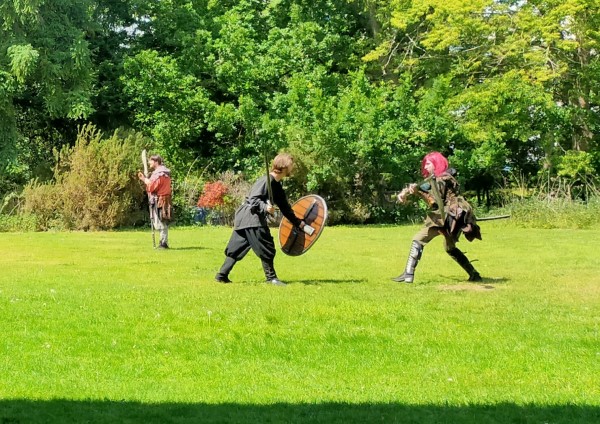
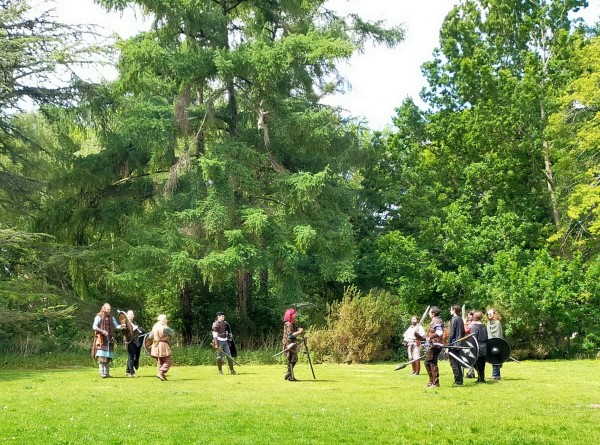
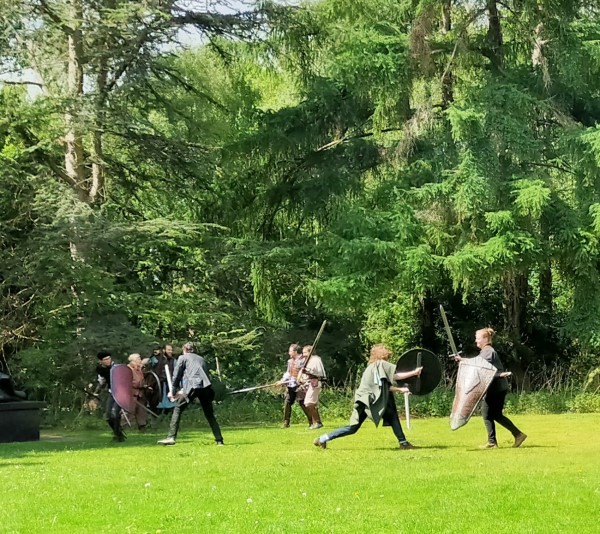
And continuing the movie theme, we weren’t expecting to witness a half-baked Lord of the Rings re-enactment as we sank a bottle of plonk in the museum refectory. How times have changed. In my day, students misspent their days getting pissed in the Students’ Union bar, not mucking about in Middle-earth. Or to paraphrase Gandalf: “You shall not pass out.”
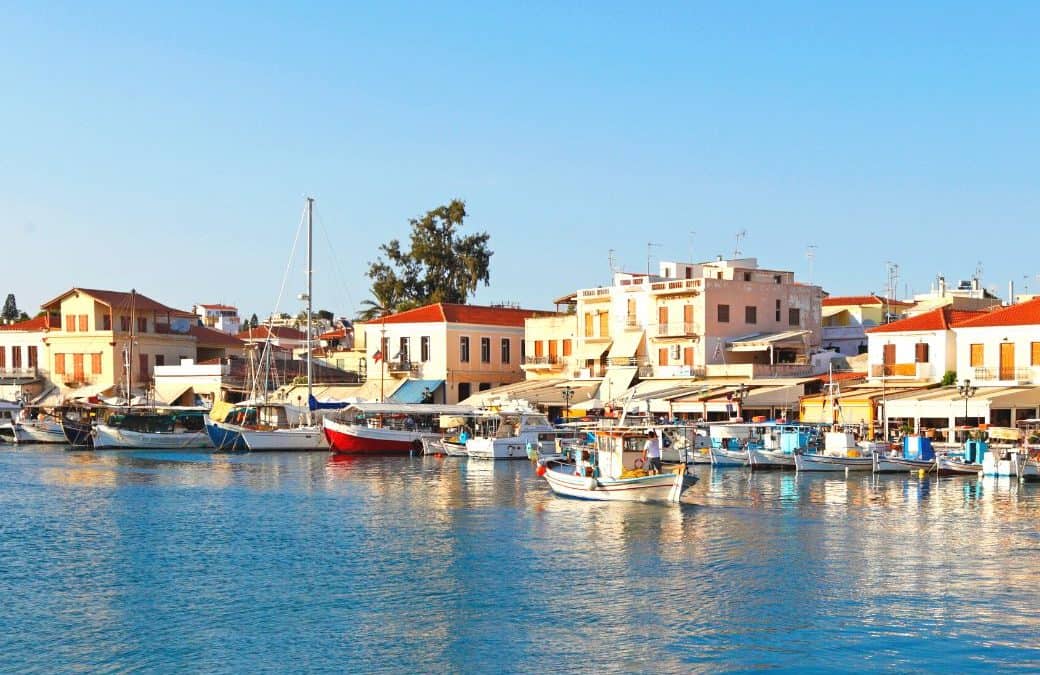
Our modern-day Greek odyssey came to a sweaty end with a few days on the pretty island of Aegina, just a short ferry hop from the Port of Piraeus in Athens. We arrived at the port on the hottest of days and everything was overheating, not least Liam’s mobile phone, which decided enough was enough and shut down without warning. Unfortunately, our ferry e-tickets were loaded into his Google wallet, so blind panic started to set in. A nice young sailor felt our pain and let us board anyway.
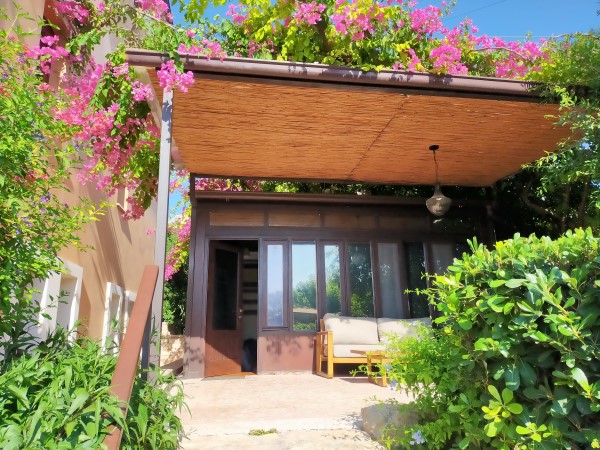
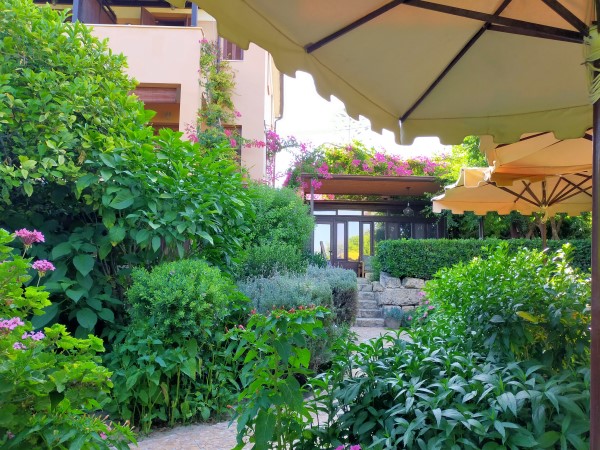
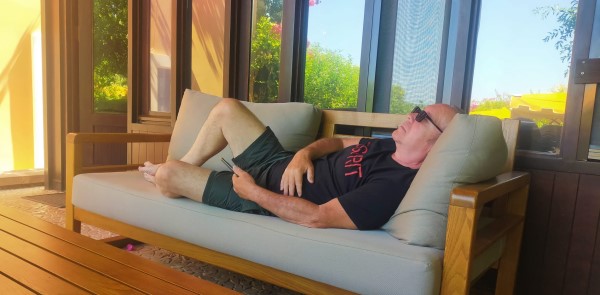
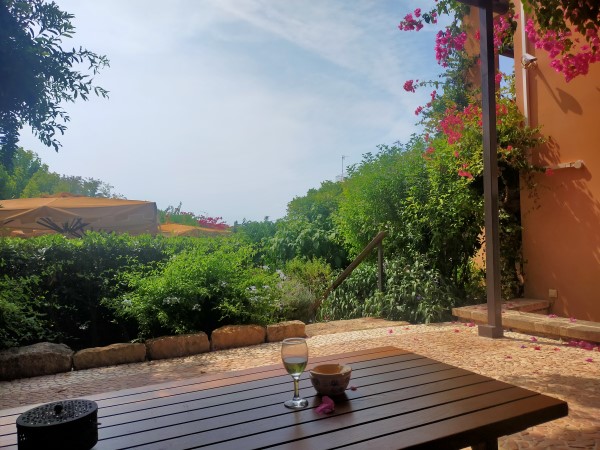
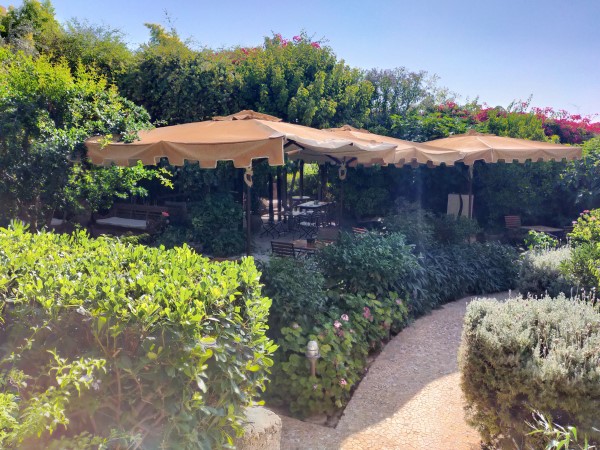
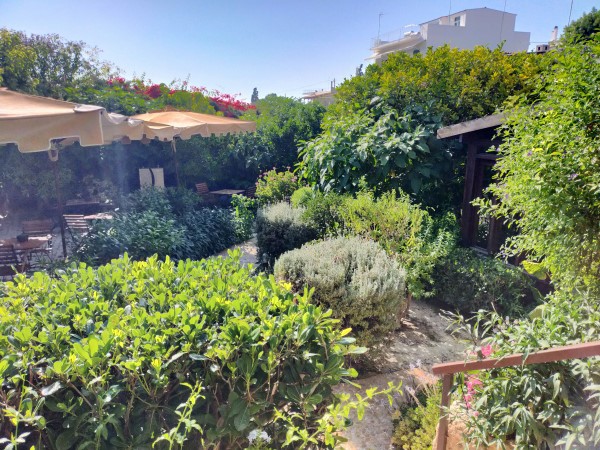
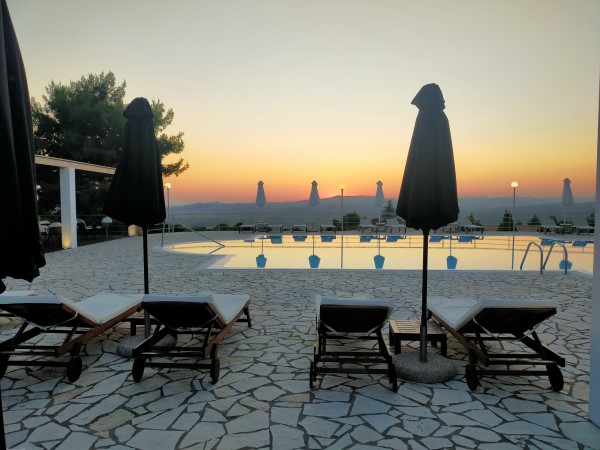
Liam had booked the gorgeous Bamboo Cottage in the lush grounds of the Rastoni Hotel, and it was perfect – just the ticket for winding down and resting our weary bones after all that exertion clambering over tumbledown stones perched on hilltops.
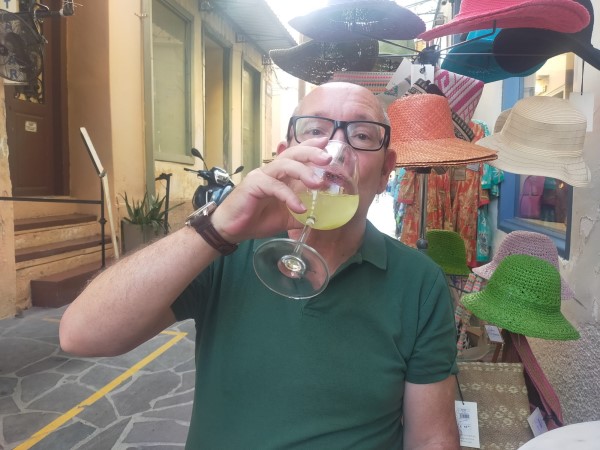
Being so close to Athens, Aegina is popular with city day trippers and weekenders who like to party. Come sundown, the fancy harbourside bars and restaurants fill with trendy young things doing what trendy young things do everywhere – chatting, flirting, larking about and having fun. We preferred the backstreet bars where the ambiance is less frenetic for those of us longer in the tooth.
On our last night, just after the waiter had taken our food order, there was a sudden power cut, plunging us all into darkness. Memories of long lights-out nights in Bodrum came flooding back. After a few moments, a generator fired up. As the courtyard filled with diesel fumes, a small lapdog in a massive pink bow at the next table yapped in competition with the mechanical beat. Mercifully, mains power was eventually restored, the air cleared and we were able to eat our meal without the restaurant smelling like a petrol station or us choking to death.
We left the Rastoni Hotel the next day with fond farewells from our kindly hostess. She asked us to come back again. That would be a big fat yes.
I’ll leave you with an image of the Alps as seen from the window of our return flight. Missing Greece already! I feel another trip coming on.
Our final sleepover on our three-day Greek odyssey was in a slightly faded, old school hotel with gaudy trappings that wouldn’t have looked out of place in one of Saddam Hussein’s flashy palaces. Nevertheless, our room was clean and comfortable, and meals were wholesome and plentiful.
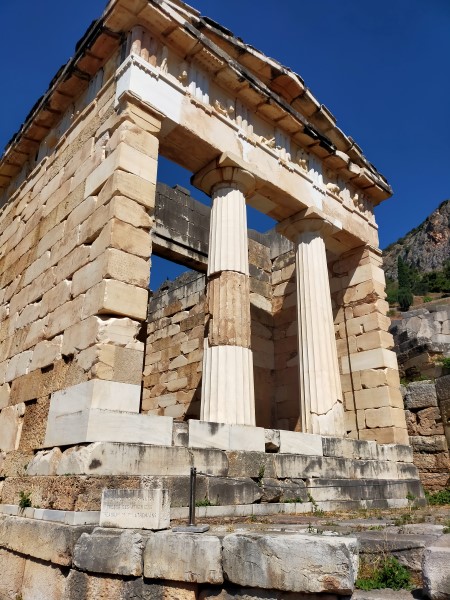
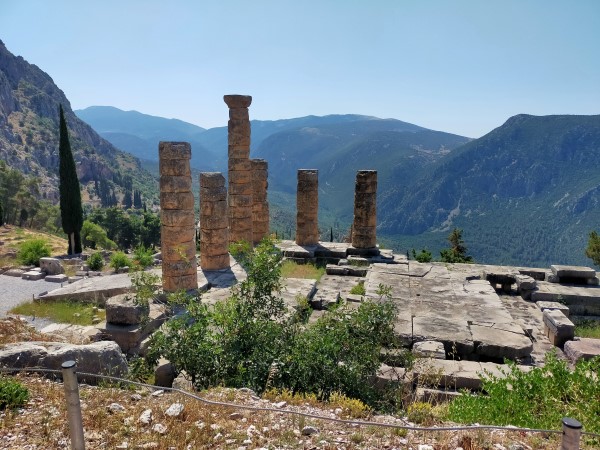
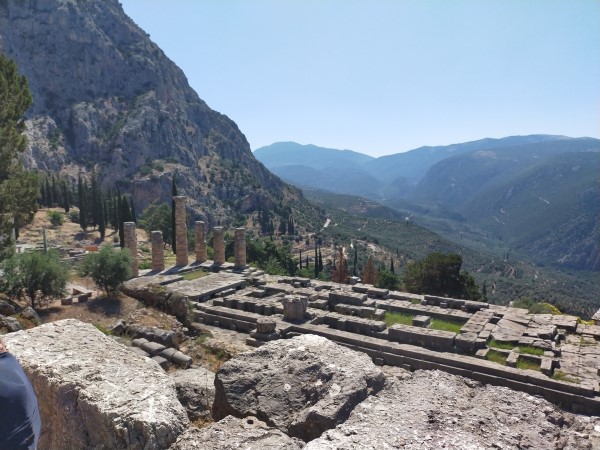
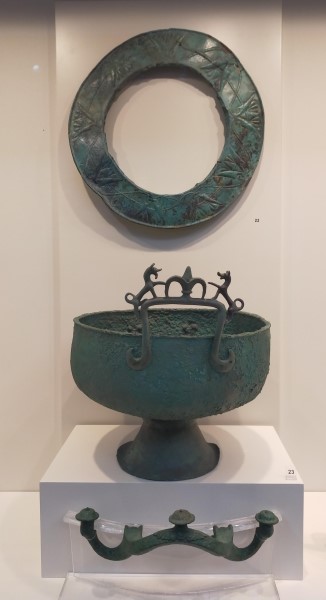
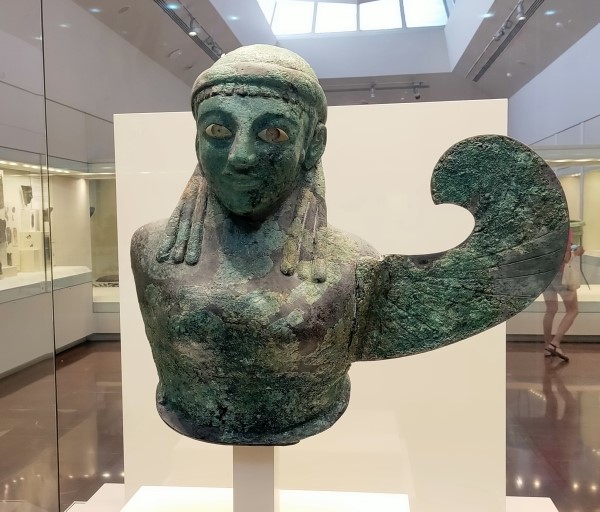
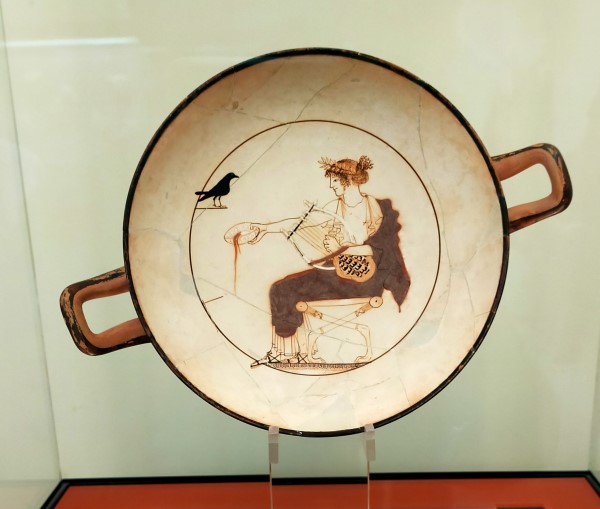
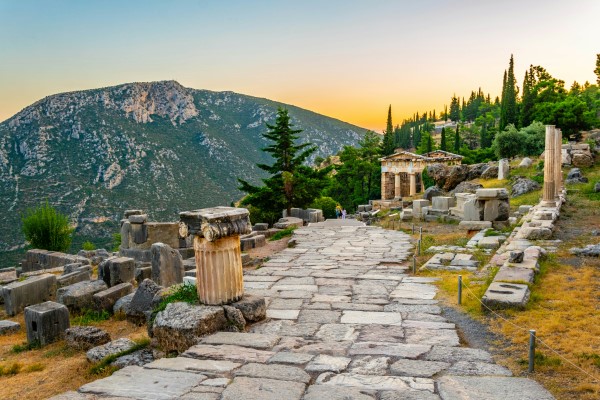
Well-fed and watered, we journeyed to Delphi, the sacred precinct dedicated to Apollo and considered by the ancient Greeks to be the navel of the world. In fact, the name ‘Delphi’ likely comes from the ancient Greek word ‘delphys’, meaning ‘womb’. As such, Delphi held unique religious and political influence, attracting pilgrims from across the Mediterranean. It also attracted their cash and ‘corporate’ bungs from city states competing for holy favours. Ye Gods, those ancients knew a thing or two about raking in the cash and making a mint.
The sanctuary was most famous for the Oracle of Apollo, whose cryptic prophecies would be delivered through the Pythia (a priestess) after she sniffed something she shouldn’t. People could wait months for a chance to consult the pretty-boy deity, but a sneaky backhander might get you to the front of the queue.
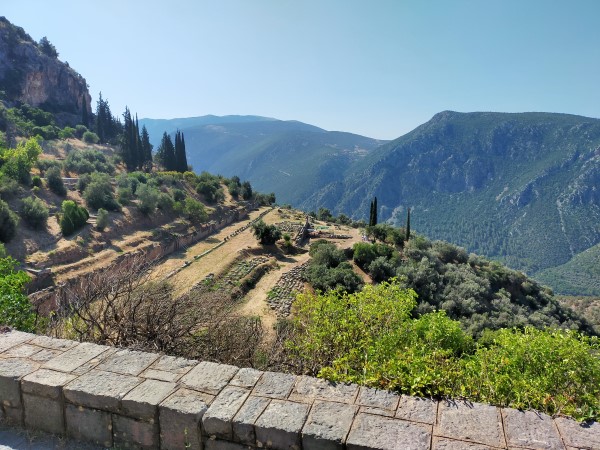
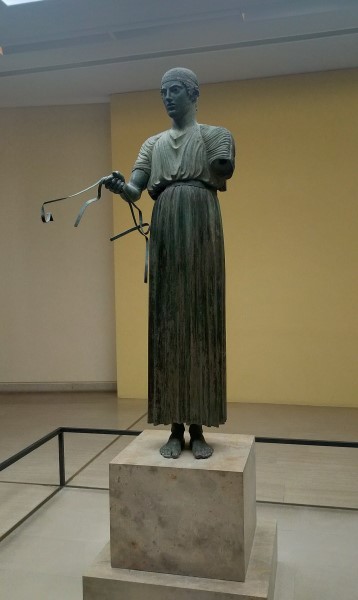
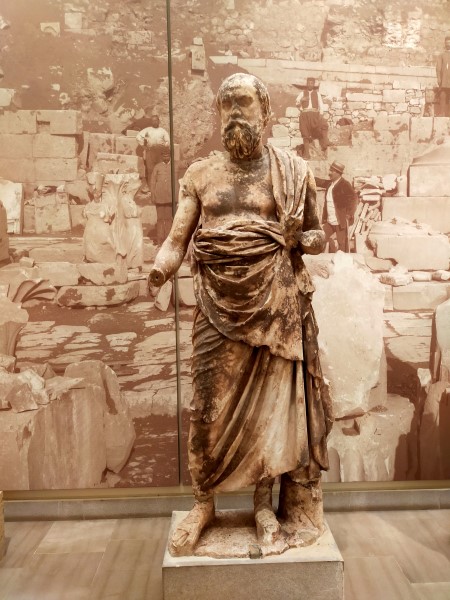
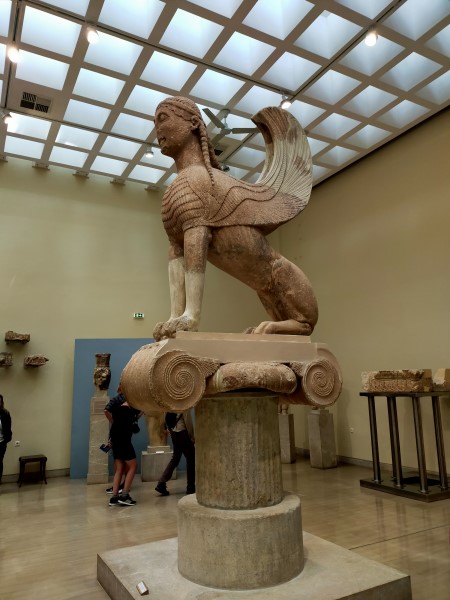
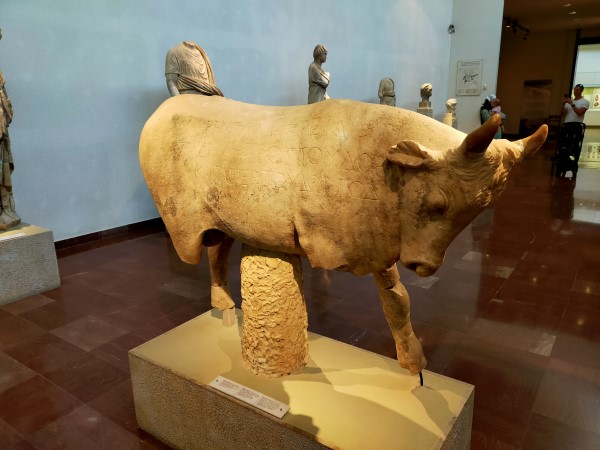
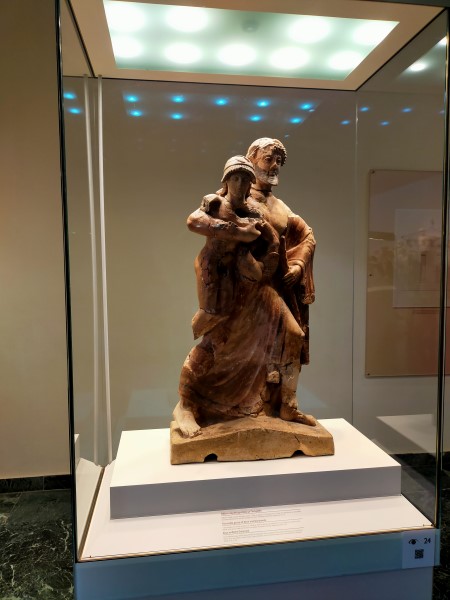
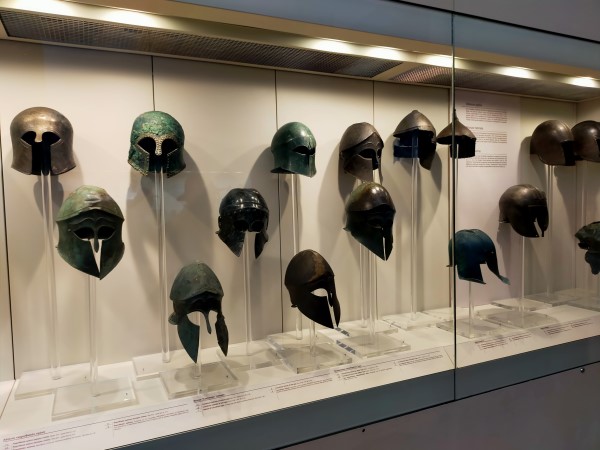
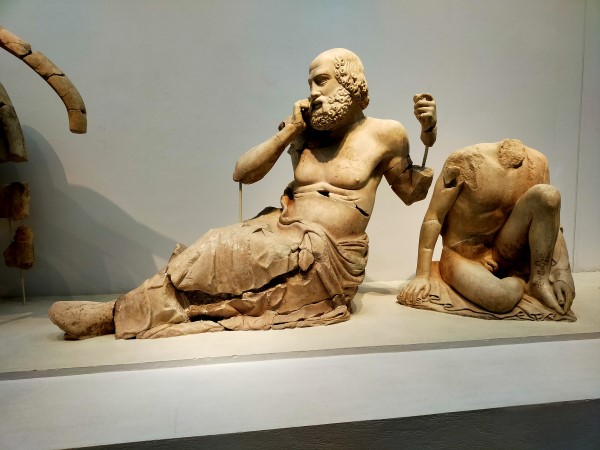
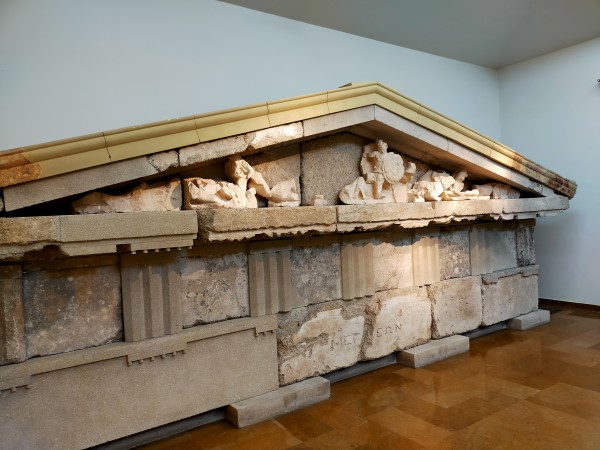
The entire enterprise was closed down by the puritanical Theodosius I in 391 – the very same Christian Emperor who called time on the Olympic Games two years later. I bet he was a laugh at a party. Just like Olympia, it’s hard to visualise how magnificent the sanctuary once looked in its heyday. But Delphi’s position, cradled by lush pine-clad mountains, is even more spectacular, and the museum even more impressive.
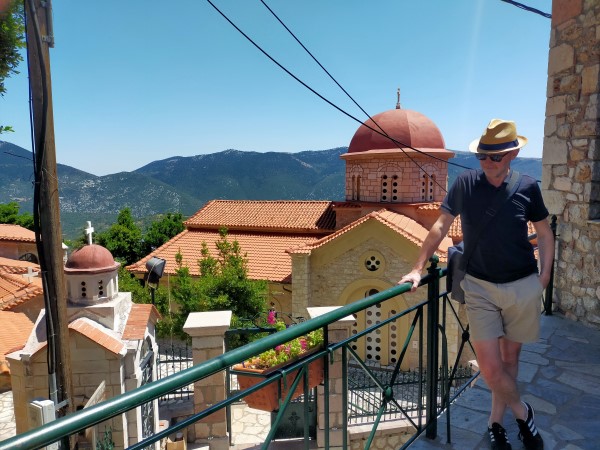
After more tales of the ancients from our guide, Demitrios, it was time to head back to the big city. But not before a lunchtime pit stop in Arachova, a cute little town of narrow streets and stone houses clinging to the slopes of Mount Parnassos.
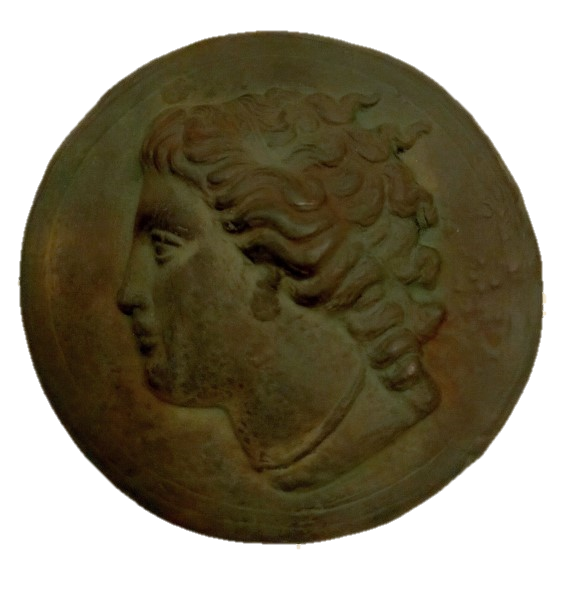
Our grand tour may have reached the end of the road, but we’re bringing home the lurv with our very own piece of classical Greece – an image of Aphrodite, a memento to hang on a wall. It’s not the real thing, obviously. No smuggling out priceless antiquities in our hand luggage. No, we picked her up in the museum shop. Now for a well-earned rest from our sweaty labours. Aegina’s up next.
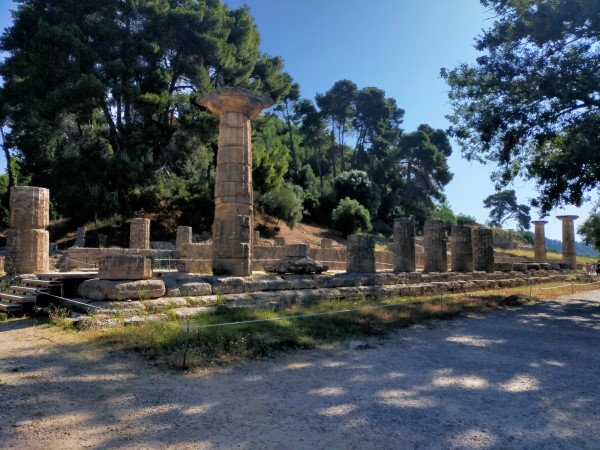
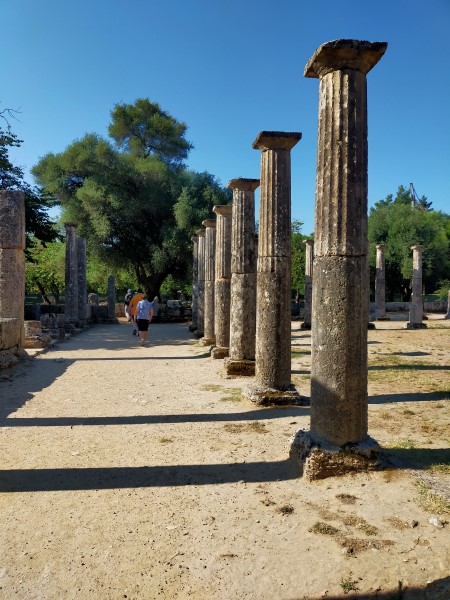
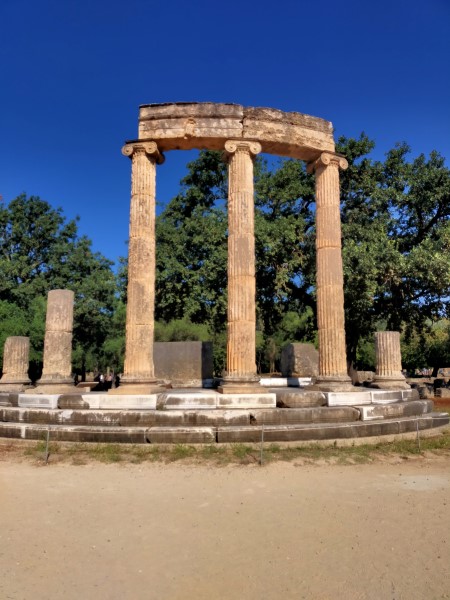
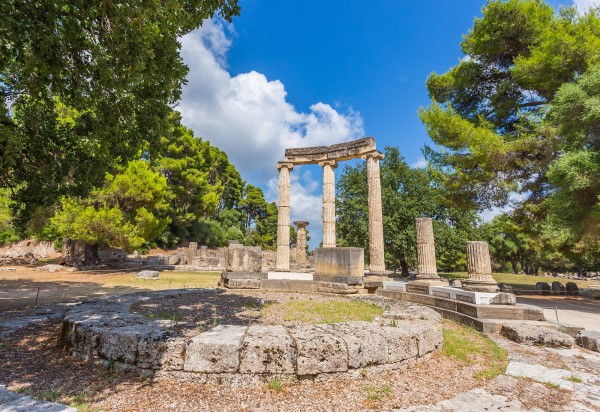
After a restful night and a bountiful breakfast buffet, we were back on the road for our morning reccy of the sanctuary of Olympia, birthplace of the Olympic Games. Just like their modern reincarnation, the games were held every four years and featured a series of athletic competitions. However, rather than the pursuit of national glory, with all that jingoistic flag-waving, the first games were a religious festival to honour Zeus, top god on Mount Olympus.
According to Demetrios, our all-knowing guide, the entire enterprise was a licence to mint money, with gifts to the gods flooding in from across the Greek world. Unlike most Olympiads these days, it made the hosts filthy rich.
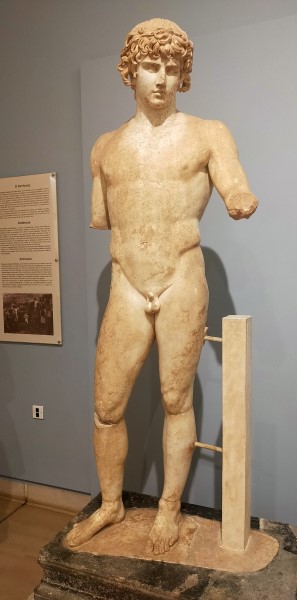
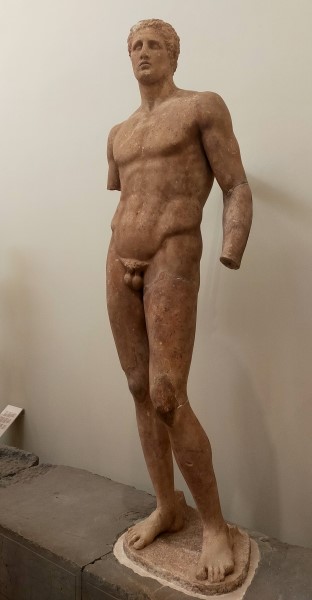
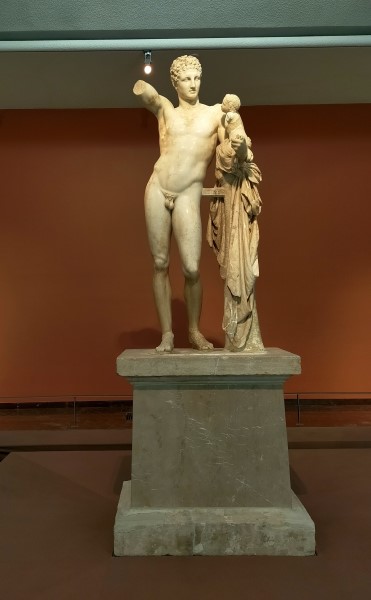
The male competitors always competed in the buff. Imagine the sight of sweaty fellas in their birthday suits dripping in olive oil without a jock strap between them, their family jewels swaying from side to side like weights on a grandfather clock – surely they must have done themselves a mischief. But I guess that was the price they paid to be poster boys of their time, to be feted and fantasised about.
Women were not permitted to participate in the main games but had their own, separate events known as the Heraea Games, in honour of Zeus’ missus, Hera. They had to be unmarried, and unlike the ripped blokes, they kept their kit on.
The games ran for about a thousand years, from 776 BCE until 393 CE, when they were abolished by that Christian zealot, the Roman Emperor Theodosius I. The buttoned-up killjoy probably thought all that homoerotic nude wrestling was the work of the Devil.
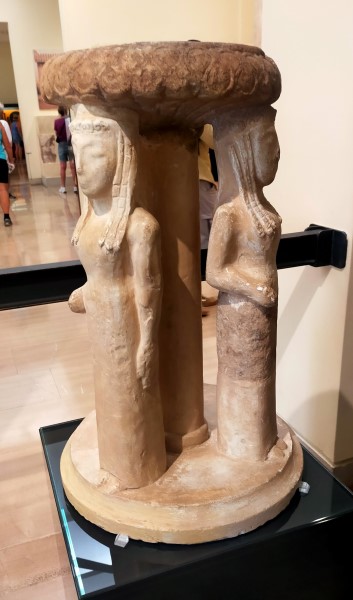
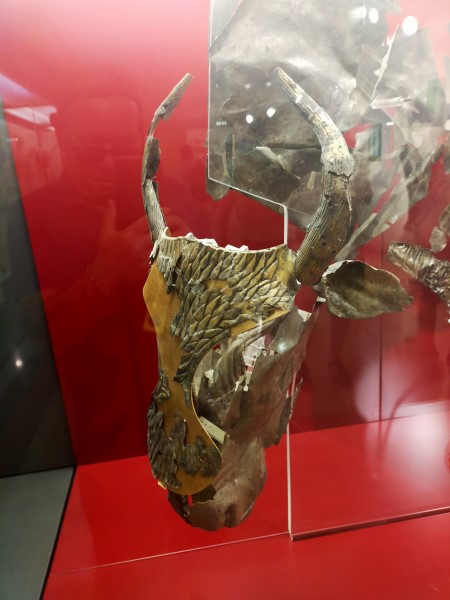
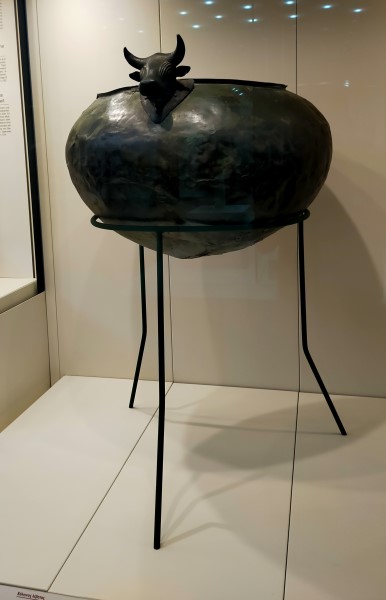
It takes imagination to visualise the once magnificent temples and civic buildings. Nevertheless, the setting is stunning. And the museum is pretty good too. Liam was thrilled to be able to place his big toe on the ancient starting line at the very first Olympic Stadium. He kept his knickers on, much to the disappointment/relief (delete according to taste) of the gathering crowd.
Our three-day whistle-stop tour of some of Greece’s most famous historic sites was both tiring and inspiring in equal measure. We were blessed to be in a small group of just five in our (mercifully) air-conditioned minibus. Our fellow travellers were all Australians. I like Aussies. We share a similar irreverent sense of humour.
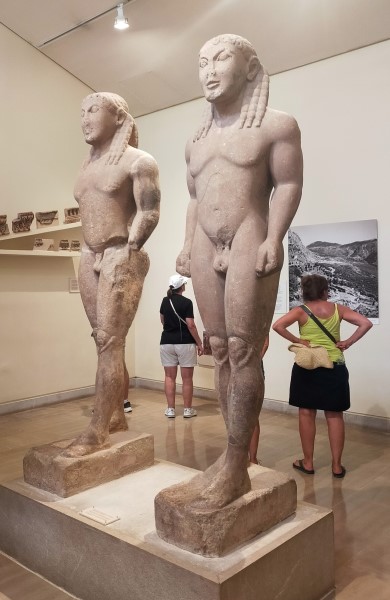
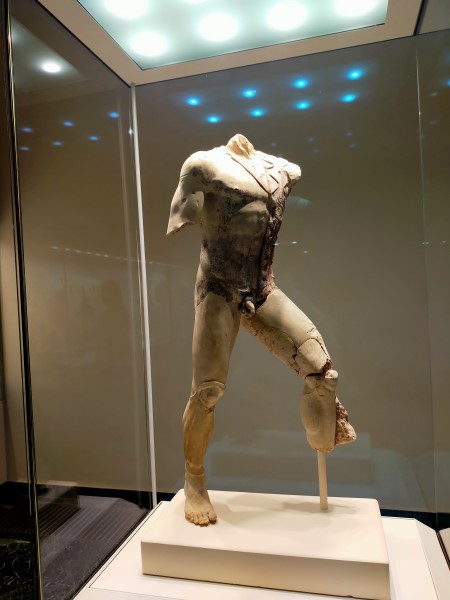
Demetrios, our well-versed tour guide – an archaeologist by trade – really knew his onions. He spun a good yarn, bringing the ancients to life by blending fabulous fact with fantastic fiction. Throughout our odyssey, he told tales of war and heroism, murder and mayhem, loyalty and treachery, greed and generosity, morals both highbrow and gutter – a no-holes-barred mythical soap opera on acid. All the vices of gods and humans were laid bare, literally in the case of the many fine chiselled statues of beautiful young men with their willies hacked off by scandalised Christians.
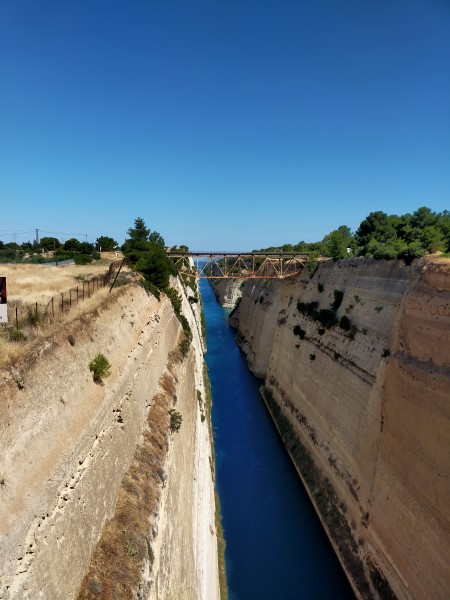
Our first stop was the Corinth Canal – not an ancient site per se; it was completed in the 1880s. But it was a welcome comfort break after the long slog escaping the urban sprawl of Athens. And the canal, cut through the hard rock of the narrow Isthmus of Corinth that separates the Peloponnese from the mainland, is impressive, despite being a bit of a white elephant.
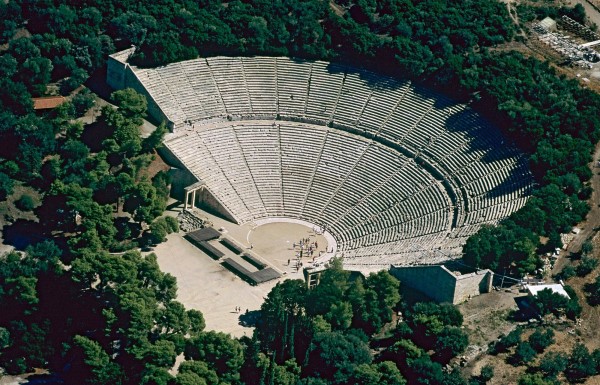
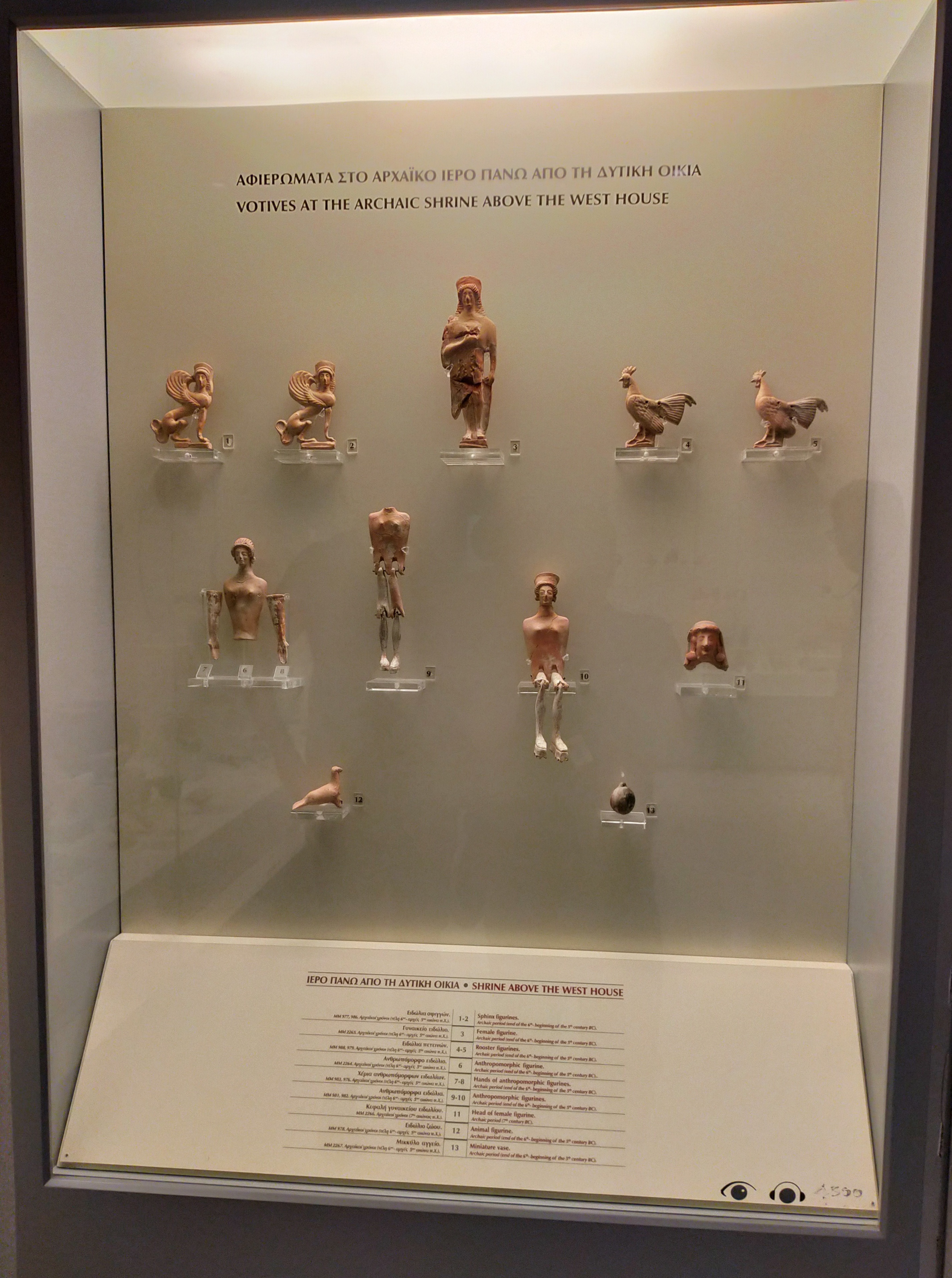
Second stop was the spectacular and well-preserved 4th-century BCE theatre at Epidaurus, with its reputation for almost perfect acoustics – ably demonstrated by Demetrios as we stood in the orchestra pit. The echo was remarkable and a little spooky. Unsurprisingly, the theatre is still in use today.
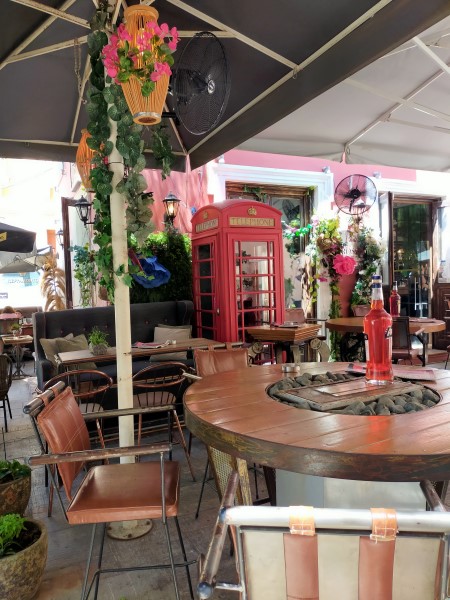
We pit-stopped in modern Epidaurus for a bite. It’s a handsome port town on the Saronic Gulf. Sadly, it was way too hot to explore, though we thought the old British classic phone box in the café was a welcome touch.
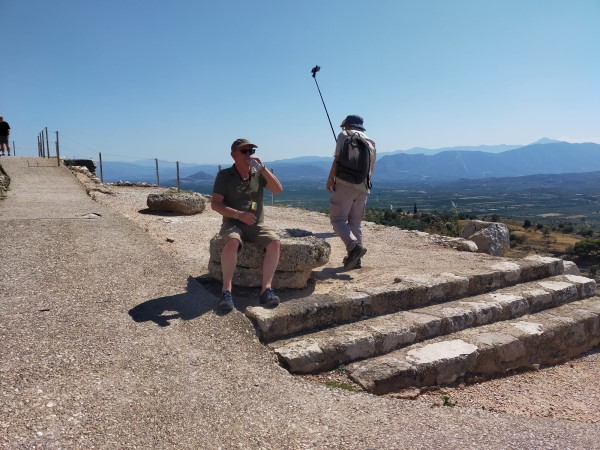
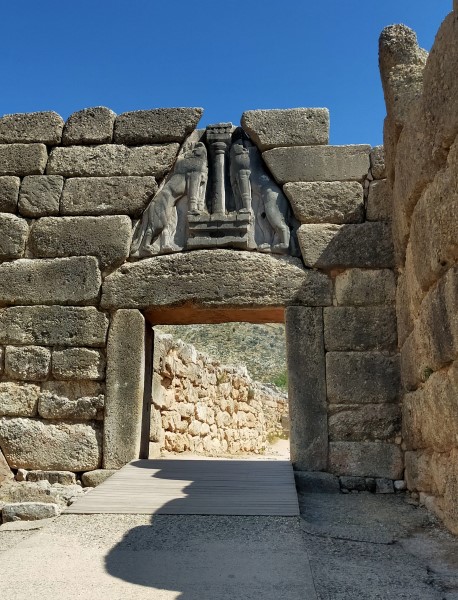
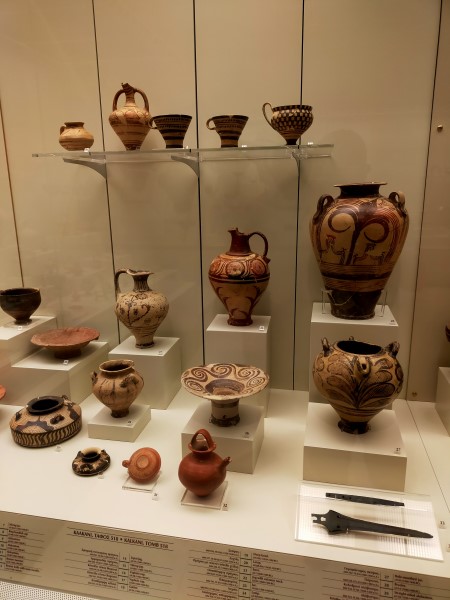
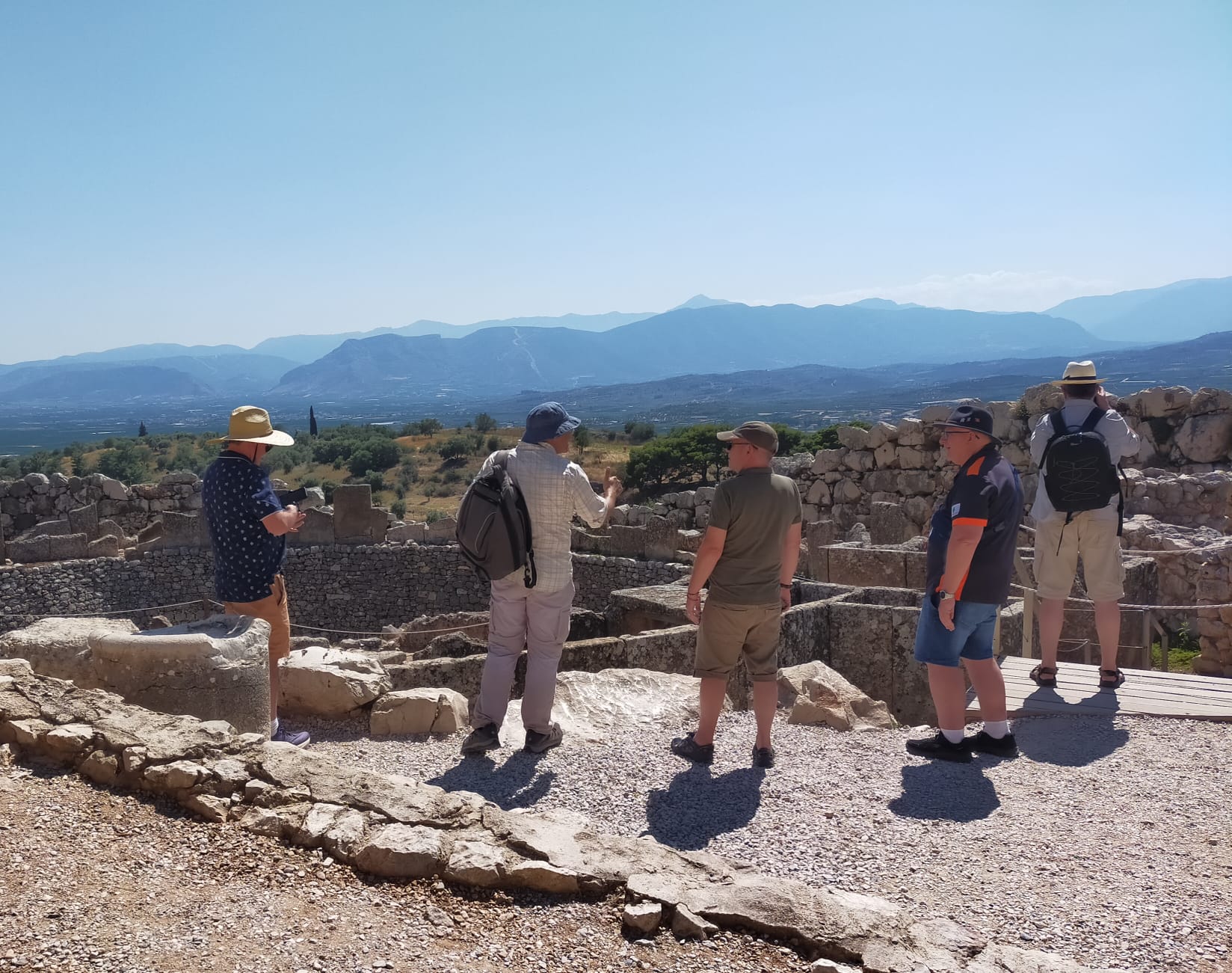
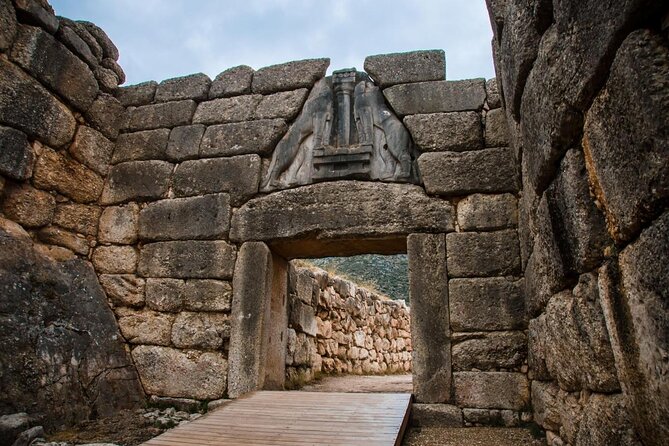
Fourth stop was Mycenae, an acropolis almost as old as time itself, sitting on a hilltop 900 feet above sea level. An entire period of Greek civilisation between around 1,600 BCE to about 1,100 BCE is named after it, so it’s no wonder it’s a UNESCO World Heritage Site.
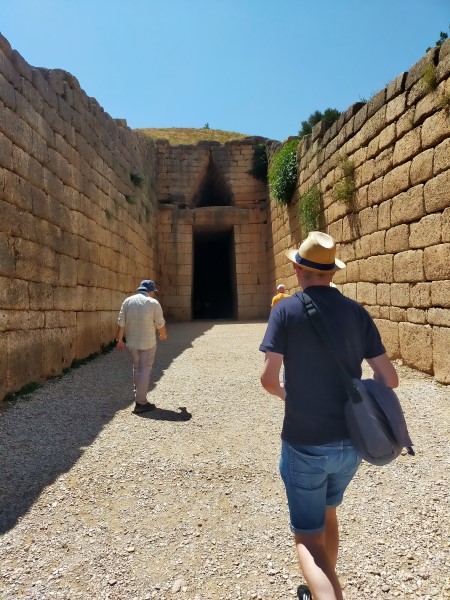
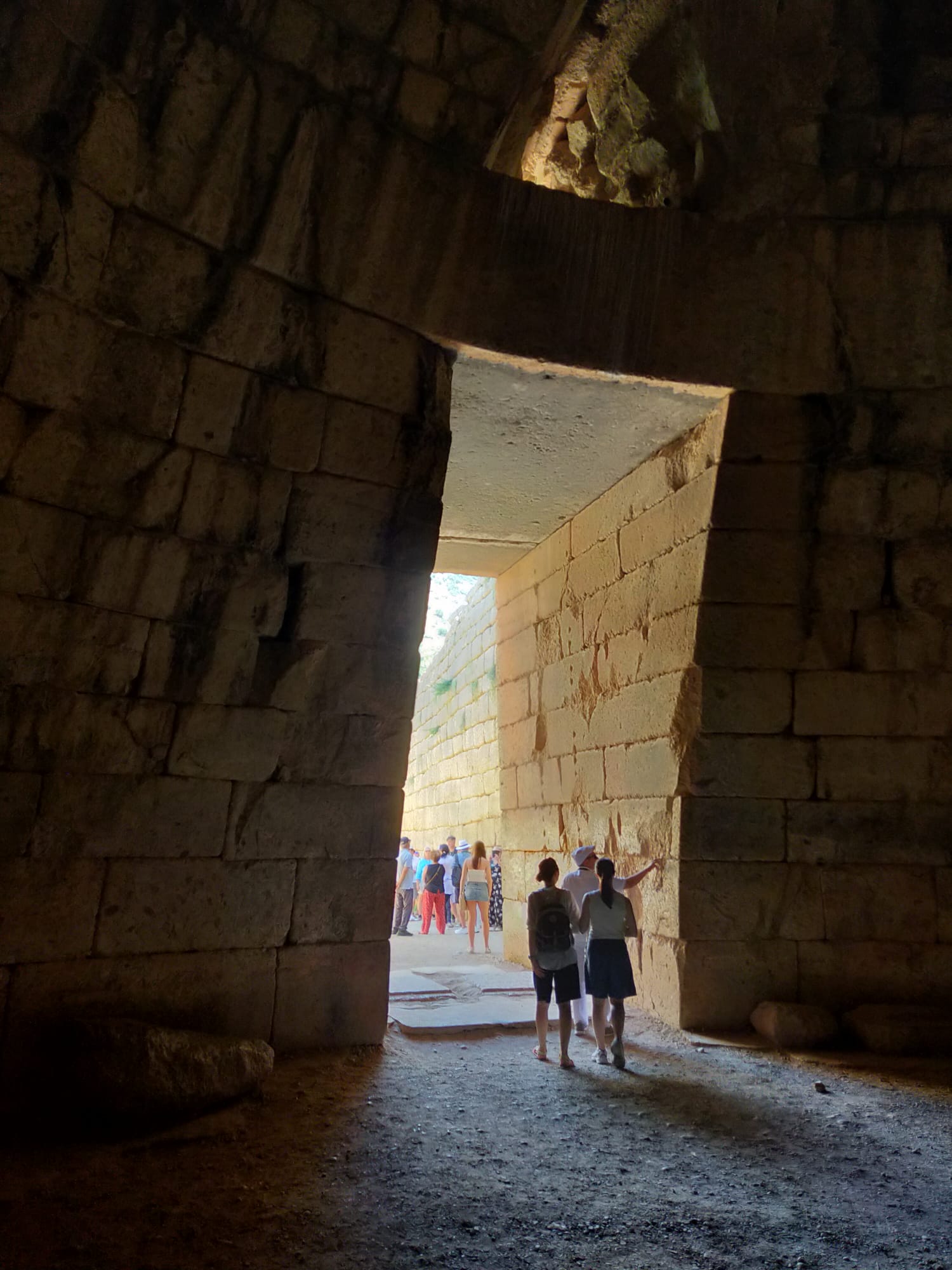
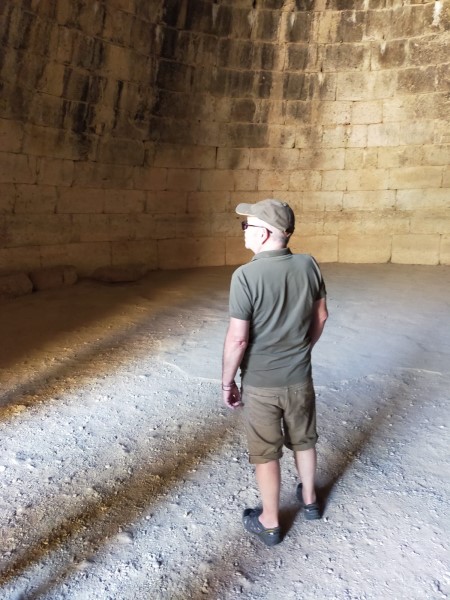
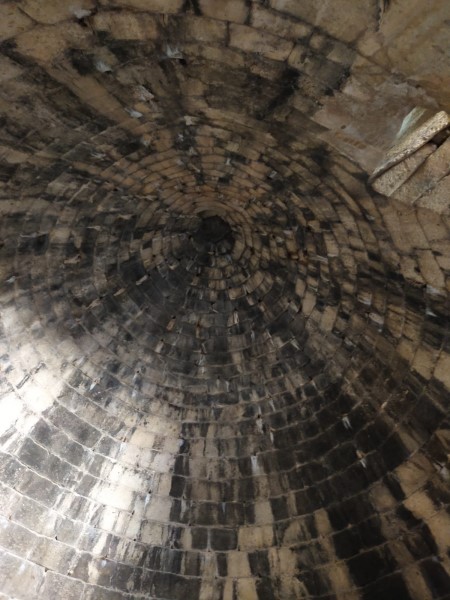
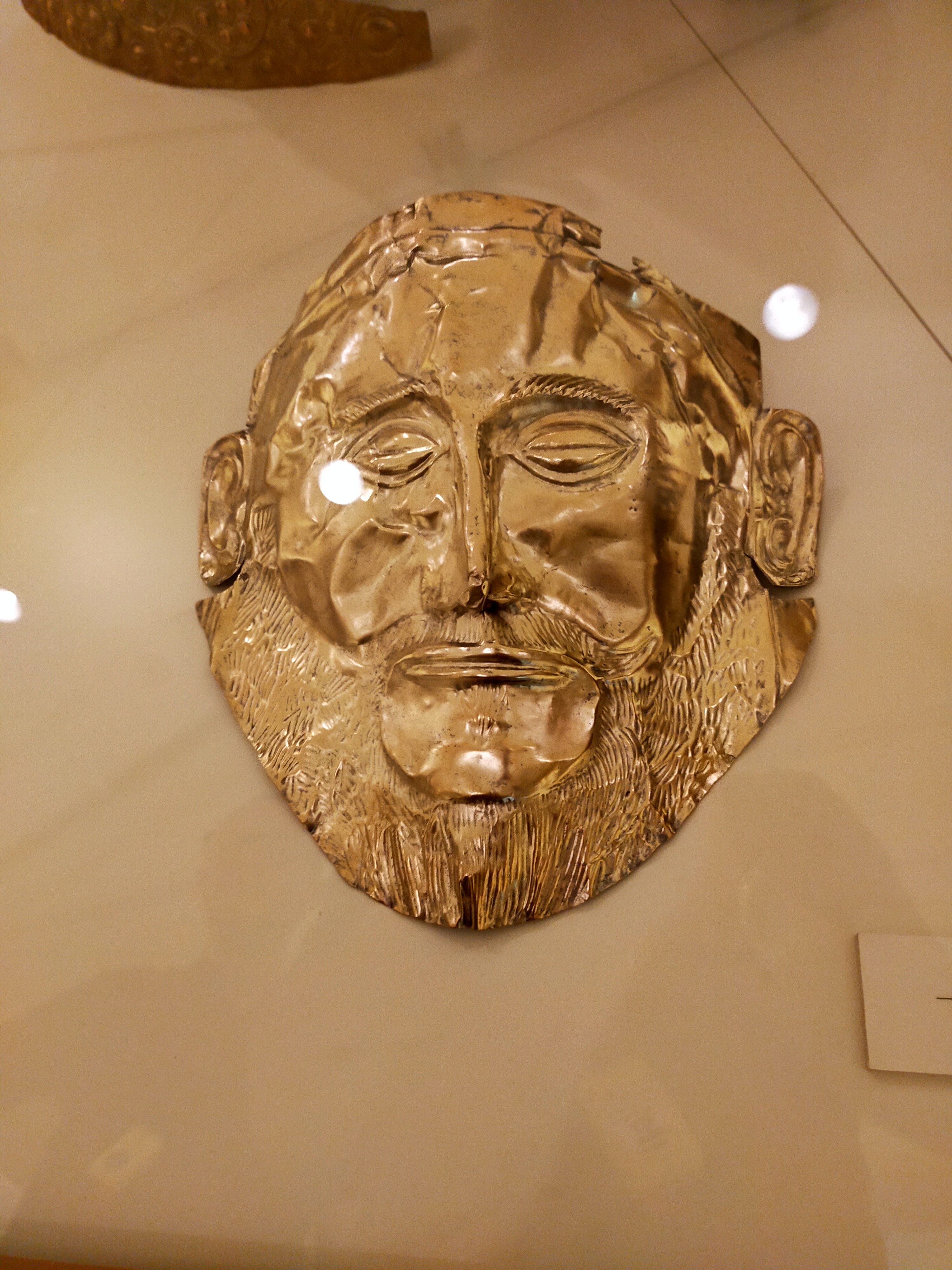
Mycenae is inextricably linked to Homer’s Iliad and the fanciful tales of Troy. Arguably, the most impressive structure still standing is a beehive-shaped building with a pointed dome known in modern popular folklore as The Tomb of Agamemnon, the legendary warrior king who led the Greeks during the Trojan War. It’s highly unlikely to actually be the treacherous old bugger’s final resting place, but never let the truth get in the way of a good myth to lure in the eager punters like me. Liam said I looked like an over-excited boy scout as I gazed in awe at the 3,300-year-old roof.
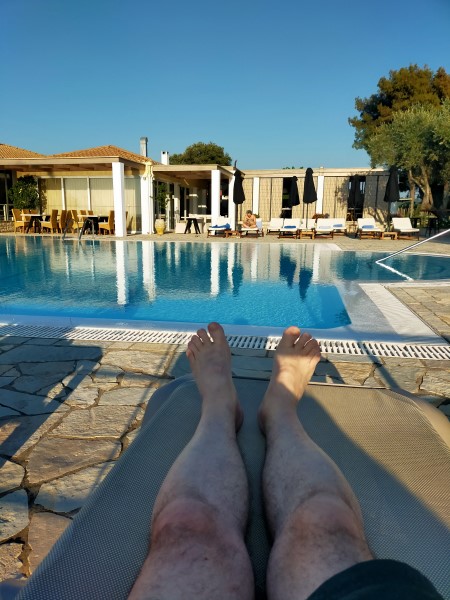
After a sweaty and exhausting first day, we were only too pleased to be dropped off at our digs for the night, just in time for a well-earned dip, followed by a glass or three of tasty local plonk to watch the sun go down.
Tomorrow, Olympia beckons. Let the ancient games begin.
Our flight to Athens was delayed by an hour but was otherwise uneventful. However, once landed, there was a tortuous slow shoe shuffle to passport control which stole another hour. Thanks for nothing, Brexiteers. By the time we got to baggage reclaim at the end of a seemingly endless series of travelators, our holiday chattels were the last cases riding the carousel. It made me wonder what we would do if, whether by accident or by design, someone were to walk off with our smalls. Let’s hope I never get to find out.
Greek summers are famously hot, hot, hot and Athens is top of the weather charts – swelter-wise. That’s why we chose June rather than August for our classical tour. We didn’t reckon on an early record-breaking trans-continental heatwave with the mercury hitting the low forties. Mercifully, the modern metro train that whisked us into town was air-conditioned.
The first pit stop on our Greek odyssey was in the Monastiraki neighbourhood – once the heart of Ottoman Athens – centred around a busy square, rammed with shops and stalls selling everything from junk to jewellery and places to eat, drink and make merry while watching the world go by. Liam even took to filming what looked like a fun-filled folk dancing display, only to discover it was a pro-Palestinian rally.
Athenians seem particularly keen on graffiti, which adorns pretty much everything – some of it artful, most of it not. We felt that if we stood still for long enough, we’d get spray-painted too. And we’d been warned about pick-pockets. But despite the bustle, the blistering heat, the ugly tags and the artful dodgers, the area had a real urban buzz that we found irresistible.
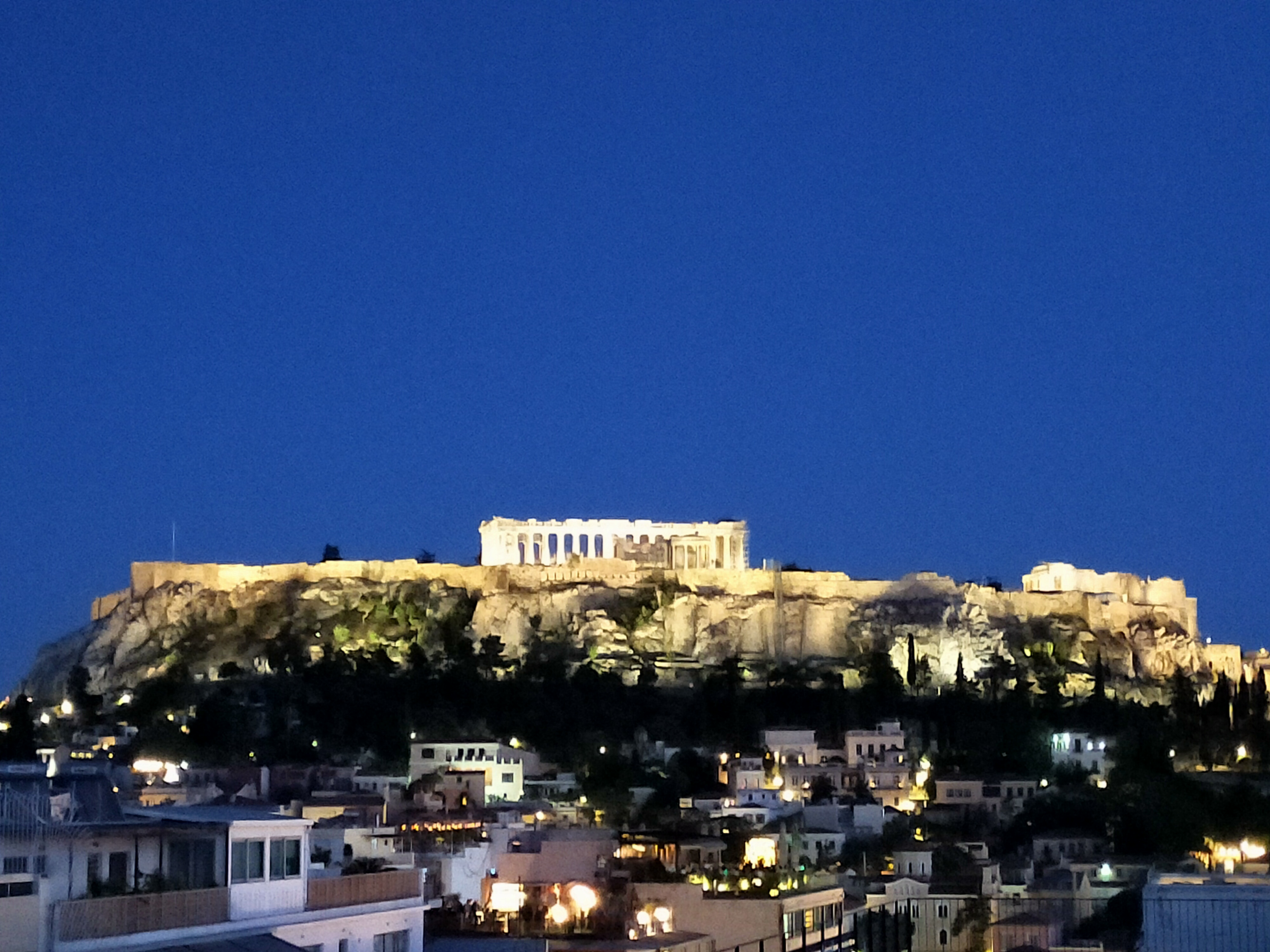
The splendid Attalos Hotel, a short case-wheeling stroll from Monastiraki Square, was our lodgings for the night. The staff were friendly and obliging and our room was cool, cosy and comfortable. But most welcoming of all was the intimate rooftop bar with its truly amazing views. Yes, that’s the Acropolis as the backdrop.
Even though we were city centre supping, the drinks bill didn’t break the bank, particularly as our delightful barmaid gave us last orders on the house. Yamas!
While we’re away on our Greek odyssey clambering over old tumble-down stones trying not to break a hip, here’s a few of my pics that didn’t quite make the cut, mostly taken in or on the way to one drinking den or t’other. Yamas! 🥂
I’ll be off-air for a week and a bit. We’re embarking on our very own Greek odyssey – by coach – taking in the ancient sites at Epidaurus, Mycenae, Olympia and Delphi, topped and tailed with overnights in Athens. I’m a sucker for an old ruin. After our exhausting reconnoitre, we’ll be recuperating on Aegina for a few days, just a short ferry hop from the Port of Piraeus.
It’s our debut pensioners’ coach outing. At this late stage of our life cycle, I can see a pattern developing. Many fridge magnets will be purchased.
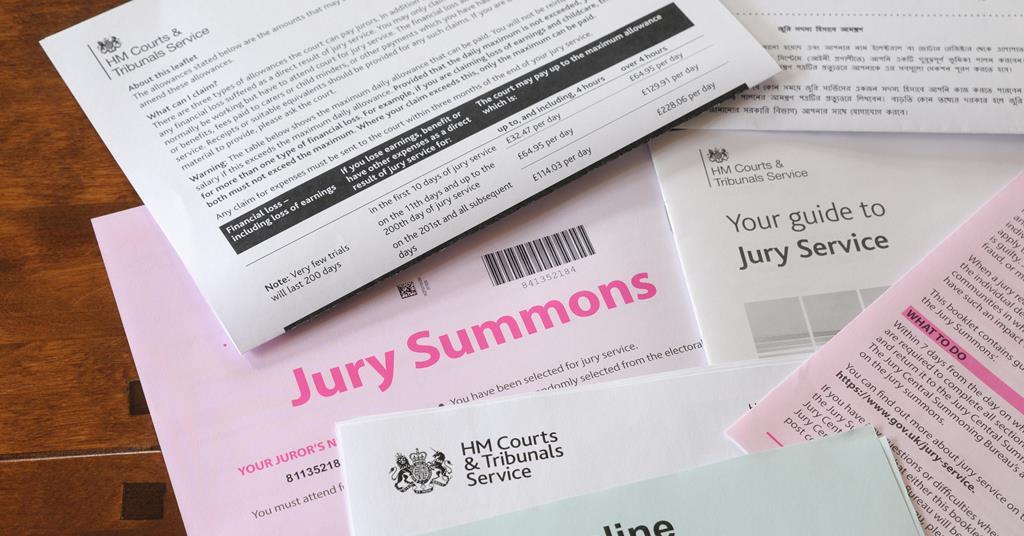
I’ve received a summons. No, I haven’t been caught with my trousers down, at least not recently. I’ve been called for jury service at Norwich Crown Court. The reaction from most people seems to be either “bloody Hell, how can I get out of it?” (generally, you can’t) or “wow, I’d love to do that”. My reaction was “oh no, not again”.
Because it’s my third time. Yes, my third. Most people I know have never been called at all.
As a veteran juror, I know the drill. It can be fascinating – the theatricals in the court, the drama in the jury room with random jurors drawn from all and sundry, and personal prejudices laid bare. But there’s a lot of sitting around in the jury pool between trials. At least these days technology can help relieve the boredom, so I’ll be twiddling with my tablet rather than my thumbs. All my other digits will be crossed, hoping I don’t get put on a trial that goes on and on.
Gossiping about an ongoing case with anyone – including with him indoors – is strictly verboten, so my lips will be sealed before sealing the fate of the defendant. To cut short the proceedings, I’m thinking of yelling “off with his head” as the accused is brought up from the cells. Or maybe not.
When I served before, I sat on a series of short trials. The one that sticks in my mind the most is the case of an ex-British Rail manager in a cheap suit who was up before the beak for fiddling his business expenses. He was caught charging the amorous services of certain ladies of the night to the company account. We found him guilty. I hope the jollies were worth it.
I’ll do my civic duty. of course, partly because I have no choice but mostly because I think it’s probably the fairest system on offer. As it says on t’interweb…
Trial by jury, where a group of ordinary citizens decide a case, has a rich history evolving from ancient legal practices to modern legal systems. The origins can be traced back to Germanic tribes and the use of juries to investigate crimes and judge the accused. In the 12th century, Henry II in England established juries to settle land disputes, marking a key step in the development of the modern jury system. Today, the jury system is a cornerstone of legal systems in many countries, ensuring a fair and impartial verdict by laypersons.
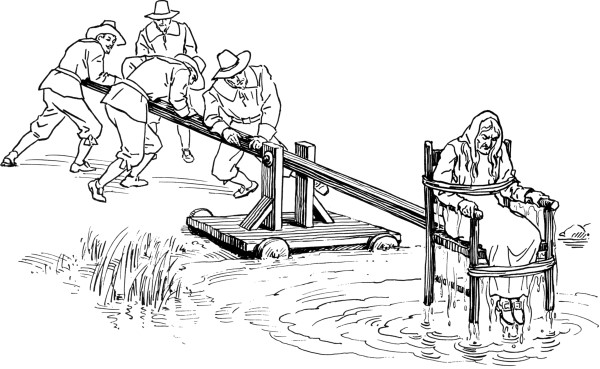
And it certainly beats ‘trial by ordeal’ – torture by any other name – once zealously promoted by the Church, with The Almighty deciding. Flipping a coin would have been fairer. It’s just a pity some traditional forms of punishment have also gone out of fashion. There are a few people I’d cheerfully strap to a ducking stool.
In the medieval era, the rag trade made Norwich rich, making it England’s second city. But it wasn’t to last. The steam age killed off traditional weaving, and old Norwich gradually slipped down the rankings, unable to compete against northern upstarts and their dark satanic mills.
Down but not out, the city reinvented itself with a new trade – making money, lots of it. And what better way to make money in a city largely built of wood than fire insurance? And what better way to reduce expensive pay-outs than to employ your own fireman? And thus, in 1797, a canny banker with an eye on the main prize, Thomas Bignold, founded the Norwich Union Fire Insurance Office.
Fast forward a couple of hundred years and following a complex series of mergers, takeovers, re-names and rebrands, Aviva is now the largest general insurer in the land – and pretty big in other lands too.
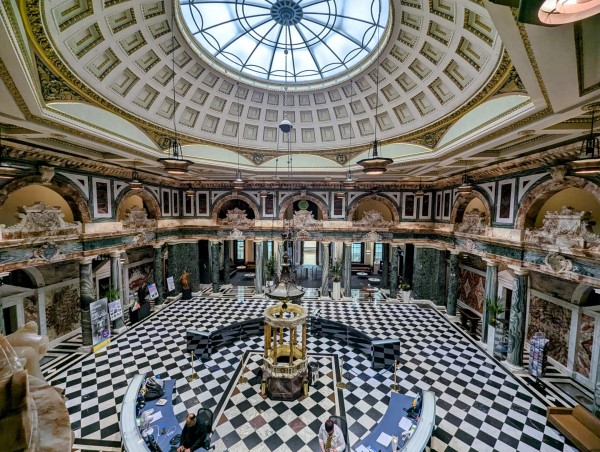
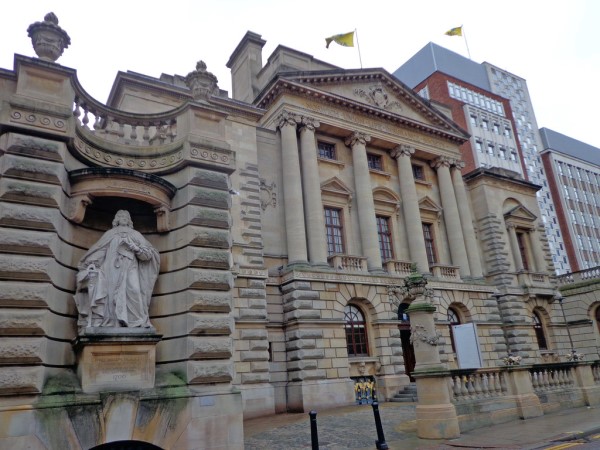
The company dominates the city centre with offices everywhere. But none are so grand as Surrey House, the purpose-built head office opened in 1905. Designed by celebrated local lad George Skipper, the lavish interior is richly decorated in marble, some of which was originally intended for Westminster Cathedral.
Marble Hall image courtesy of Pat Jacobs.
The classy Edwardian pile shines like a diamond among a forest of run-of-the-mill utilitarian Aviva office blocks.
To find out more, we joined a friend for the Marble Hall tour run by The Shoebox Experiences*. The people at Shoebox know how to tell a good tale, punctuating history with tasty nuggets and fun facts – and their tour was simply brilliant.
*The Shoebox Experiences run a number of city tours. All profits go to their social enterprise which creates supportive places for vulnerable people. We last joined a tour on their fascinating Hidden Street gig.






 Perking the Pansies