Fifteen-Year Itch

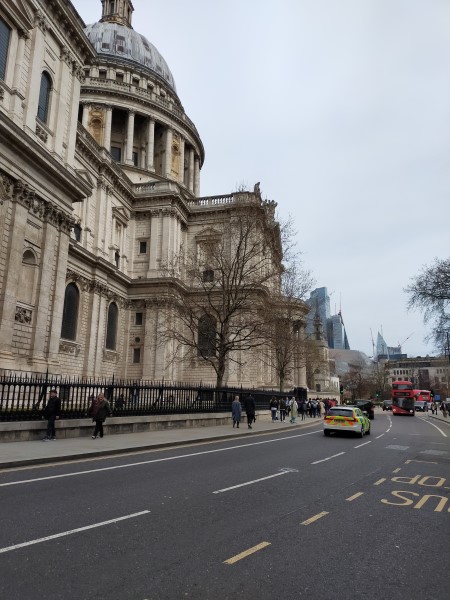
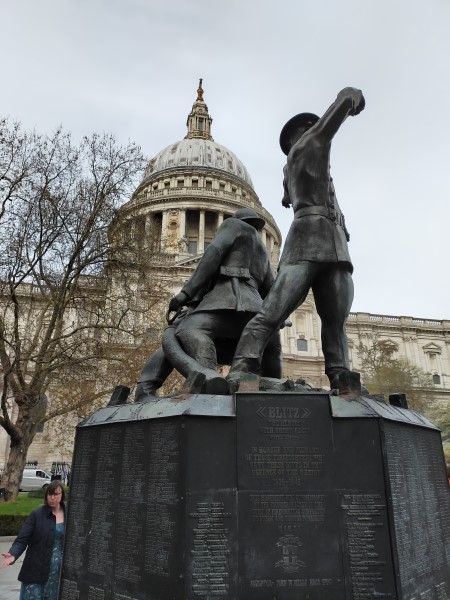
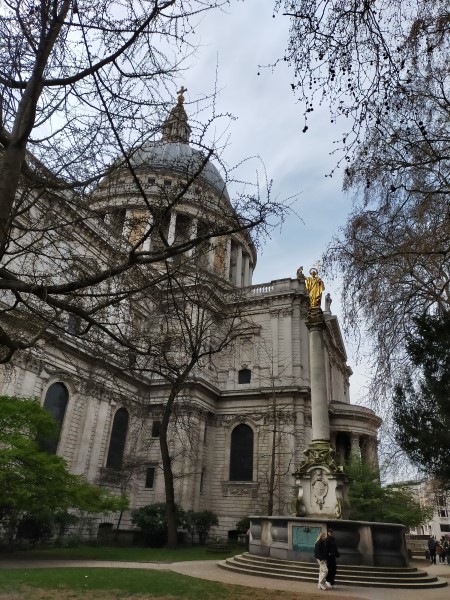
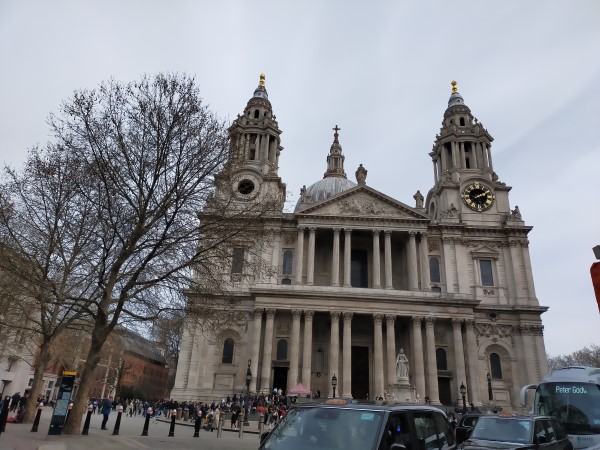
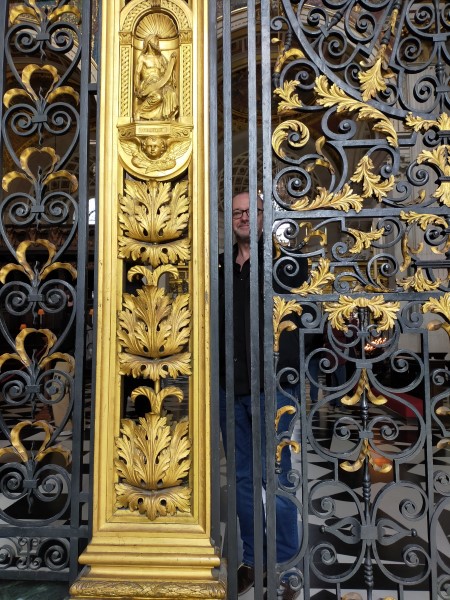
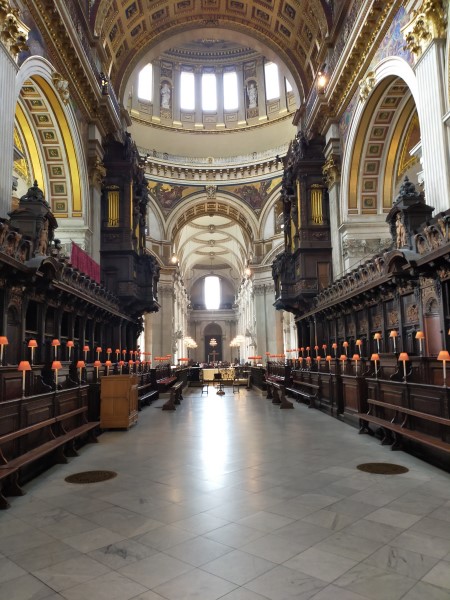
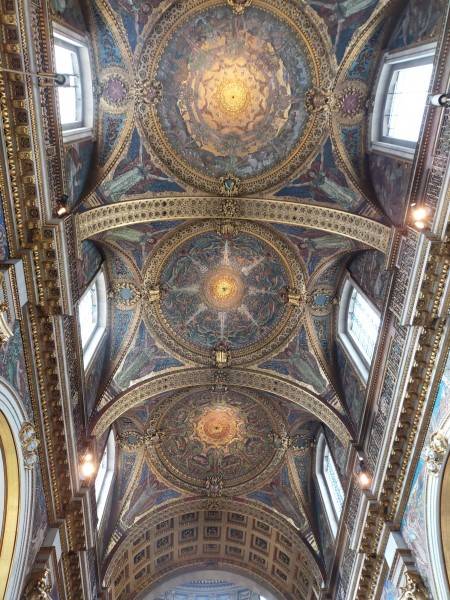
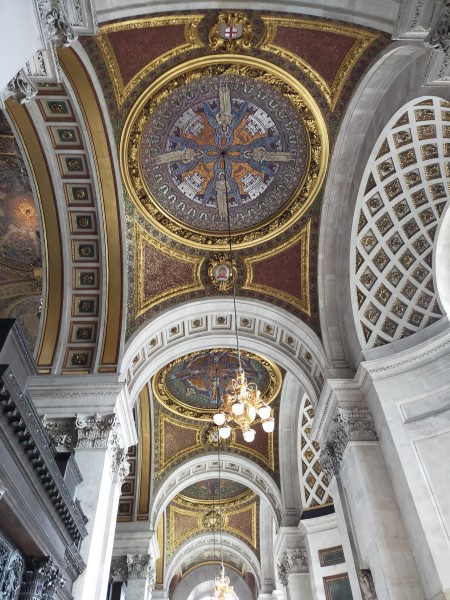
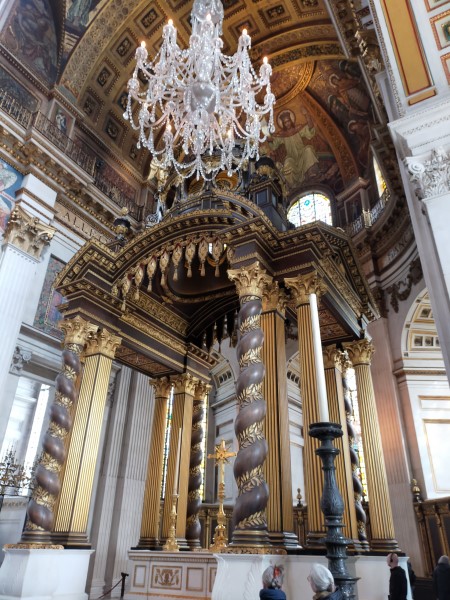
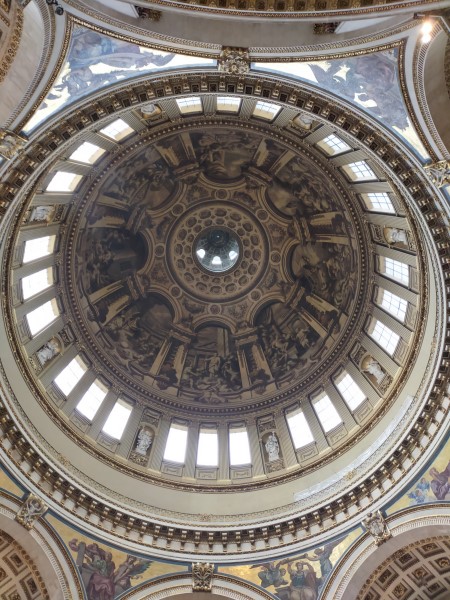
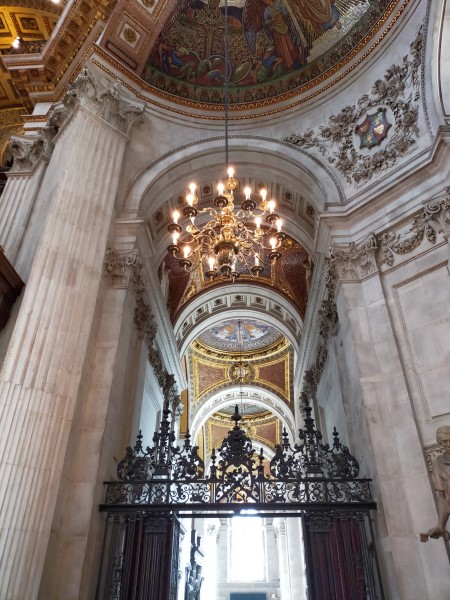
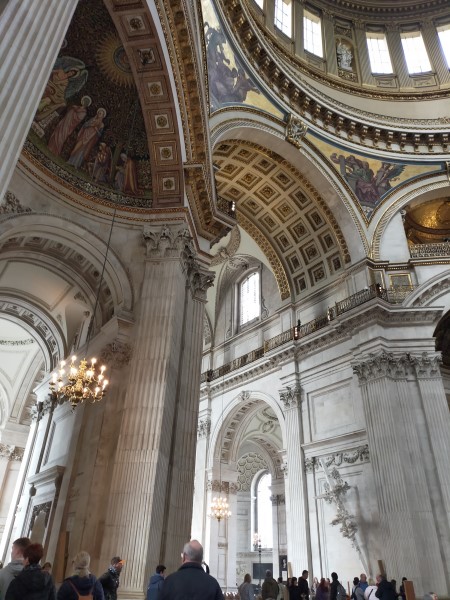
For our fifteenth wedding anniversary we were itching for a big city scratch with a difference. Despite my heathen leanings, I do like an impressive church, and few are more impressive than London’s St. Paul’s Cathedral, Christopher Wren’s tour de force topped with its heavenly dome. The earlier Gothic pile was torched along with much of the old medieval city in the Great Fire of 1666. It’s reckoned the blaze started in a bakery in the appropriately named Pudding Lane, bringing a whole new meaning to the hallowed phrase ‘give us our daily bread’.

Meandering around the flashy Baroque splendour brought back happy memories of my first pilgrimage – back in my spotty teens when I accompanied my grandmother, who was over from Ireland.

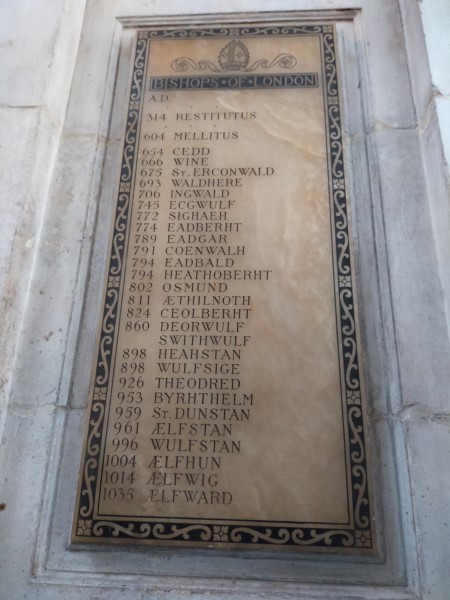
According to the annals, there’s been a church on the same spot since 604 AD, and possibly as far back as the late Roman period, as suggested by a plaque listing the pre-Norman bishops with their glorious tongue-twister names.

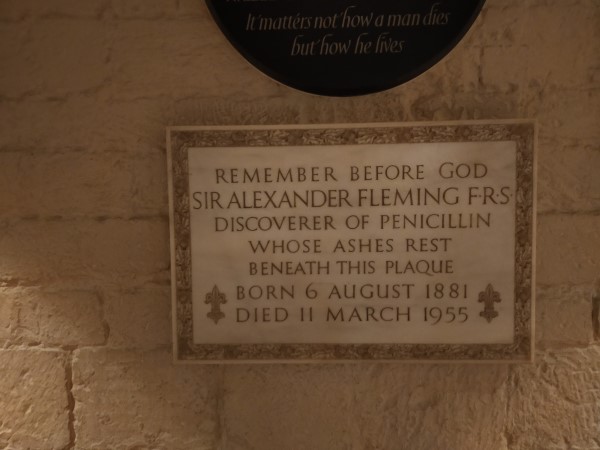
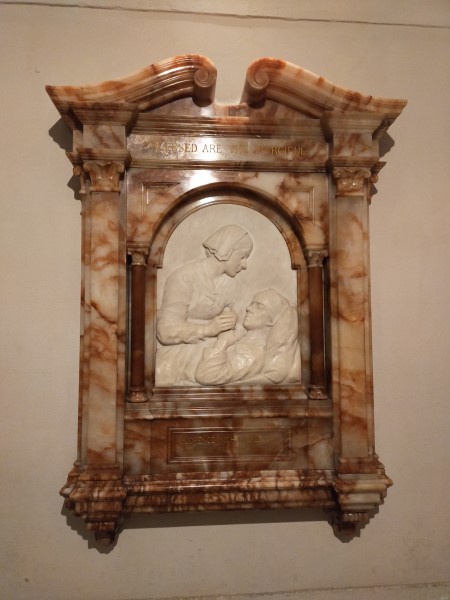
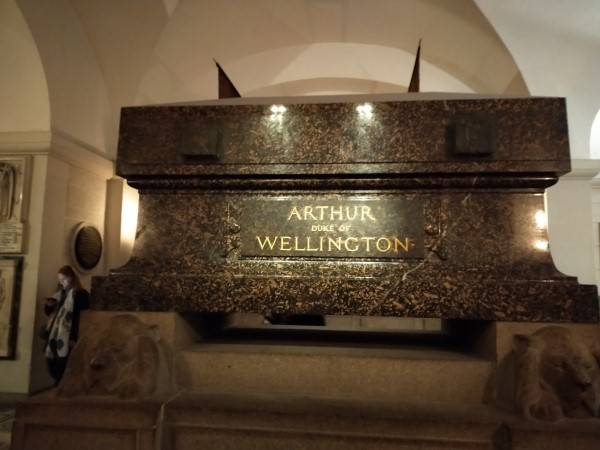
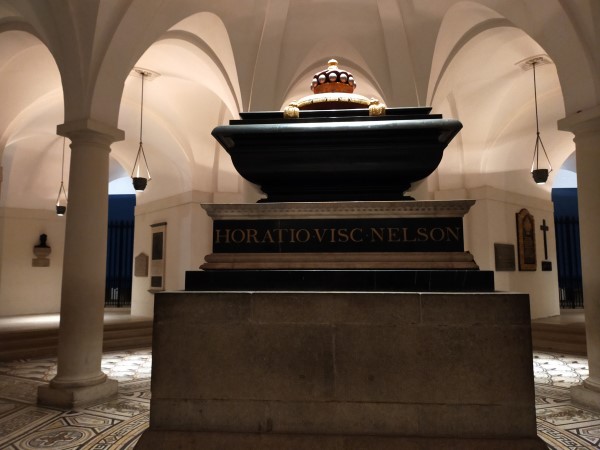
In stark contrast to the lavish decor above, the crypt is simply appointed and stuffed with the tombs of kill and cure notables from days long past, from Florence Nightingale and Alexander Fleming – who discovered penicillin quite by chance – to the victors of Trafalgar and Waterloo, Nelson and Wellington. Napoleon must be spinning in his monumental Parisian grave. Wren is there too, of course.

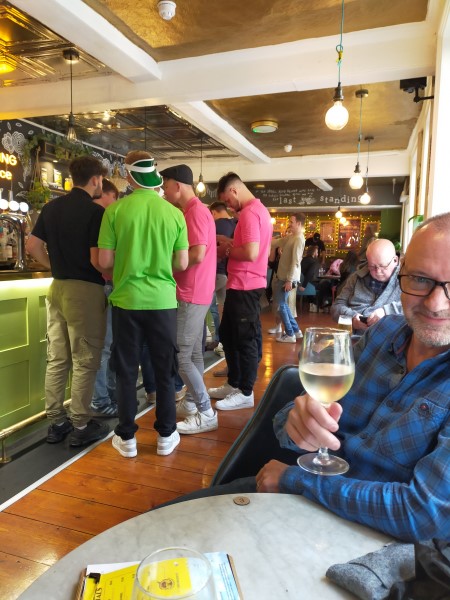
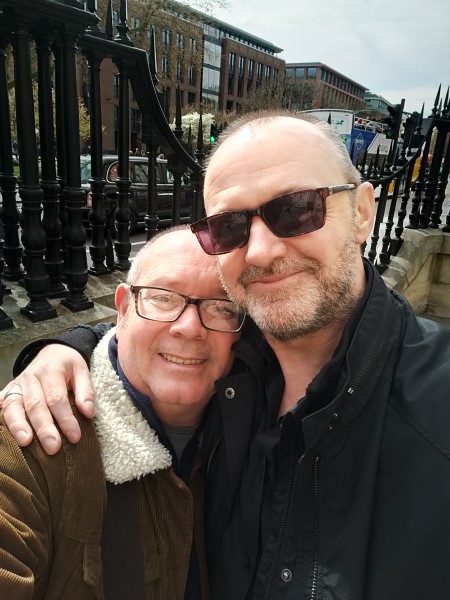
After piety came avarice, with indulgent afternoon tea and bubbles in The Swan at Shakespeare’s Globe Theatre followed by mother’s ruin at Halfway to Heaven, the homo watering hole near Nelson’s massive column, where Liam and I first met. They knew we were coming judging by the ultimate gay megamix playing on the jukebox – Pet Shop Boys, Erasure, Marc Almond, The Communards, Frankie Goes to Hollywood, Dead or Alive, Gloria Gaynor and Hazel Dean – with Liza Minnelli’s ‘Love Pains’ bringing up the rear. Liam’s shoulders shimmied to the beat. Perfect.

What’s Your Poison?

Every month without fail, Chet Contact drops on the mat. Produced by the Chet Valley Churches, the community magazine is packed with handy information about local community groups and services for believers and non-believers alike. There’s a lot going on round these parts. From bells to balls, bats to bowls, cakes to quizzes, pumping iron to eyeing up the birds, from stage to the silver screen, arts and crafts, knitting to nattering, foraging to growing your own, and much more besides – all country life is here.

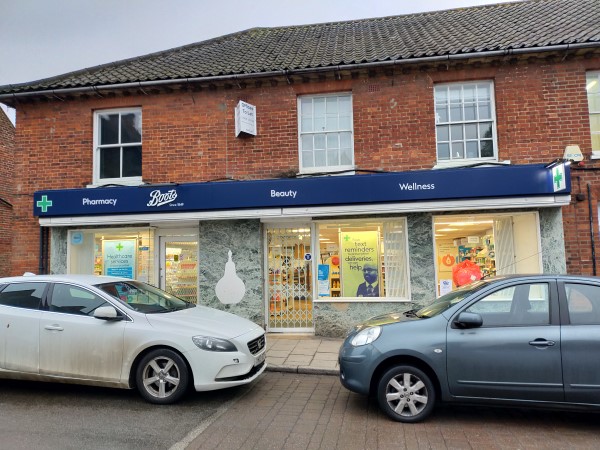
I like the regular history piece in the mag. I knew Loddon has old roots – the earliest written reference to the village was around 1042 – but I was surprised to read that there’s been a pharmacy in Loddon on the same site for over 180 years. It’s now a branch of Boots. Long gone are all those jars full of potions laced with opium and mercury from the apothecary’s handbook of old wives’ tales. Maybe that’s why, back then, life expectancy was only about 57.

Back to Turkey

We were struck down with the dreaded lurgy over the festive period and it just went on and on. What’s a boy to do when he’s at his lowest ebb, snot-wise, and he needs to perk up the pansies? Book a holiday of course. And the holiday we booked is to Dalyan in southwest Turkey. We plan a week of R&R with a bit of sightseeing and beach-bumming thrown into the mix.

We all know about last month’s catastrophic earthquakes, which flattened large swathes of Turkey and Syria, killing tens of thousands. It’s truly heartbreaking. We got a small taste of it when we lived in Bodrum. It was just a minor tremor, no damage done, but it still sent us fleeing into the courtyard.

The recent disaster will put some people off visiting Turkey but I hope not too many. The last thing the country needs right now is yet another blow to the economy. As most tourist businesses are family-owned, it’s the ordinary folk who suffer the most.

The situation is desperate and will remain so for a long time to come. If you’d like to help, please give what you can. It all makes a difference. There are plenty of appeals out there to choose from. Here’s one in the UK:

Disasters Emergency Committee

On a lighter note, Dalyan is a long way from the disaster zone. This is how I described it in Postcards from the Ege, a tongue in cheek guide book I wrote many moons ago:

“Back in the day, Dalyan was a quaint and sleepy village on the banks of the Dalyan River. The town first hit the headlines in the mid-eighties when an international campaign successfully defeated a plan to develop the nearby Iztuzu Beach where endangered loggerhead turtles famously lay their eggs. Turtles and tourism now co-exist (just). The soft, white sand is well worth a visit but take a packed lunch, slap on total sunblock and don’t step on the eggs. You don’t want to be responsible for wiping out an entire species.”

And the nearby ruins of Kaunos:

“Stuck in the bog of the Dalyan river delta with a chronology dating back to the 9th century BC is Kaunos, a city lost in the vegetation for over 300 years. Originally a Carian settlement and now a UNESCO World Heritage site, the ruins are a jumble from different periods – Greek, Roman and Byzantine. Kaunos was a regional seaport of some note. However, like Ephesus, the silting of the harbour left the city high and dry and sealed its fate. The site is best reached by small boat from nearby Dalyan. You’ll gently put-put through the crystal-clear river past majestic reed beds belly dancing in the breeze. Today, the city is appreciated as much for the prolific wildlife as it is for the scattered stones. Also, as with Miletos, the surrounding swamp is particularly popular with holidaying mosquitoes. The city was finally abandoned in the 15th century following a malaria epidemic. You’ve been warned.”

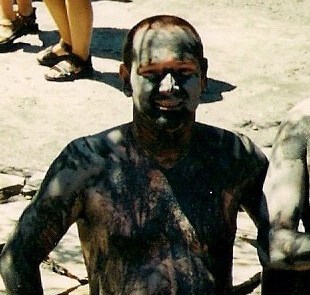
The last time I was in Dalyan was over 25 years ago. I can’t wait to dip my toes in the warm waters of the Aegean again. I might even persuade Liam to take in a mud bath with me in a vain attempt to regain our long lost youth. Yes, this was me back in 1997. It didn’t work then either.

Inevitably, the resort will have changed but I hope not too much. I’ll keep you posted.

Where is St Edmund Buried?

In Bury St Edmunds, obviously – or is he? The cute Suffolk market town might be the final resting place of St Edmund, ninth-century Christian king of East Anglia. Allegedly, he was cut down by a wild bunch of pillaging Danes doing what the Danes did back then.

Eventually those pillaging Danes saw the error of their wicked heathen ways, dropped to their knees, converted to the ‘One True Faith’ and hung up their horny helmets.

For his sins, Eddie the Martyr was canonised and an abbey founded in his honour by that great Dane, King Canute – he of holding-back-the-tide fame. Edmund even became England’s patron saint for a few hundred years until he was rudely upstaged and replaced by George in or around the fourteenth century. And Georgie boy wasn’t even English. But then, who can compete with a dragon slayer?

In Medieval times, a gravy train of pilgrims rolled in from all over Europe to visit Eddie’s shrine. It was a good little earner and the Abbey of St Edmund became one of the richest, largest and most powerful Benedictine monasteries in all of England. Then in 1539 that old letch Henry the Eighth popped along and ‘dissolved’ the abbey (i.e. pillaged like those Danes of old) and that was the end of that.

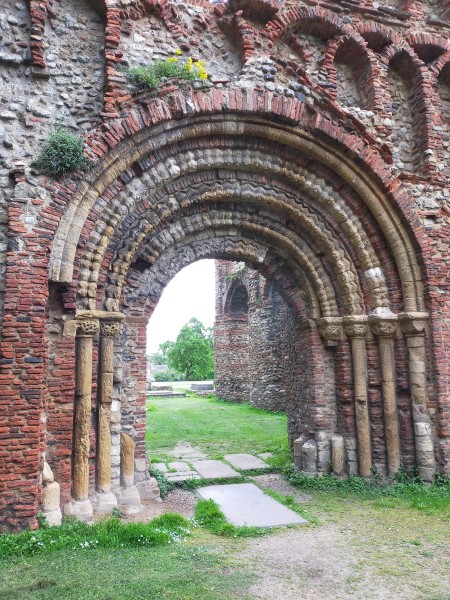
A sunny day took us across county lines for a gander around the old holy pile. Apart from two impressive medieval gatehouses, little remains of the abbey itself, though next door is Bury St Edmunds Cathedral called – wait for it – St Edmundsbury. The Abbey’s pretty grounds are lovingly tendered by the local council and a dedicated army of volunteers; many of them could well be the descendants of those pillaging Danes who cut down the saintly king. ’Tis their penance.

All is forgiven. Nowadays, we really like the Danes.

Among the roses and the ruins, there’s a World War Two memorial to the US Airforce (or the US Army Airforce as it was known back then). The USAF was, and still is, big round these parts as East Anglia is famously flat and just a short bombing raid to the continent.

But … the current whereabouts of Edmund’s sainted bones is anyone’s guess.

Postcard from Bulgaria

We got the hot gossip washed down with Bulgarian plonk we were hoping for. But that didn’t mean our entire trip was a non-stop booze-fest. In between top-ups, we did manage to drink in a bit of culture too, with a gander round ancient Nessebar, a pretty little town tumbling over a small Black Sea island joined to the mainland by a causeway. It’s full of old Orthodox churches and sprinkled with bars, cafés and places to browse for tourist tat and local handicrafts. The assault course of rough cobbled streets is charming but ladies and drag queens should leave the heels at home. Even the flat-shoed risk a snapped ankle.

Founded in the second millennium BC and originally a Thracian settlement called Mesembria, the town passed down the line to the ancient Greeks, Romans, Byzantines and Bulgars before eventually falling to the Ottomans in 1453. Our guidebook called this ‘the time of the Turkish enslavement’ – memories run very deep in the Balkans. Finally, Nessebar was incorporated into the new Bulgarian state in 1885.
Nessebar has a small but impressive museum exhibiting artefacts from down the many ages. Fallen Catholic Liam loves a religious icon and started to hyperventilate when we stumbled across a room full of ’em.
Thank you to our lovely landladies for putting us up and putting up with us – you know who you are!

Go West, Young Man

We have old friends in Torquay, a palm tree-lined seaside resort in Devon. We hadn’t seen them in ages because of the pandemic, so a catch-up was well overdue. All roads lead to London, and we didn’t fancy the hassle of crossing the sprawling metropolis only to come out the other side, so we flew from Norwich International airstrip to Exeter International airstrip on a little jet – like Z-listers without the paps.

Old Exeter – Roman Isca Dumnoniorum, Saxon Execeaster – has been around a while, though at first glance you’d never know it. The Luftwaffe did a great job flattening the city in the Second World War, so you have to look closely to find ancient treasures.

Mercifully, the magnificent cathedral, founded in 1050, was spared the hellfire that destroyed pretty much everything else – a little odd considering it sticks out like a bullseye at the heart of the city. Although I’m not religious in the slightest, I do so love a gander round a holy pile.

Most of what the visitor sees is thirteenth century, and what impresses first is the awe-inspiring ceiling that soars towards the heavens. At 96 metres, it’s the longest continuous medieval stone vault in the world. It surely convinced the hovel-dwelling, unwashed illiterati of old that it was made with divine intervention – and so helped keep them on their knees.

And then there are all the elaborate tombs – mostly containing the old bones of long-dead bishops.

And the stained glass windows aren’t bad either.

While Norwich hosted T-Rexes and steppe mammoths for the summer, Exeter went for giant cutesy street dogs.

After Exeter, we spent the next couple of days hitting the sherry and chewing the cud with our old muckers at their palatial digs in Torquay. And fantastic it was too. Our hosts are a little camera shy so, instead, here’s an elegant bust of Agatha Christie, the queen of the whodunnit and the best-selling fiction writer of all time, who was born in the town.

Ahoy, Me Hearties

Last Christmas, our gift from the in-laws was a fancy meal in a top-notch Indian eatery in old London Town – at a time and date of our choosing. We waited ’til spring to combine our lunchtime curry with a nautical-themed long weekend, staying in Greenwich, home to the Prime Meridian – of Greenwich Mean Time (GMT) fame.

Our first day was spent following the crowds along the tourist trail around the Maritime Greenwich World Heritage Site, popping in and out of the museums. Unlike my last trip as a young whippersnapper, we didn’t make it up the hill to the Royal Observatory. Liam was crest-fallen that he didn’t get a chance to stand astride the Prime Meridian.

On day two we cruised the riverboat from Greenwich pier to Battersea Power Station, which once lit much of London but has since been redeveloped into well-appointed rabbit hutches with obscene price tags. We were hoping to look around the massive power station itself but it wasn’t to be; it’s still a work in progress. The Cinnamon Kitchen – the chic venue for our meal – more than made up for our disappointment. The nine-course taster menu was probably the best Indian food I’ve ever had. And the mango sour cocktails weren’t bad either.

Our final full day in the Smoke saw us taking in the sights, sounds and exotic smells of Borough (up)Market followed by a quick gander round Shad Thames, the uber-trendy South Bank district, and a troll along the riverside Queen’s Walk. It’s an area I know fairly well and was the venue for my jury service at Southwark Crown Court back in the day. Eventually we docked at the best-guess replica of the Golden Hind, the first English ship to circumnavigate the globe, captained by Francis Drake – hero, buccaneer, pirate, thief (delete according to taste). After all that exertion, who could refuse us a restorative tonic and gin at an old riverside inn?

Ahoy, Me Hearties!

Close Encounters

We were to meet up with the fragrant Roving Jay for one of our regular bloggers’ food-and-drink conventions but our plans were scuppered at the last minute. As we’d already bought the bus ticket, we went into town anyway for a wander around. Tombland, Norwich’s historic heart, is looking splendid after a recent wash and brush up. You might think the name comes from something spooky but it’s actually old English for ‘open ground’ (or such like) and is where the old market was held until those dastardly all-conquering Normans moved it to its present location a little after 1066 and all that.

It was a great day for a stroll so we decided to check out Cathedral Close, the substantial grounds of the grand Norman church. The Close is full of statues – of men mostly, as is the norm. However, one woman, Edith Cavell, has pride of place at the entrance. Ms Cavell was a British nurse in German-occupied Belgium during the Great War. She is remembered for tending to soldiers from both sides of the trenches and for helping about 200 Allied soldiers escape. Arrested by the Germans, she was tried for treason and shot by firing squad. It caused quite an international incident at the time as it wasn’t the done thing to shoot women – only horses. As she was a Norfolk lass, Edith Cavell is buried in the cathedral.

Doubtless, someone will discover something about Ms Cavell’s words, views or deeds that wouldn’t quite be cricket by today’s standards and demand she’s knocked off her plinth. That would be a shame.

Naturally, a chilled bottle was waiting for us at the end of the trail. We settled down at the Red Lion Pub on the river next to the Bishop Bridge, built in 1340 and the city’s oldest, to watch people messing about in canoes. Bottoms up!

The Ship of the Fens

Our next family do since the end of lockdown was to Liam’s lot. A fun family BBQ in rural Hertfordshire, a night or two in Cambridge and a visit to Ely, a teeny-weeny city with a vast cathedral dominating the flatlands. ‘The ship of the Fens’ can be seen for miles around, demonstrating just how important He used to be to the prince, the pauper and everyone in between. There’s been a house of God on this spot since 673.

Ely sits on a small plot of high ground at the heart of the Fens, a once expansive marsh long since tamed by dykes and ditches, and drained for agriculture. The city has a quirky feel to it and, despite being only 14 miles from Cambridge and 80 miles from London, projects an air of splendid isolation and self-sufficiency, perhaps inherited from times past when it was an island, cut off for much of the year.

Obviously, the huge church is the main event. I’m not even remotely religious but its sheer scale forces you to look up to the heavens in utter astonishment.

What’s in a Name?

The twin villages of Loddon and Chedgrave have ancient roots. Both are listed in the Domesday Book of 1086, that great asset register commissioned by that great asset stripper, William the Conqueror. Bill the Bastard wanted to know how much tax he could squeeze out of his newly acquired kingdom.

Image courtesy of Tour Norfolk

The earliest written mention of Loddon (Lodne or ‘muddy river’ in old Celtic) was before the Norman conquest, in the will of Ælfric Modercope written around 1042. Ælfric was a wealthy Anglo-Danish theyn (high-ranking retainer), a favourite of Emma of Normandy, consort to Cnut the Great, king of England, Denmark and Norway (and quite a few Swedes too). That would also be the legendary King Canute who tried to order back the tide. Sadly, that’s just a tall tale. Yes, I have spelt ‘Cnut’ correctly.

It’s not known just how intimate Alfie was with the serial Queen (she was the widow of Cnut’s predecessor) but he was one of the richest theyns in all East Anglia and by far the biggest landowner in old Lodne. Not that I’m one to gossip. A thousand years later, Alfie lives on with his rather butch bronze effigy standing on top of the village sign on Farthing Green.

Chedgrave’s sign features three different spellings of the village name – Chedgrave, as now, Scatagrava, the old Danish name and Chattegrava, the Latinised version used in Domesday.

The name is thought to derive from some Anglian bloke called ‘Cheatta’ plus either ‘Grove’ or ‘Pit’ (depending on the original pronunciation). I prefer ‘Cheatta’s Pit’. Sounds a bit more dark ages and vaguely pagan. I have fanciful notions of Cheatta and his kin dancing naked round a fire pit to celebrate the summer solstice. And the fact we live on Pits Lane next to a recreational space called ‘the Pits’ adds a little spice to the fantasy.