Sucking on a Fag

Who knew that there’s an Italian brand of pizza oven briquettes called ‘Faggetto’? We didn’t until the waitress sat us next to a stack of them at Franco Manco, a pizza parlour in South London. We weren’t offended. The waitress wasn’t making some sort of point (in fact, she was delightful). Besides, the casual use of ‘faggot’ and ‘fag’ doesn’t carry the same meaning here as it does over the pond, at least not for my generation. For us, faggot is a traditional British meatball made from pork, and a fag is slang for a cigarette – giving a whole new meaning to the phrase ‘sucking on a fag’, something I used to do several times a day. Until I quit smoking, that is.

Bottle and Basket, Booze and Bunting

After tripping the light fantastic along Tooting High Street, I took Liam even further down my memory lane with a short hop to Wandsworth Town. I showed him where I was a shoe shop Saturday boy, the primary school where I was a knotty-haired happy chappy, and finally, my digs from the age of ten until I ventured out into the wicked world – my ‘days on the tills, nights on the tiles’ moment before marriage and a mortgage.

After my Dad retired from the British Army, my parents ran a backstreet shop, one of a parade of four. Ours was a ‘bottle and basket’ selling booze and bread and all things in between, and we lived above and behind. It was a good little earner. Even during the dark days of the 1974 three-day week, Dad kept the lights on with candles from the cash and carry. It was a cold and miserable time and people hit the hard stuff to get through it – a bit like the recent lockdowns. On a happier note, as part of Her Maj’s 1977 Silver Jubilee celebrations, Mum helped organise a street party. The till rang non-stop as the red, white and blue bunting fluttered in the summer breeze.

Of the other shops, next door was a butcher’s with a newsagent’s at the end. I can’t remember what the third shop in the parade was. It hardly matters now as they’re all gone – long-since converted into gentrified houses that fetch a king’s ransom.

Here’s a very rare picture of me from that bygone era. Our first-floor parlour was a riot of clashing colours and patterns – very de rigueur at the time. I’m sure it’s much more tasteful today. But why was my chopper bike propped up against the sofa?

Give My Regards to Tooting Broadway

I spent much of my teenage years in Tooting, a rough-round-the-edges strangely-named suburb in South London. My late, lamented old pal, Clive, was raised there in a modest terraced house, and we enjoyed many a fun-filled Saturday afternoon hot-gossiping and talking silly schoolboy sex to a seventies soundtrack of Elton, 10cc, Alice Cooper, Led Zeppelin and Bowie.

But as we discovered recently, the Tooting of yesteryear isn’t quite the Tooting of today. It’s still decidedly rough-edged but with a wonderful multi-cultural blend of spice and street cred drawing in an eclectic crowd, the young and the cool rubbing shoulders with the long-established South Asian community. It’s no wonder Tooting is now known as ‘curry corridor’, with a mouth-watering menu of restaurants. We quite fancied an ‘Indian’ but changed tack when we wandered through Broadway Market to find that the old stalls flogging fruit and veg, frilly knickers, tat and knock-off, have been largely supplanted by international street food vendors, sit-down eateries and uber-trendy bars.

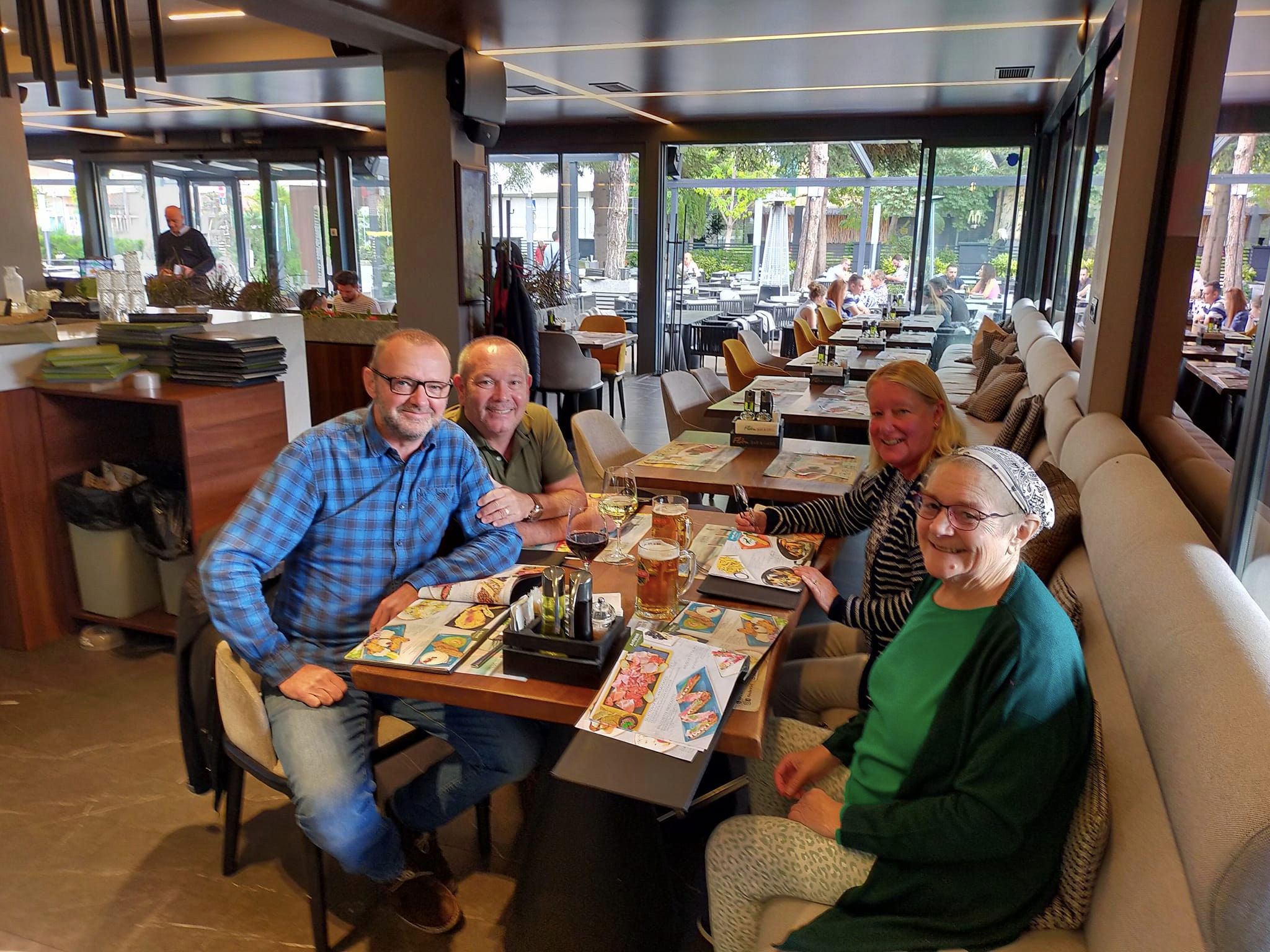
We settled on artisan pizzas at Franco Manca washed down with vino and limoncellos, then boozy-cruised to a bar for espresso martinis. The evening ended with a couple of large glasses of fruity red at a ramshackle Portuguese bistro. Heads thumped the next day.

The Duke

In 1961 a portrait of the Duke of Wellington by Francisco Goya was lifted from the National Gallery in London. Only 19 days earlier it had been ‘bought for the nation’ for £140,000, a huge sum to shell out back in the day. But it wasn’t an ill-gotten gain to be fenced to a dodgy dealer. No, it was a modern take on robbing the rich to feed the poor, or rather to pay for their TV licenses. The thief sent a series of ransom notes to the authorities guaranteeing to return the Duke unharmed if elderly people were exempted. It’s a campaign that still rumbles on to this day. But who was the anti-hero behind the audacious heist? None other than Kempton Bunton, a middle-aged cabbie from Newcastle with a messianic sense of social justice.

And now there’s the COVID-delayed film, Duke, based on this extraordinary story and starring Jim Broadbent as Kempton and Helen Mirren as his long-suffering wife, Dorothy. Both deliver top-notch performances in a very British, very funny and heart-warming Robin Hood tale for the modern age. But does Kempton meet his Waterloo? The answer will surprise.

As an interesting footnote, the painting appears in Dr No, the first James Bond film, where it’s on display in the villain’s lair giving the impression it was stolen to order.

It’s a British Library Thing

Every year I get a statement from the British Library setting out how many times Perking the Pansies has been borrowed from UK libraries. This is followed some time later by a payment. It’s only pennies per loan but it’s nice to know my camp old nonsense isn’t gathering too much dust 11 years after it was published.

UK publishers are obliged by law to supply copies of their books to the national libraries of Britain and Ireland, so it’s no surprise that Perking the Pansies can be found at the British Library, the national libraries of Scotland and Wales, the library of Trinity College, Dublin and the libraries of Oxford and Cambridge Universities. What is a surprise is that the book can also be picked up at libraries in Greenwich and Wandsworth in London and libraries in East Sussex and Greater Manchester.

What’s an even bigger surprise is that the book is available to borrow in Antwerp (Belgium), Illinois and New York state (USA), Auckland and Wellington (New Zealand) and Victoria and New South Wales (Australia).

But what is my camp old nonsense doing in the library of Harvard University? Blimey!

Another Death on the Nile

I love a whodunnit even when I know who did it. And who doesn’t know who did it in Agatha Christie’s Death on the Nile? It’s Kenneth Branagh’s second outing as the Belgium sleuth, with a tash so vigorous you wonder how it stays up. Branagh first cut his teeth as Poirot on Murder on the Orient Express back in 2017 where he introduced us to a more troubled, introspective private eye, quite different from the fastidious and slightly fey comic version we’ve come to expect. This time around we learn more about Poirot’s back story: a man scarred in every sense by the savage reality of the Great War. This isn’t quite as Agatha wrote it and, no doubt, purists will hate the update. When the elegant SS Karnak set forth once again on that fateful Nile cruise, many critics asked why bother? I, for one, enjoyed the choppy adventure.

The Book of Mormon: The Newest Testament

Since they switched the theatre lights back on, we’ve been playing catch-up with all the shows queuing up impatiently in the wings. Our latest gig was the UK tour of The Book of Mormon. Deliciously camp, rude, lewd and super crude, the song and dance show pulls no punches when ridiculing the fairy tales at the core of the Mormon credo – and by extension, organised religion in general. So there was a third biblical testament buried on a hillside in upstate New York? Who knew? Not the villagers in far-flung Uganda who had more pressing, real-world problems to deal with, like trigger-happy warlords, grinding poverty, AIDS and female genital mutilation. Ripe for conversion? The all-American dancing boys from Salt Lake City thought so. The desperate often are.

Credit: Paul Coltas

All’s well that ends well as the Bard once wrote and the show does have a happy ending because, in the end, we all need something to believe in, even if it’s just the power of the human spirit. By curtain call we were all on our feet. Yes, it’s that good.

As we left the theatre, we spotted a solitary Mormon elder politely handing out leaflets for the cause. Seems The Church of Jesus Christ of Latter-day Saints sees the show as an opportunity for a recruitment drive. Who said there’s no such thing as bad publicity?

Nuns and Nazis

I first watched The Sound of Music in the sixties at the tender age of seven. To see over the heads of the people in front of me, I sat on an upturned seat. Not that I saw that much anyway. I nodded off halfway through and didn’t wake up ‘til Dame Julie and co were heading for the hills.

Even though the film eventually became a Christmas staple on TV, I never actually sat through it. All I knew was that it was a tale of good versus evil with singalong tunes. And then the BBC exposed the truth about the von Trapps in a 2013 warts-and-all documentary. It turned out our heroes didn’t climb any mountain or ford any stream to escape the clutches of the nasty Nazis. No, they caught the 5.30 express to Italy. It was a bitter blow.

To restore my faith in the fairy tale, I jumped at the chance to see a new production at Norwich’s Theatre Royal by the Norfolk and Norwich Operatic Society. They’re amateur thesps but they always put on a good show.

As we necked our interval gins, I asked Liam,

So, when does the cute blond sing ‘Tomorrow Belongs to Me?’

That’s from Cabaret.

Oh.

Seems I was mixing up my Nazis.

Overall, the production was charming, with some really sweet moments. Nuns and Nazis, what’s not to like? For us, the stand-out performance was from Sara Cubitt as the Mother Abbess. ‘Climb Every Mountain’ is a tough song to sing, and we held our breath as she warbled towards that devilishly difficult final note. Did she hit it? Oh yes. 

Belfast – Should We Stay or Should We Go?

I was a little nervous when I took my seat to watch Belfast, Kenneth Branagh’s semi-autobiographical film about the life of a working-class family in late sixties Belfast. It was a time when the Troubles really exploded on the streets, and I was dreading being slapped about the face by the grim senselessness of sectarianism.

But despite the nightmarish backdrop, there’s something incredibly warm and generous about the film. Set to a Van Morrison soundtrack (with a little help from Love Affair’s Everlasting Love) and shot in radiant black and white, the tender and funny script has a simple question at its heart – leave for a brighter future ‘across the water’ or stay for kith and kin and all that’s familiar. It was a choice faced by generations of Irish people – including our own.

The sparkling cast really deliver – anything with Judi Dench gets my vote – and despite the eye candy that is Jamie Dornan, the stand-out performance has to be from Jude Hill as Buddy, the young boy around whom the story revolves.

Do they stay or do they go? Here’s a clue. Sir Kenneth Branagh is now one of the UK’s foremost actors and directors.

Here’s the trailer…

The Nimmo Twins – Normal for Norfolk

After a six-year hiatus, local comedy heroes The Nimmo Twins (Owen Evans and Karl Minns) were back treading the boards at the Norwich Playhouse for the second of their twenty-fifth-anniversary shows. Despite their glittering quarter-century career, to our shame, we’d never heard of them, but then a couple of fellow villagers put us firmly in the picture.

I’m glad they did. In skit and sketch, satire and song, characters old and new, the Twins put us straight about all things normal for Norfolk – the ups and mostly downs of Norwich City Football Club, local petty bureaucrats who couldn’t organise a piss-up in a brewery, geriatric TV presenters well past their sell-by, livestock-lovin’ farmhands with single-digit IQs and flash Londoners with their fancy cars and holiday homes, all delivered in the broadest of Naarfuk and with tongues firmly in cheek. It’s a total, affectionate piss-take and it’s hysterical.