
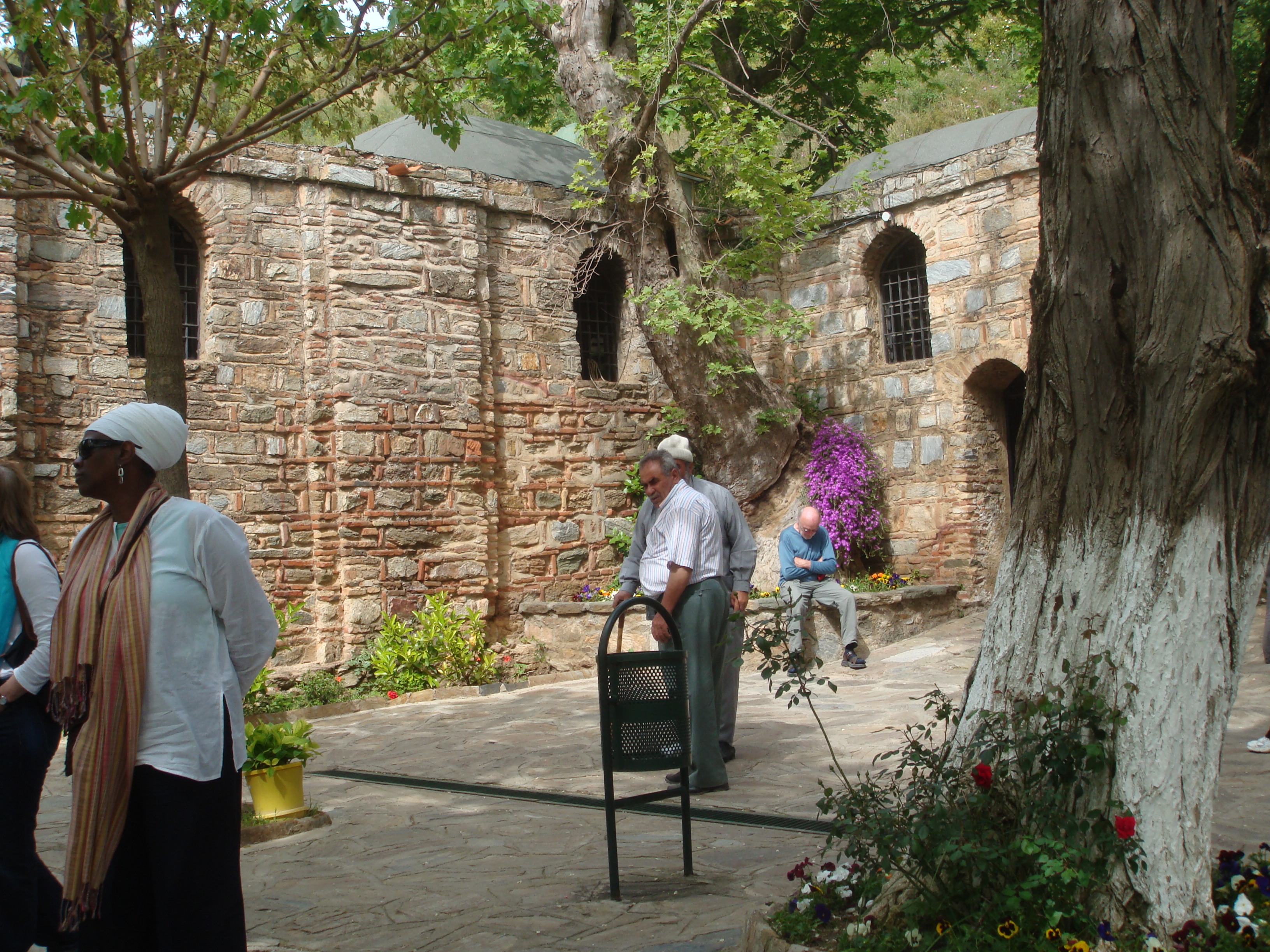
 Charlotte and Alan fancied a day trip and invited us along for the ride. We decided on a pilgrimage to The Virgin Mary’s House (or Meryemana – Mother Mary, in Turkish), near Ephesus followed by excursion to nearby Şirence. We travelled the now familiar Izmir road arriving at Selçuk for a tasty and inexpensive pide lunch. Replenished, we ascended the mountains to Meryemana (or Mary-enema, as Alan calls it).
 Completed in 1950 in neo-Byzantine style on 7th century foundations, Mary’s gaff is a cute, unassuming little bungalow, now a consecrated church but with the character of a shrine. It’s the centre piece of well-tended park overlooking a pretty wooded valley. We entered the house reverentially and gazed upon the small effigy of Our Lady. It felt contrived to me. I have little time for religion and give more credence to the tooth fairy. Outside in the courtyard Liam lit a candle as is required of a fallen Catholic.
There is scant biblical evidence that Jesus’ mum found her last resting place there (before her Assumption, of course). This hasn’t stopped the place becoming a side show on the bible tours circuit or various popes cashing in on the act with papal sponsorship. Naturally, there’s the obligatory tacky gift shop selling Chinese made plaster figurines and vials of holy water. Liam procured a small woodblock icon of the Madonna and child that is now proudly displayed on a shelf in the loo.
 Onwards to Şirence, a small village perched high on the hills above Selçuk. Surrounded by vineyards and orchards set within a serene Italianate landscape, Şirence had been a Greek populated settlement until 1923. During the exchange of populations between Greece and Turkey the inhabitants were told to pack their bags and leave for Athens. After being left to rot for decades, the village has re-emerged as a bolt hole for wealthy Turks attracted by the fine wood-framed stucco houses that clutch precariously to the hillside. Despite teeming hawkers serving the mob of tourists, both Turkish and foreign, the village retains a real appeal. We grazed at the stalls, drank beer, sampled wine and infused the charm.
We thought of dropping in on fellow jobbing blogger and good egg Kirazli Karyn who lives only a spitting distance away but we didn’t want to descend unannounced and mob handed.



 I was acquainted with a squat toilet from a very early age. As an army brat I lived some of my childhood in Malaysia and our house came with an extension for the Chinese maid. We weren’t posh, Dad was a regimental sergeant major, and every family had a maid courtesy of Her Majesty, even lowly squaddies. It was time before the rise of the Asian Tigers and the reawakening of the Middle Kingdom when Britain still had a blue water fleet. The maid’s quarters were equipped with a squat toilet whereas our family convenience was of the pedestal variety. She used her facility and we used ours. ‘East is east and west is west and never the twain shall meet’ as Rudyard Kipling wrote.



 Perking the Pansies