One of our greatest regrets during our time in the Land of the Sunrise is not taking the time to visit magical Cappadocia. I can offer no satisfactory excuse. We just didn’t do it. I give you some images to tickle the taste buds and stir the wanderlust.
This slideshow requires JavaScript.
We were reminded of our failing by Pansyfan Bonnie. She sent me this fascinating Turkish film of Göreme from 1962, courtesy of Turkey Central. This is Göreme only 50 years ago, yet it could be from the time of Abraham – no camera-toting tourists, no swish cave hotels, no restored Disney murals, no over-blown restaurants, no hot air balloons, no hot air hawkers. From biblical to boutique. I have no words.
Our local supermarket, Tansaş, is a short stroll from the house along the narrow ancient street that Alexander the Great once minced down in 334 BCE. Like many ancient Anatolian thoroughfares, the road is just wide enough for two camels to pass each other unhindered. It wasn’t built for a speeding motorcade of Nissan tanks flanked by Vespas on amphetamines. It’s a one way street but we look in both directions to keep body and soul together. It’s just as well the Green Cross Code was hard-wired into my brain as a child.
Three or four times a week, we pass a two storey building containing a shop unit on the ground floor. In the short time we’ve lived in Bodrum, the unit has changed hands several times – variously reincarnated as a small market, café, kuaför (hairdressers) and now a market again. The current proprietor is a smiling middle-aged man with a kind face, balding on top with side strands stretched back and fashioned into a trendy pony tail. He spends his days sitting on a plastic patio chair, chain smoking and chatting amiably to passers-by. We’ve not once seen a customer cross his threshold. Alas, like the predecessors, his business seems doomed to fail. It occurs to me that in Blighty, a prospective buyer would check the books before parting with the readies. In Turkey I assume there are no books to cook.
Civilisation in Anatolia has deeper roots than most people imagine. The recently discovered ruins of Göbekli Tepe are among the oldest human-made structures yet discovered. The site is almost 12,000 years old, predating any other known civilisation by several thousand years. Eat your heart out Abraham (c1800 BC) Rameses the Great (c1300 BC), Nebuchadnezzar (c600 BC) and all those daft fundamentalist Christians who think that the world was created 6000 years ago.
Today’s guest is gorgeous Kym who is the author of Turkeywithstuffin’s Blog and the pretty brain behind On the Ege, the monthly online magazine about Turkey’s Aegean coast. Kym is married to dusky Murat, her hunky Turk. When veteran expat Kym wears a headscarf, she wants to look like Sophia Loren but thinks she looks more like Hilda Ogden. Personally, I think she resembles a darker version of Gynneth Paltrow in the Talented Mr Ripley.
Kym
It’s a Thursday in November 2008 and I am on my first road trip to Sanliurfa, my husband’s birth town. When we first arrived in Urfa late at night, the electricity was off and the city was in darkness. Perhaps because I was tired from the long journey, I felt uneasy and had commented more than once that I’d been kidnapped and taken to Beirut. I did for a moment consider taken a plane home the following day. As we stood in the dark alley I was moaning, but once the large iron gate opened things could not have looked more different. We walked into a beautiful stone courtyard with mosaic tiles, Ottoman seating, potted plants and a small fountain.
The Manager at the Beyzade Konak Hotel is Murat’s cousin’s husband, Omer. He shows us to our room and once I have the internet and some coffee (they have a generator), I’m quite happy to chuck Murat out for an hour or so to allow him to play with his cousin Mehmet. I have a boiling hot shower, get my pajamas on and send a few quick “I’ve landed” emails. Then it’s lights out and a sleep so deep I could be in the cemetery.
Urfa
Day breaks and I realise the hotel is between two mosques. I open my eyes to the dual call to prayer, one a heartbeat behind the other. I doze for a bit then remember I’m actually on holiday and there are shops out there.
After breakfast, I nip back to our room and cover my locks with a headscarf. It’s a simple gesture of respect while I’m here and among the more traditional rellies. Well, that and I don’t really want to get stoned in the street! Mu of course thinks this is great and off we trot, out through the iron gate and onto the streets of Sanliurfa.
Once we leave the cobbled alley and get onto the main drag, its bustling; busses hog the road, cars fight for space beside them, scooters weave in and out of the traffic and pedestrians narrowly avoid being run over. The air is filled with BBQ spices, pungent & smoky and the smell is everywhere. Small eateries and kebab houses jostle for space alongside clothes shops and jewelers who have 24 karat rays shining from their windows.
Stunning
There are a few glances my way naturally. It could be the pale skin and the green eyes, or it could be the flip flops and bright red toenails that don’t quite go with the rest of my ensemble. Still, that’s a great excuse to buy shoes isn’t it?
First things first, I need a new camera. We wander across to the maze of connecting alleyways that make up one of the eight covered bazars, to the collection of electronic shops. The salesman shows us his wares and converses with Murat: “Senin Esin mı?”(your wife), “Yabanci” (a foreigner), “Alman?” (German). Mu confirms the first two and I answer the last. “English” I say, not realising at the time that we will have this conversation many times during our stay. I guess it’s due to my height and build and of course, my great Grandparents, Mr & Mrs Shram!
I end up with an Olympus, a compact professional the man says. We will see.
Leaving the shop we are met by Cousin Mehmet and Hassan Amca. Their first words to me are “Kym, Beirut Nasil?” Very funny! The four of us then continue around the bazaar which contains a veritable Aladdin’s Cave full of treasure. There is even a street full of workshops where workmen batter copper and solder iron.
Heading into the Balikigol area toward the cay bache, we pass through the ‘Sipahi Bazar’ and the ‘Kazzaz Bazaar’, the oldest covered Bazaars of Urfa. These were built by the Ottoman Emperor, Suleiman the Magnificent in 1562. It really is like stepping back in time and I watch ancient shalvar wearing salesmen sitting cross legged in their little tented alcoves, bathed in rich colour and drinking tea while customers peruse their antique carpets, kilims and hand woven head dresses.
Feed Me!
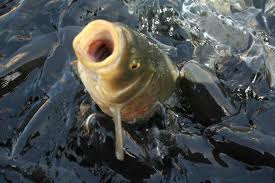
During our small shopping excursion, I’d picked up some elastic hair bands that I needed and watched as three pairs of hands reach into theirpockets to pay for them. Oooooo I like shopping here. I wonder if it works in shoe shops? A few minutes’ walk and we reach the cave of Abraham. Legend has it that the Babylonian King, Nemrud, had Abraham captured and thrown into fire. His crime? Calling upon the people to worship the real god and not the icons of celestial objects, as was the religion of the time. Of course, God was watching and on seeing this, he turned the fire into water, saving Abraham from certain death. Not content with that, he then turned the surrounding woods into the sacred fish, the ancestors of which we see today at the site of the “Halil ur Rahmen” Mosque in the centre of Urfa.
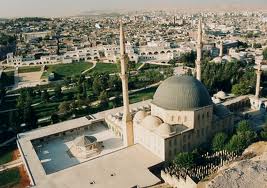
I buy a dish of fish pellets and watch the fat feisty fish fight each other for each tiny morsel, after which we take a rest in the cay bachesi. I sit sipping hot sweet tea and take a look at my photos so far. The photos are amazing; sneaky zoom shots of men at prayer and performing the abtest, plus the usual tourist shots of minarets and domes. It’s getting late now and as dusk settles over the city, we head back to the hotel.
Nemrud
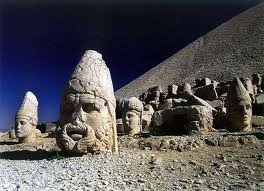
So far so good, my first day in Urfa was wonderful and I am hungry for more. We have decided to use Urfa as a base for a few road trips. On my list are: Harran, Nemrut, and Hasenkeyf, then, a stop at Cappadocia on the way home. I had no idea at the time but this journey would also encompass, Mardin, Midyat, Batman & Siirt. My Anatolian adventure continues.
Geographically, Anatolian Turkey is in Asia and Thracian Turkey is in Europe. A simple glance at a map confirms it. Istanbul is not called the city that straddles two continents for nothing. For commercial convenience, the whole of Turkey is often classified as Europe for such things as travel insurance and flights. Lonely Planet lists Turkey under Eastern Europe and the Caucasus when it is part of neither (apart from Thrace). Is Turkey also part of the Middle East? This is less clear. The Middle East is an ill-defined term that always includes Arabic countries, but may or may not include the nations of North Africa (who speak Arabic) and may or may not include non-Arabic Iran. Where does Cyprus fit in? It’s closer to Asia than to Europe and the Greek side is part of the European Union (nominally on behalf of the whole Island but that’s another story).
Does any of it matter? Certainly not to long gone conquerors who marched across Asia Minor from all points of the compass at the drop of a helmet. Take a look at this to see what I mean.
It only matters to me when trying to catch the weather forecast on BBC World. The Beeb doesn’t seem to know where Turkey is either and generally ignores us altogether. Consider this. Geologically, Europe isn’t a continent at all. It’s an appendage to Asia with an arbitrary border drawn along the Ural and Caucasus Mountains. Those in the know describe the entire landmass as Eurasia. You see we’re all Asians really.
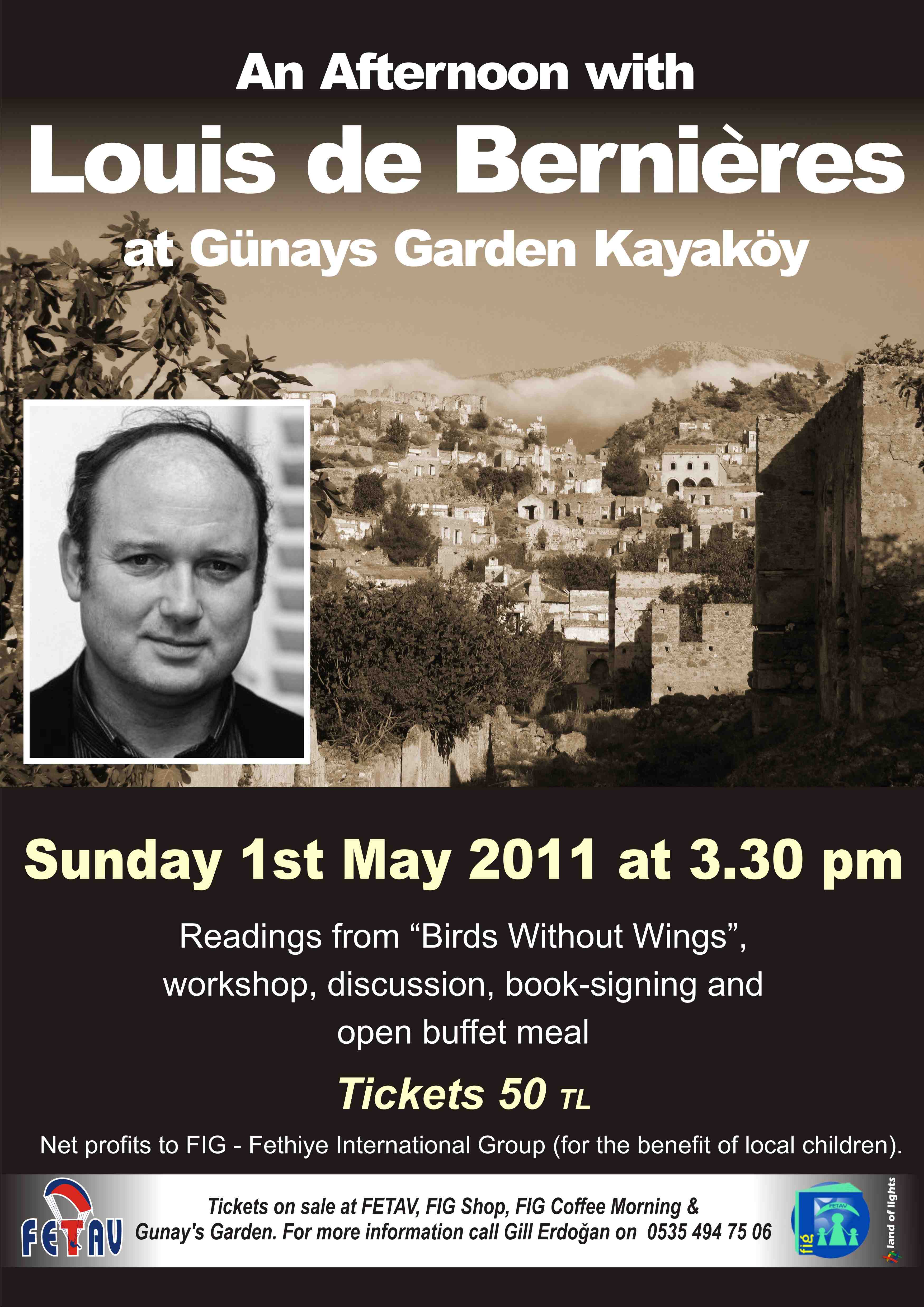
Award winning novelist Louise De Bernières is coming to town – well to Kayaköy a tumble down deserted former Greek village actually. Expect a civilised, sunny afternoon of recital, chat and nibbles to chew over his superb novel Birds Without Wings. If only I could write like him. Profits from the event will go to local children in need so it’s not yet another jamboree for street dogs.
Birds without Wings is a beautifully crafted, intensely human tale set in an imaginary Aegean village called Eskibahçe. Although fictional, the village is based on the hamlet of Kayaköy (Greek: Levissi) near Fethiye. The story unfolds against the backdrop of the defeat and disintegration of the Ottoman Empire, the rise of the Turkish Republic and the innocent sounding ‘population exchange’ that occurred in 1923. This cruel trade was a curious and unique episode in modern history as it was mutually agreed by both governments and sanctioned by the League of Nations. 1.5 million Greeks from Anatolia and 500,000 Turks from Greece were forcibly expelled from their centuries-old communities and ‘repatriated’ to their so-called homelands. It was religious rather than ethnic cleansing since ethnic Turks who were Christian were out and ethnic Greeks who were Moslem were in, and vice versa.
The expulsions were a harsh and deliberate plan by both adversaries to create states of religious and cultural homogeneity. This might be forgiven as the inevitable consequence of two paranoid, insecure nations attempting to foster a loyal citizenry but the fall out still resounds to this day both in the Aegean region and in the wider world.
Louise de Bernières is perhaps best known for his earlier book Captain Corelli’s Mandolin which is set on the lush and verdant Greek Island of Kefalonia during World War Two. My very first holiday with Liam was to Kefalonia. Our debut jolly was marred by a manic Franco-Algerian woman, a bird with bingo wings. She took far too much of a frisky shine to Liam. She chased him around the pool like a bitch on heat and I had to tell her to keep her wandering lusty hands to herself.
We bloggers are like rats. We get everywhere and Japan is no exception. Charles Ayres writes a deliciously over the top blog called Impossibly Fabulous from the Land of the Rising Sun offering camp agony uncle advice to the bewildered. It helps to keep him sane as an alien in the most homogenised nation on our diverse planet. I am concerned about Liam’s slow but certain slide towards the veil and sought Charles’ insight. These were his thoughts:
January 2015 Update: Unfortunately, Impossibly Fabulous is off the air these days so this link no longer works.
Incidentally, the word Anatolia derives from the Greek Anatolē which means ‘sunrise’ so Charles and I are both bloggers from the land where the sun rises. A bit silly really as the sun rises everywhere eventually, even in Grey Britain.
Chrissy calls three or four times a day for no particular reason, liberally dispensing unsolicited wisdom on all matters Turkish. She assumes we sailed up the Meander on a banana boat. This is even more galling since she thinks ‘Anatolia’ is a city in Southern Turkey.








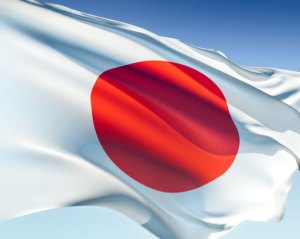 We bloggers are like rats. We get everywhere and Japan is no exception. Charles Ayres writes a deliciously over the top blog called Impossibly Fabulous from the Land of the Rising Sun offering camp agony uncle advice to the bewildered. It helps to keep him sane as an alien in the most homogenised nation on our diverse planet. I am concerned about Liam’s slow but certain slide towards the veil and sought Charles’ insight. These were his thoughts: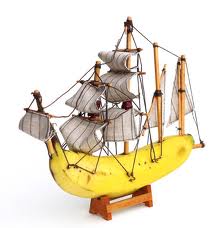
 Perking the Pansies