Jack Scott’s Postcards from the Ege

Jack Scott’s Postcards from the Ege

Not much of the news coming out of Turkey these days is positive – refugees, bombs, riots, censorship and the usual rhetoric from the imperious Erdoğan. The western media do so love to stoke up a drama. You could be forgiven for thinking the place is falling apart. Well, it isn’t. But the headlines are putting visitors off. According to some estimates, bookings by Brits are down by over a third. A glance at the travel agent’s window reveals the bargains to be had, reflecting a tourist trade going through lean times. It would be foolish to suggest there aren’t any problems but Turkey remains one of the safest holiday destinations anywhere.

It’s been four years since we returned from Turkey and we’re content with our lot in old Norwich Town. The slowish pace of life suits us well. But, we’re often nostalgic for our easy come, easy go days of Bodrum. During one particularly wistful afternoon in the boozer, Liam and I took a drunken stagger down memory lane. Over the last few years I’ve scribbled a word or two about my best bits of Turkey and I’ve even won writing competitions with my musings. So to cure me of my melancholy, Liam suggested I put them all together. So that’s what I’ve done. And very cathartic it was too. I’ve called it Postcards from the Ege, Jack Scott’s Turkey Trail.

Here’s the blurb:

With such an immense political and cultural heritage, it’s no surprise kaleidoscopic Turkey is such a feast – a prime cut of authenticity, seasoned by the West and spiced by the East. Jack Scott knows a thing or two about the country. He lived there for years and travelled widely – to Istanbul and along its south-western shores from Izmir to Alanya. In Postcards from the Ege, Scott shares some of his must-sees and personal highlights. Follow Scott’s trail. Come to Turkey.
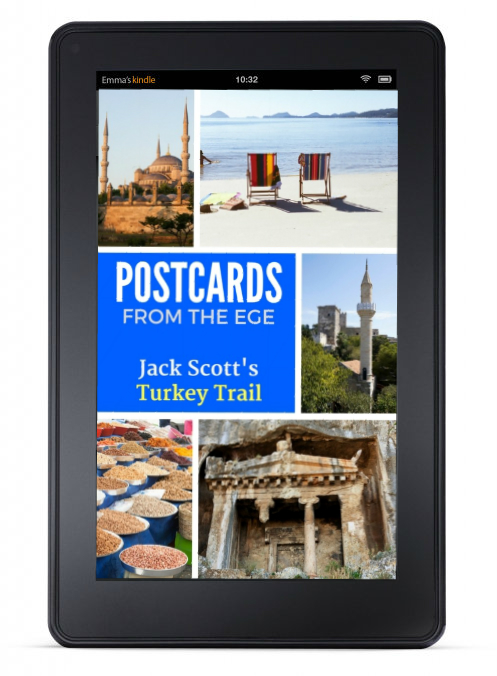
The e-book has just been published on Kindle by Springtime Books. It’s a steal at a couple of quid and if it encourages people to sample the extraordinary land we used to call home then that’s all to the good.

amazon-kindle-logo1

Türkiye’ye Hoşgeldiniz!

Communal Crapping

Image: Thomas Depenbusch

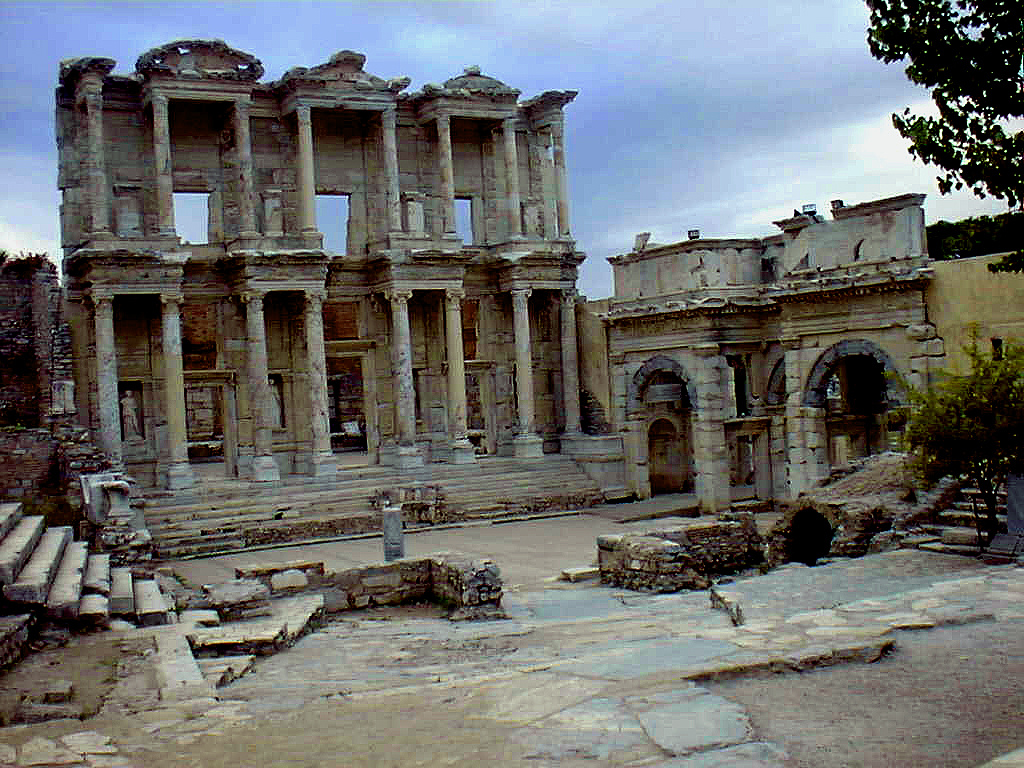
Selçuk is a handsome town, host to a fine museum and spitting distance from the wonder that is Ephesus: world heritage site nominee and arguably one of the most impressive open air museums anywhere. And, since we were in the vicinity anyway, it would have been rude not have a look around the imposing ruins. Ephesus (or Efes to give the place its Turkish name which is also happens to be the name of Turkey’s favourite ale), was one of the most sophisticated cities of antiquity, adorned with grand civic buildings, marble-clad pavements, street lighting and home to the Temple of Artemis, one of the Seven Wonders of the Ancient World. Sadly, just one lonely, forlorn re-assembled pillar remains of Artemis’ once vast shrine rising up precariously from a mosquito-infested bog. What a lunatic hadn’t destroyed by torching the place, the Christians had finished off. The rest of the city is a magnificent affair and in impressively good shape after decades of excavation and partial reconstruction. We had decided to drop in at just the right time of the year. As Turkey’s second most visited attraction (after Sultanahmet – the old city – in Istanbul), Ephesus is best avoided at the height of summer when the unforgiving sun and the rag-tag of camera-toting tourists conspire to make the place Hell on Earth.

The city was of immense significance to the early Christian Church. St Paul wrote his Epistles to the Ephesians (to damn them for their debauched ways I suppose, having never read them) and the Virgin Mary is reputed to have lived out her dotage nearby. It can be reasonably argued that Christianity, as an organised religion, was born in Ephesus. Not a lot of people know that.

We hired a guide but soon wished we hadn’t. A serious academic type, he droned on about the fine and upstanding Ephesians: civilised, cultured, always kind to their slaves. We fancied the alternative history, the salacious version, where the same fine and upstanding Ephesians visited the hungry whores via the secret tunnel connecting the great library to the brothel. After the sombre tour, we paid off the guide and re-roamed the ruins unescorted. Something not to be missed is the public latrine. The Romans were particularly fond of communal crapping, artfully combining conversation with evacuation.

Having had our fill, we returned to the car and journeyed back south but were unable to resist another detour, this time to Priene. Built on a natural escarpment high above the Meander River flood plain, Priene is the most complete Hellenistic site in Turkey. Whereas Ephesus overawes with its monumental scale, Priene seduces with its intimacy and superb aspect. We loitered a while as the sun began to set over the Ege bathing the ruins in a soft warm light.

It was time to top up the tank, so we pulled into a service station. Such establishments in Turkey are a joy, belonging to a gentler age, with staff on hand to fill your tank and sponge down your dusty windows. In fact, it wasn’t that long ago when a friendly chap with a cheesy smile and handlebar moustache would fill your car as a lit fag dangled from his gob.